

As the global mass adoption of Web3 becomes an increasingly inevitable reality, the crypto industry’s user base continues to expand rapidly. According to Crypto.com research, as of 2025, there are around 24.6M active users in the blockchain space and approximately 560M cryptocurrency holders worldwide.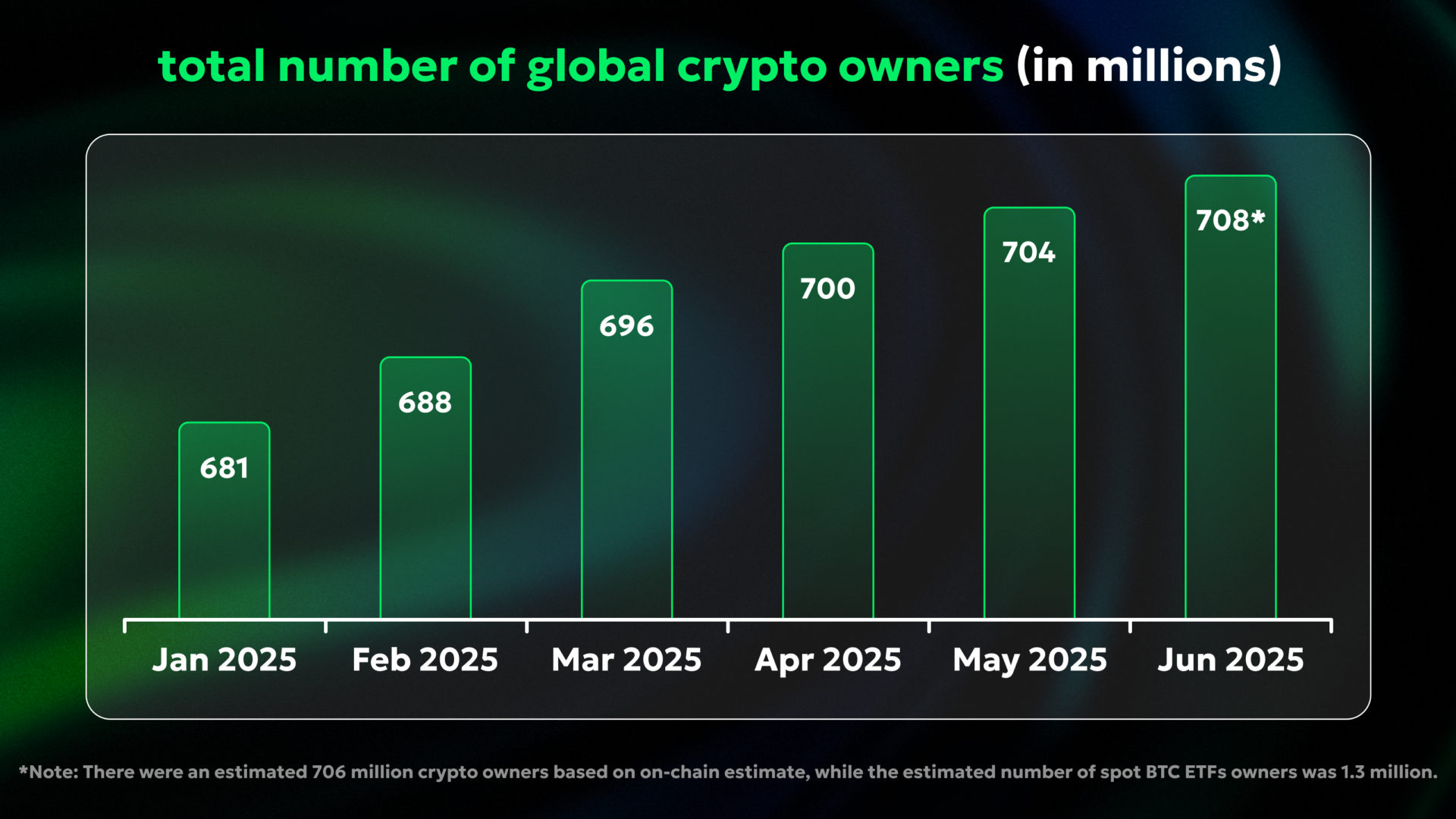
*As of July 1,2025
At the same time, user activity has surged dramatically in recent years as we enter a hot stage of the bull market. However, as the crypto market evolves and matures, more participants are shifting from pure speculation toward more sustainable earning strategies.
This transition has been fueled by the rise of various DeFi applications and the growing diversity of blockchain ecosystems during the 2021–2025 bull market cycle. Meanwhile, DeFi TVL is recovering to levels close to its 2021 bull market peak, now exceeding $157.5B, just $10B shy of the previous record of $168B.
We’ve also witnessed the emergence of automated market makers, a surge of lending protocols and DEXs, and, most recently, the rapid rise of perpetual DEX trading. Within just a year, the top five perp DEXs have managed to reach nearly a quarter (~23%) of the 24-hour trading volume of the top five largest CEXs (156.86B vs. 36.66B), something that would have been unimaginable just a few months ago.
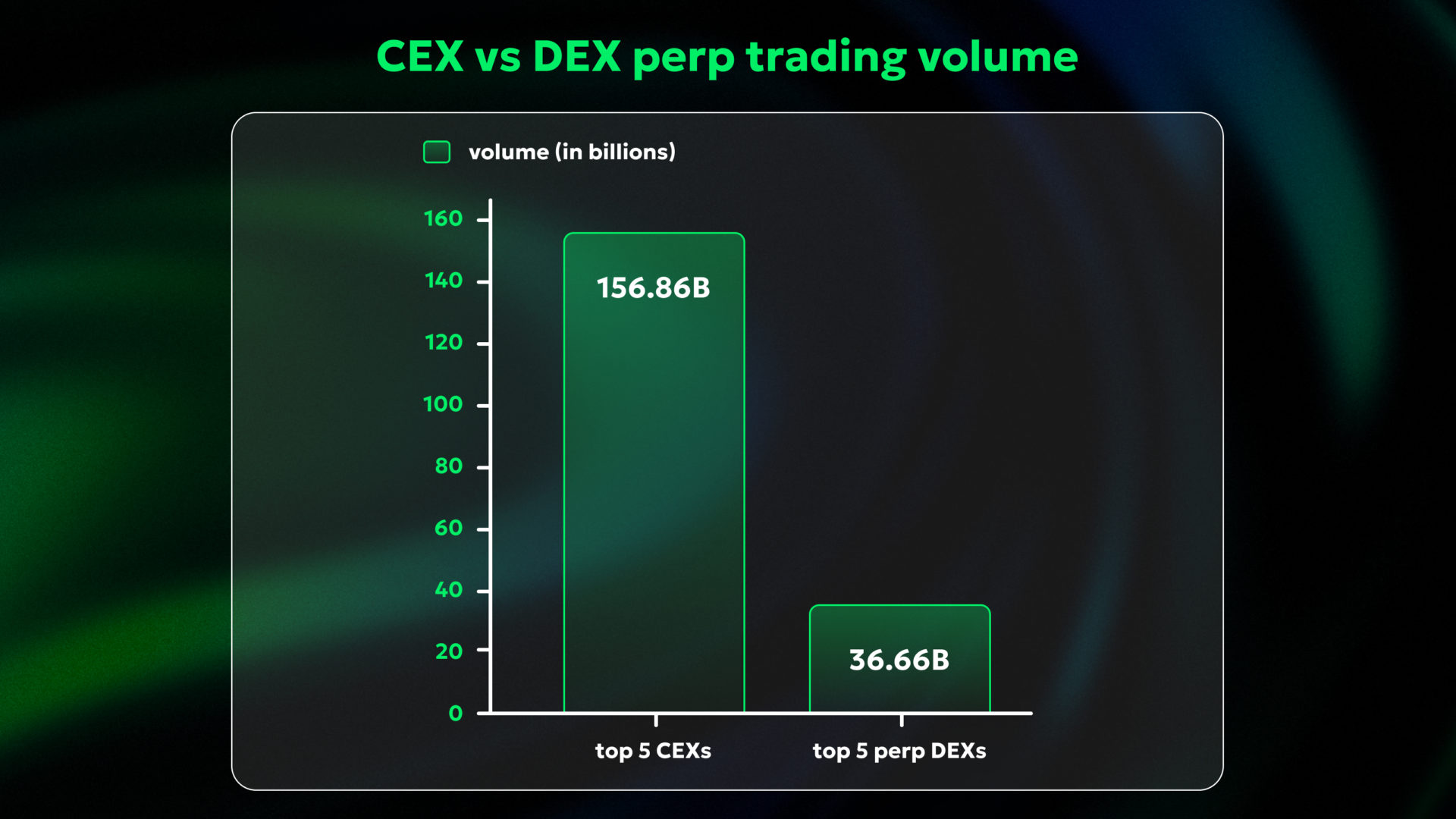
*data as of November 10, 2025
Amid these factors, and as users increasingly seek more stable income sources than trading, the concept of yield farming has emerged.
But what is yield farming? Let’s break it down.
what is yield farming?
The term crypto yield farming refers to generating returns without the need for constant token speculation. In this way, users can protect themselves from market volatility and implement more predictable, robust ways to earn returns or diversify their income streams using their assets in crypto. Typically, Web3 users classify these activities as:
- Staking: One of the oldest strategies for yield farming in crypto market. The idea is to delegate your tokens to the node operators of L1 blockchains like Solana, Binance Smart Chain, or Ethereum. These nodes execute transactions and earn a share of block rewards from the L1 chain. The main caveat is that staking rewards are not free, they are generated through token inflation.
- DeFi yield farming: The core concept is making your holdings work for you. To participate, you deposit your funds as a token pair (e.g., USDC-USDT, ETH-USDT, ETH-AAVE) into a DEX liquidity pool and earn a share of the swap fees generated by that pool. Generally, the higher the demand for the pool and the smaller its TVL, the higher the APY.
- Lending: A yield-farming strategy that’s somewhat similar to staking and DeFi farming: you don’t need to split your holdings into token pairs as with staking, but the yield comes from other DeFi users rather than from validating transactions, much like LP farming. On top of that, lending provides you with yield farming opportunities on a much wider range of assets compared with staking.
- Funding farming: This strategy involves identifying perpetual pairs on DEXs that offer a positive funding rate for short positions, while simultaneously buying the same tokens on spot markets, either on the same or a different exchange. By maintaining a delta-neutral position, you can continuously earn the funding rate from the exchange, generating a steady APY. On top of that, you have a chance to qualify for airdrops from various protocols, which often reward active traders, with Hyperliquid being a prime example.
- Revenue Sharing: A new yield farming strategy. It works similarly to dividend payments in the stock market. Users hold or stake a project’s specific tokens and earn a share of its profits as compensation. This approach is ideal for long-term believers in a project, as it allows them to generate yield tied directly to the protocol’s performance. And the better the platform performs, the higher the returns for token holders.
As you can see, in recent years, many alternative ways on how to yield farm crypto have emerged.
yield farming strategies with GOOD token
To align with these market trends, the GOOD token was created. The GOOD token is the native utility token of goodcryptoX, used for:
- Revsharing: Hold 10,000+ GOOD tokens to earn a share of up to 50% of goodcryptoX’s revenue;
- Trading rewards: Trade on goodcryptoX and earn $GOOD tokens, the more you trade, the more you earn. It’s that simple;
- Swap fee discounts: Hold over 10,000 GOOD tokens to unlock up to 50% discounts on swap fees in the app;
- Token burns: goodcryptoX regularly buys back and burns $GOOD tokens on a daily and monthly basis, allocating 10% of its revenue for this purpose.
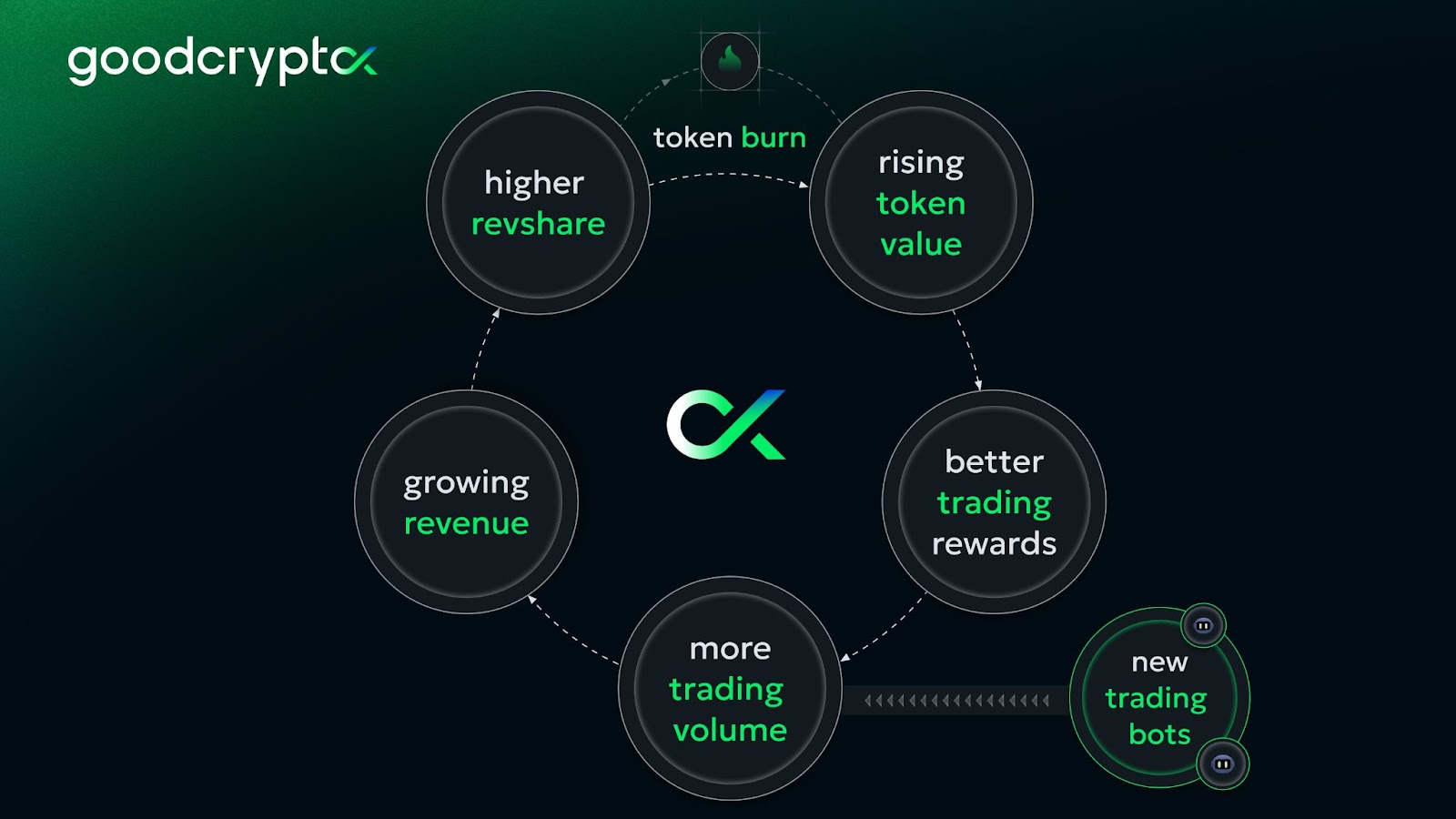
By design, it’s integrated into goodcryptoX as part of a growth flywheel, where every trade, holder, and line of code drives both the protocol’s and token’s growth:
Real usage on goodcryptoX generates DEX revenue ➡️ bigger revsharing and token burn stats ➡️ incentive to buy GOOD grows ➡️ stronger GOOD ➡️ stronger $GOOD = more attractive trading rewards ➡️ greater trading rewards = more users to trade on goodcryptoX.
And the loop repeats.
But how exactly can you earn with the GOOD token? Let’s find out.
-
GOOD revenue sharing
The easiest and most popular way to generate returns with $GOOD is through holding the revenue sharing crypto $GOOD. The rules are simple: hold more than 10,000 $GOOD in your goodcryptoX wallet to qualify for daily revenue-sharing rewards.
The revshare APY depends on the token’s price and the revenue that goodcryptoX generates from swap fees. You can track the current GOOD revshare APY in the project’s comprehensive performance spreadsheet. As of October 2025, the average rolling APY for $GOOD stands at around 30%, with the previous month’s peak reaching an impressive 111%.
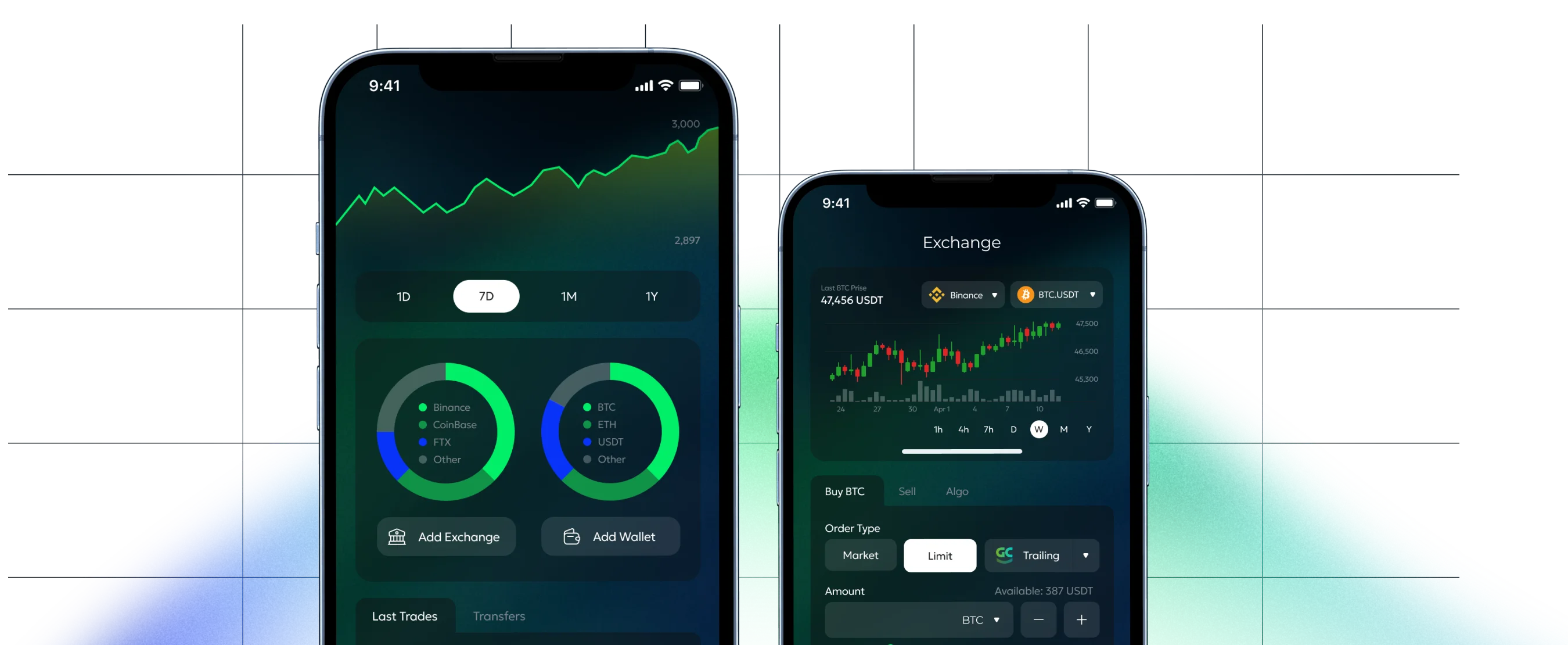
With the upcoming integration of Hyperliquid perp DEX trading, goodcryptoX is set to become the first platform to offer no-code, CEX-grade algorithmic trading on Hyperliquid DEX. Future updates plan to include advanced features such as sniper bots, TradingView bots, DEX Grid bots, integrations of more perp DEXs, and more. These milestones are likely to boost trading volume and platform revenue, potentially driving the APY for $GOOD even higher.
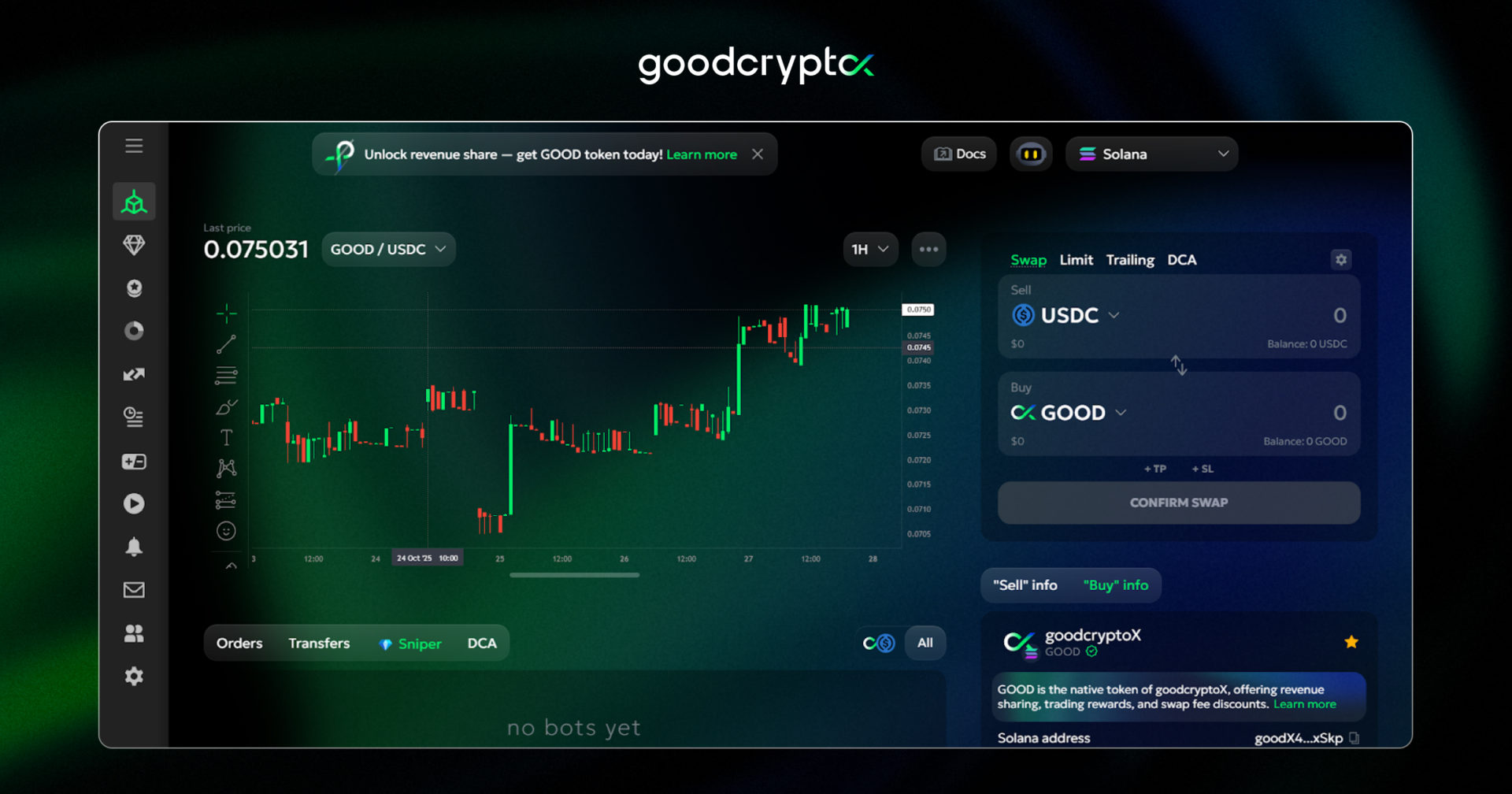
To participate, visit our app and log in or register on goodcryptoX. Then, switch to Solana DEX trading and enter the GOOD TA: goodX4LG92UAcRdFRUykfP2fAfzQAVttrToEPxtxSkp.
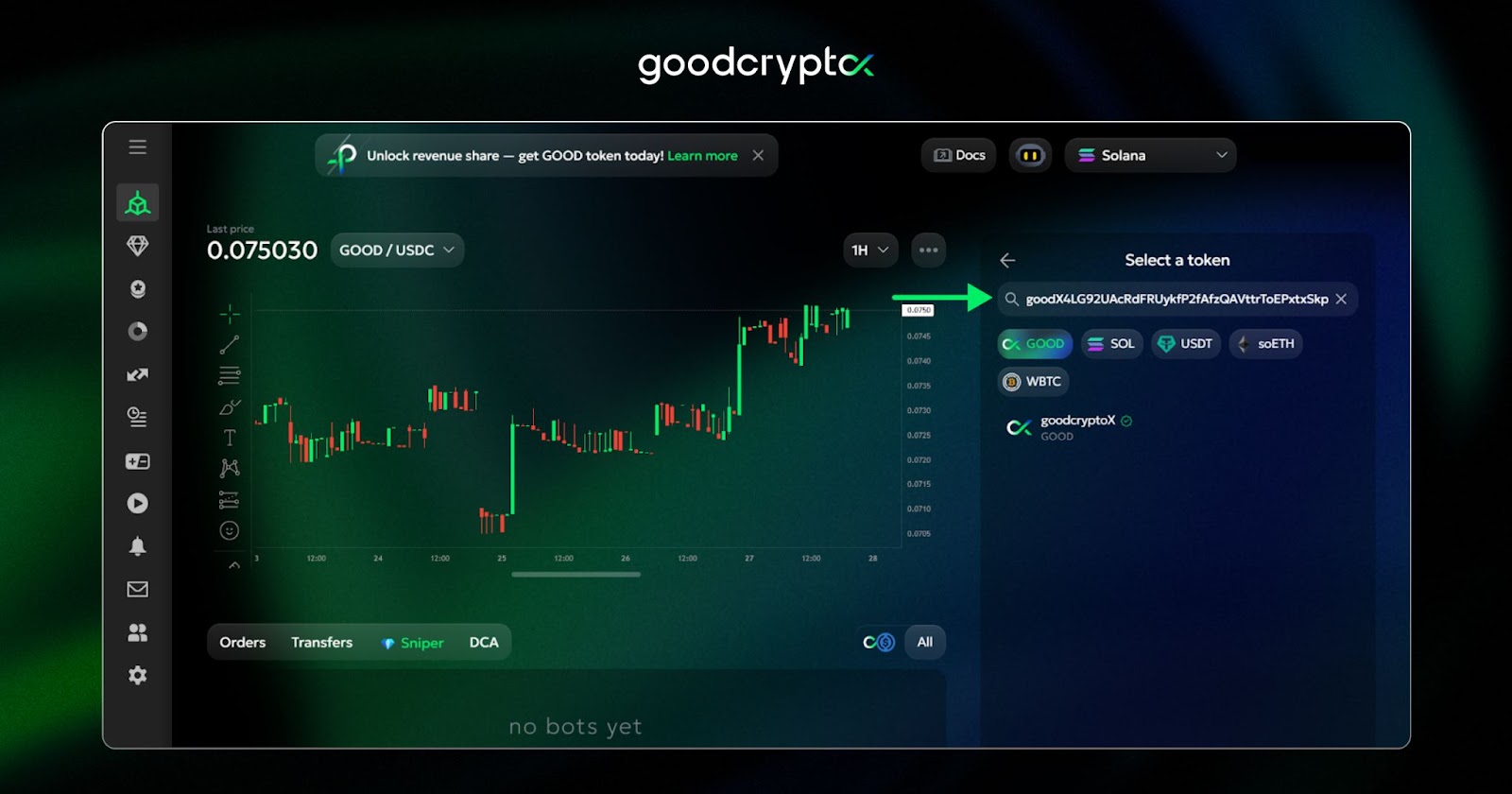
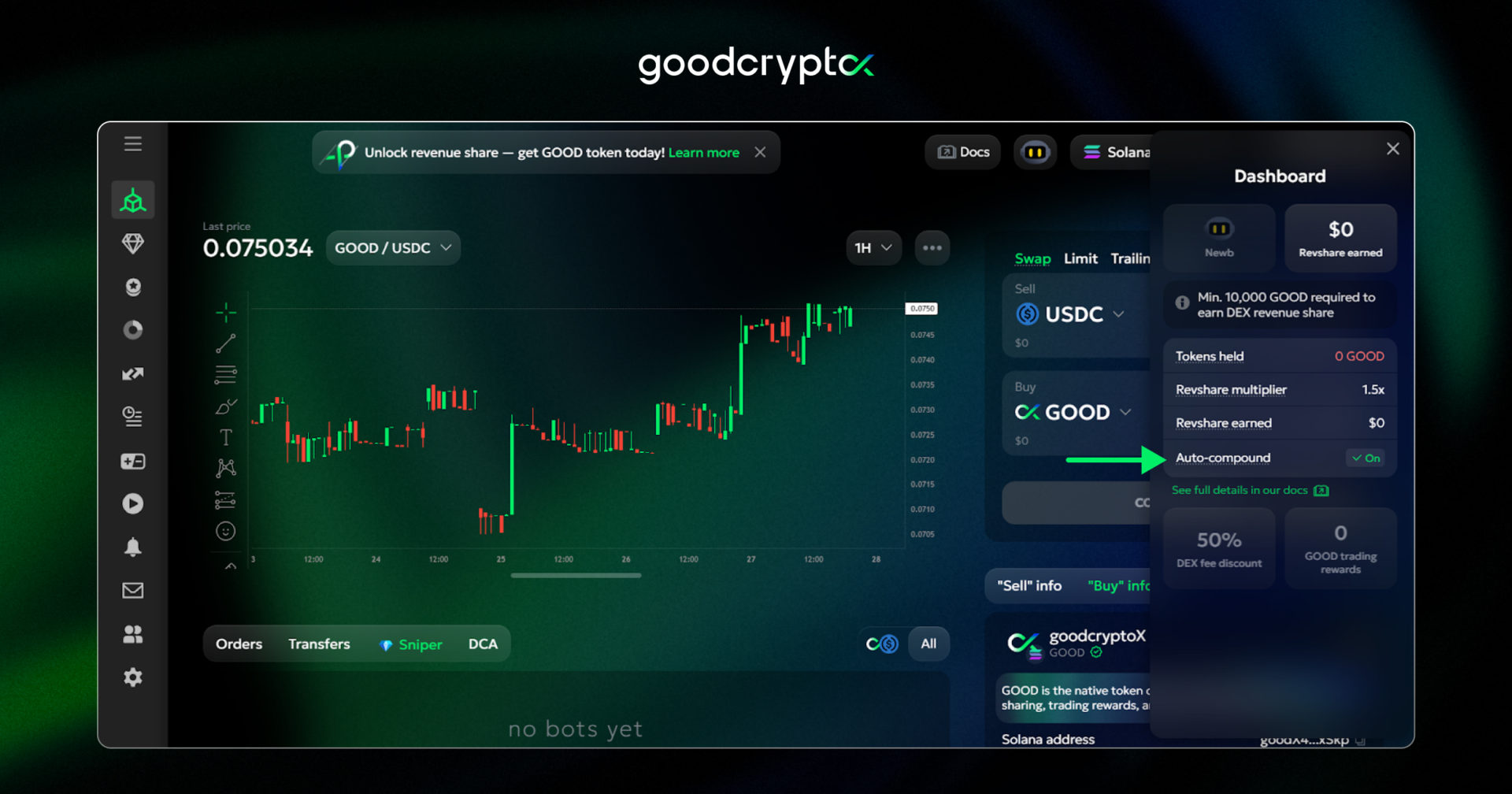
You can also turn on or off the auto-compound mode for your tokens in the goodcryptoX token dashboard. The autocompound means that the app will automatically convert your $GOOD tokens, adding up to your initial deposit and generating even more revsharing rewards for the next epoch. If you would like to continue earning in $USDC, turn this feature off.
$GOOD/USDC LP DeFi yield farming
Yield farming in DeFi is another way of generating returns with the $GOOD token. Instead of simply holding your tokens in your goodcryptoX wallet, you can split your $GOOD holdings 50/50 and provide liquidity to the GOOD/USDC pool. This strategy helps minimize market exposure, since half of your position remains in stablecoins, while still allowing you to earn APY on your $GOOD, even if you don’t qualify for revsharing rewards.
The key advantage of this strategy over revsharing is the boosted APY available during the ongoing LP farming campaign. Since the token’s launch on September 9th, we’ve run several rounds of liquidity farming, now extended for the fourth time. At its peak, the campaign offered over 1,000% APY, and it has since stabilized at 100%+ APY. Quite a solid APY for a Solana DeFi yield farming strategy, don’t you think so?
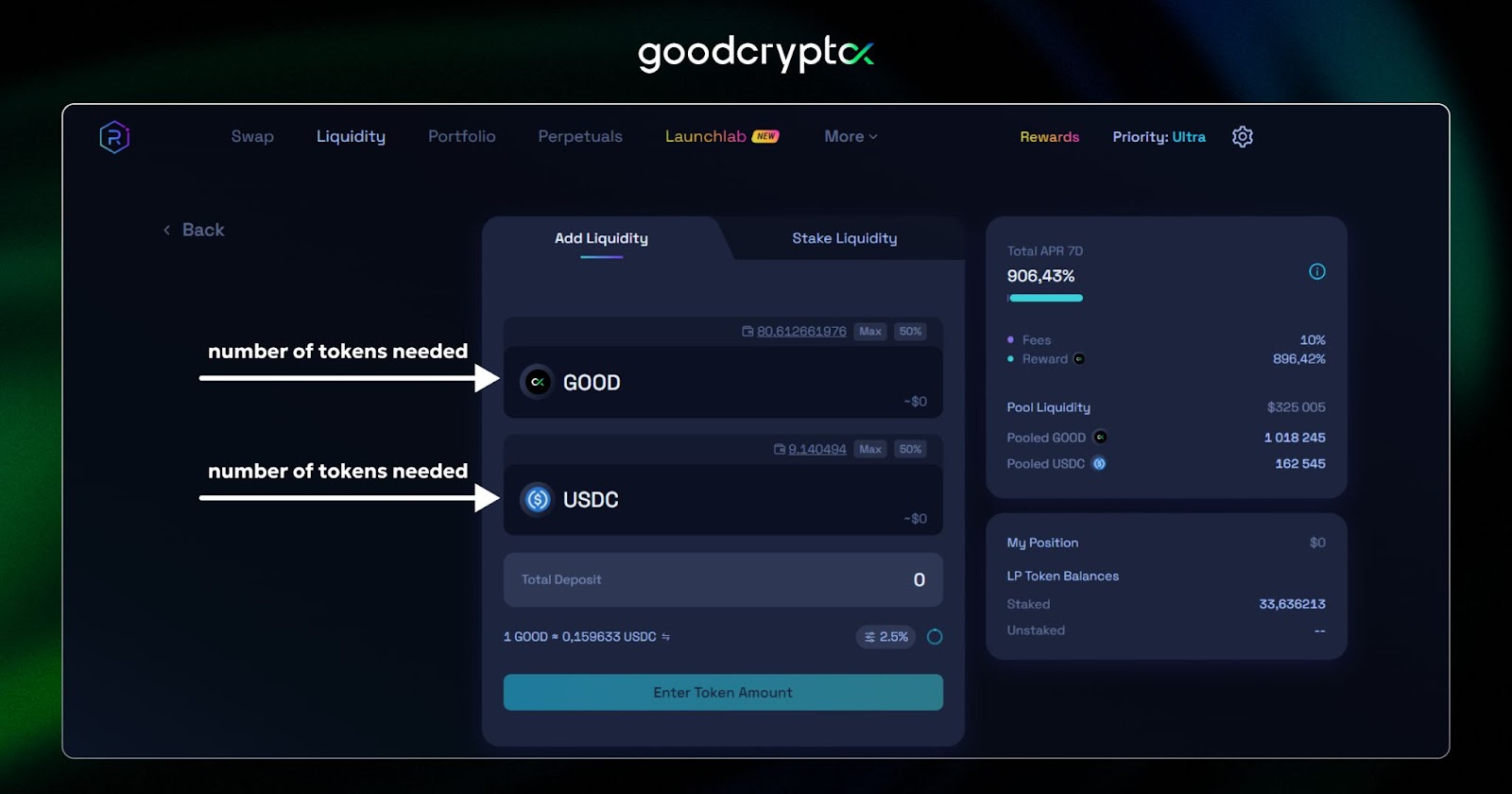
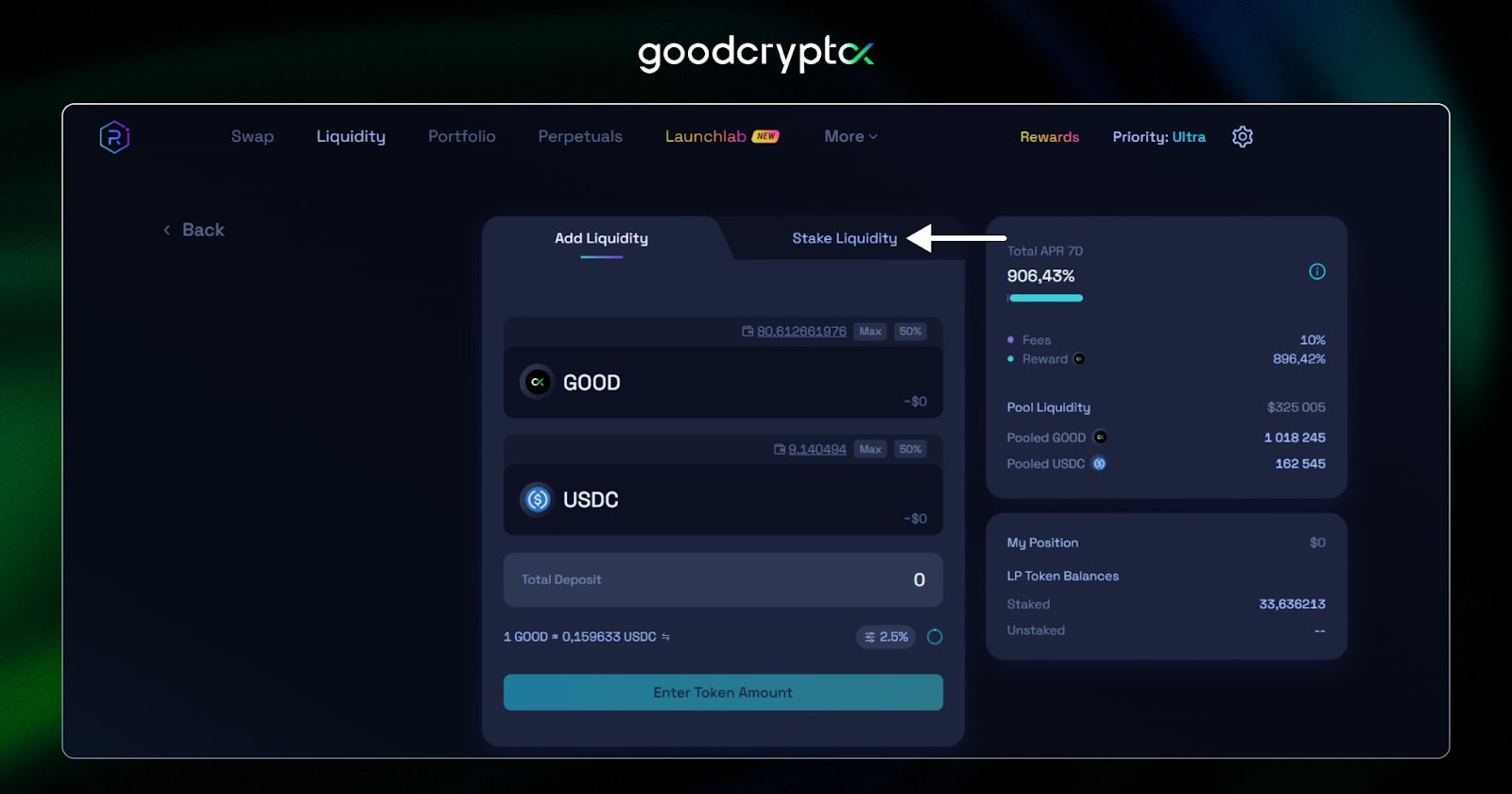
To proceed, visit the Raydium DEX, connect your wallet, and add liquidity to the GOOD-USDC pool.
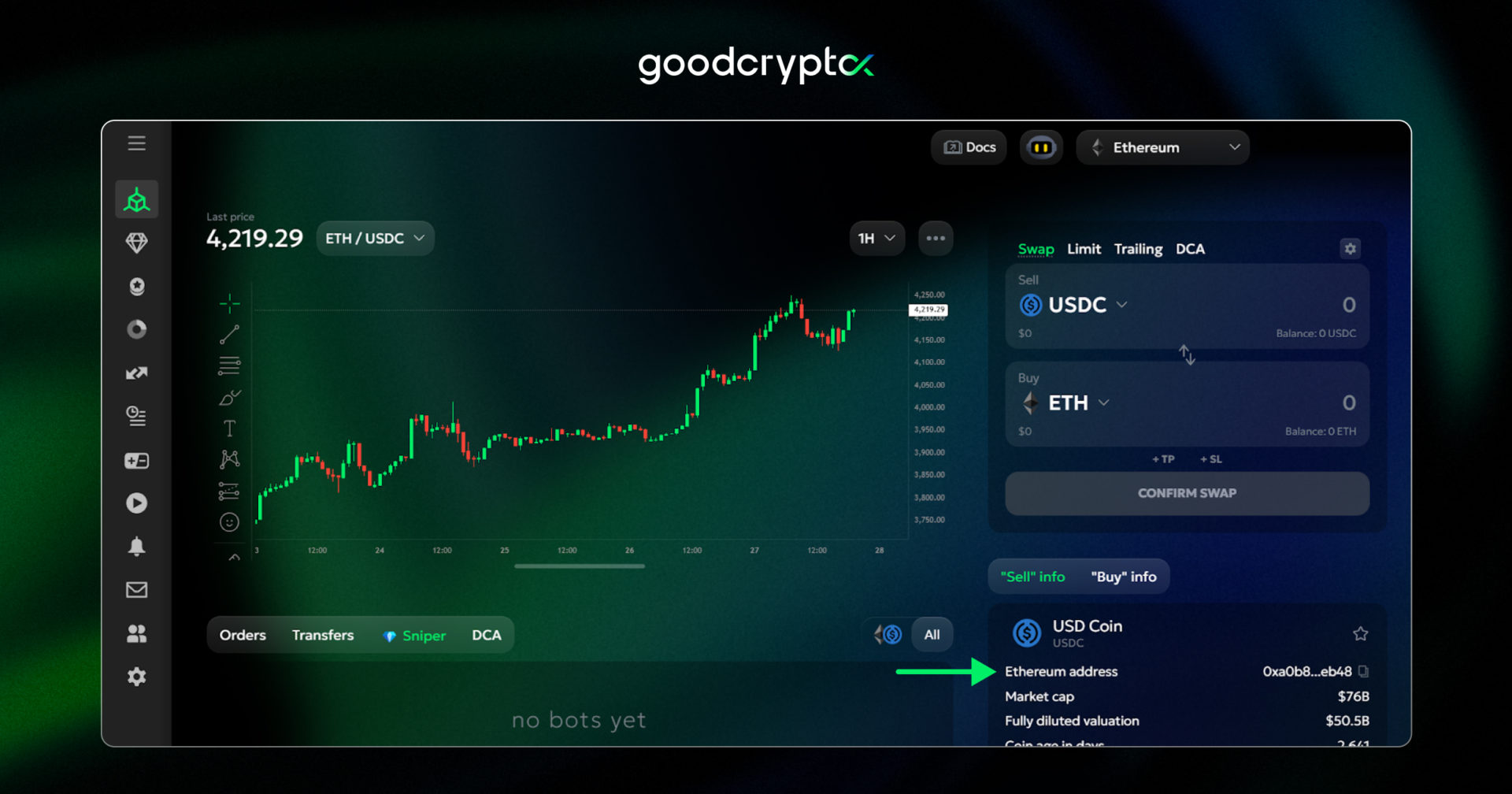
You’ll need to use an external wallet for this – we have yet to implement the ability to connect your built-in goodcryptoX wallet to external DApps. You’ll also need both GOOD and USDC in equal proportion. For example, if 1 GOOD = 1 USDC and you want to add 1,000 USDC, you’ll also need to add 1,000 GOOD.
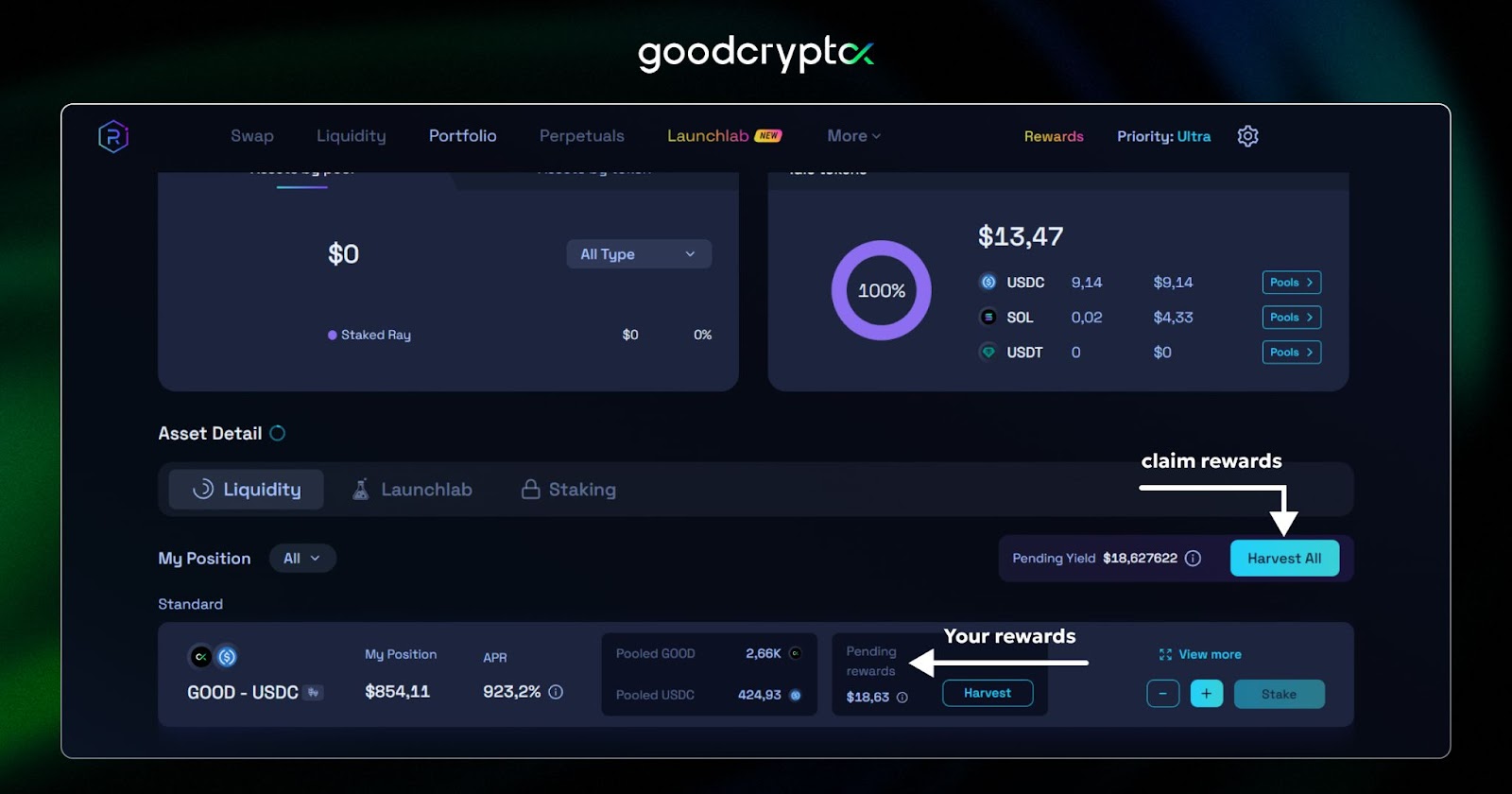
Claim yield farming rewards and view your LP details in the “Portfolio” section on Raydium. You’ll see your position value, accrued rewards, and the “Harvest” button to claim them.
Congrats – you are now DeFi yield farming with GOOD/USDC LP.
GOOD trading rewards
While not technically a yield farming strategy, this feature of the $GOOD token can still help you generate yield. You can earn weekly rewards for trading on goodcryptoX, whether on DEXs or CEXs, spot or futures. The rewards are calculated as follows:
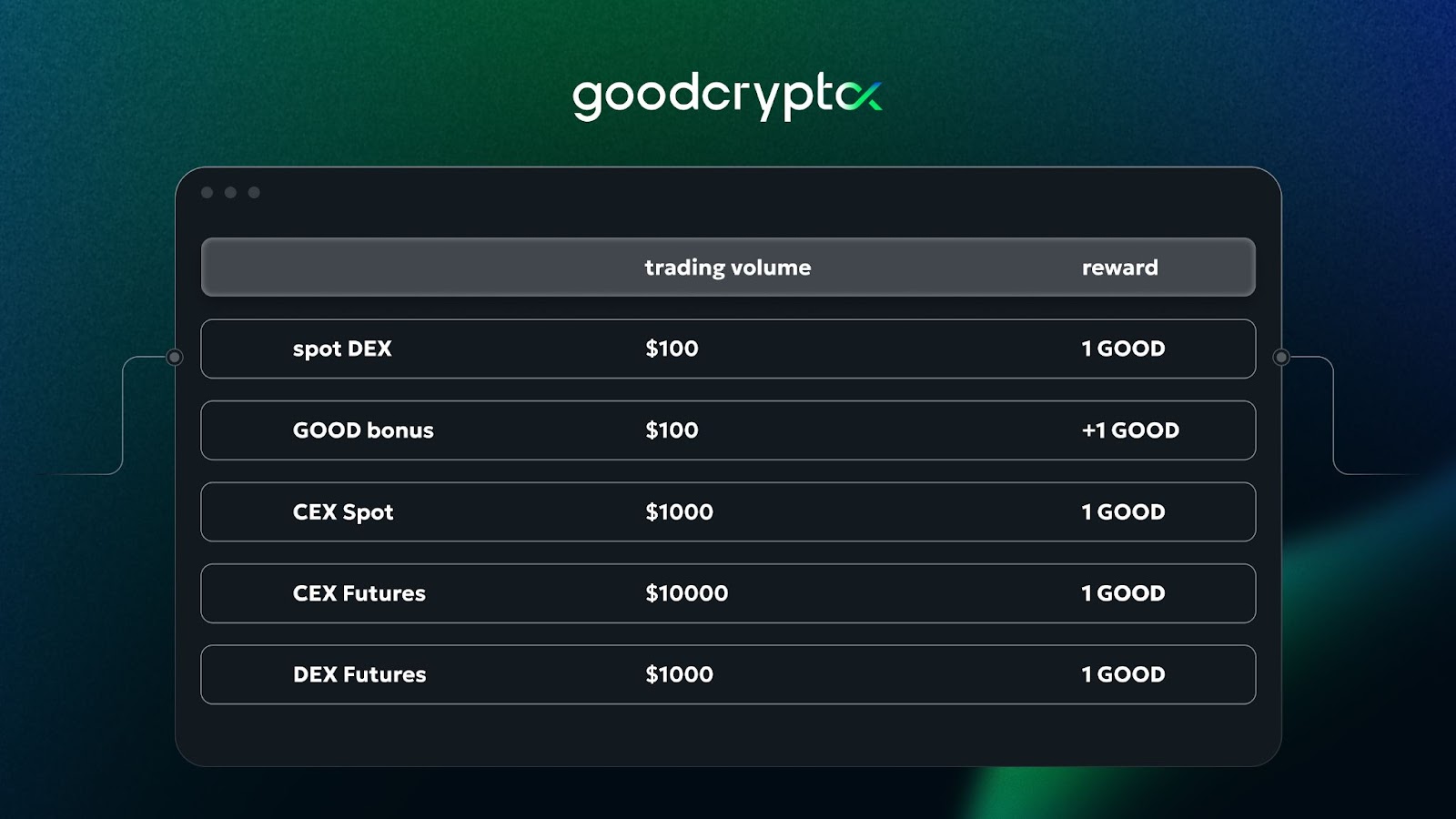
But how can trading rewards help you?
- The most obvious is while trading on goodcryptoX using crypto bots. Use goodcryptoX bots to generate returns and earn 2× trading rewards for bot usage.
- Trading rewards can also help during funding farming. Simply open perpetual positions on Hyperliquid while holding spot positions on the same or another exchange via goodcryptoX to earn funding rates.
💡 Pro tip: Hold over 10,000 GOOD tokens to unlock stackable discounts and qualify for the previously mentioned revsharing program, taking advantage of multiple goodcryptoX features at once, including rev-sharing, swap fee discounts, and trading rewards.
Even more exciting, trading with goodcryptoX bots or participating in funding farming also qualifies you for the upcoming GOOD Airdrop Two.
Conclusion
To sum up, yield farming is a diverse niche with various pros and cons across different strategies. When it comes to $GOOD, users can earn through three main sources: revsharing, yield farming DeFi through Raydium DEX, and trading rewards
So, which crypto yield farming strategy is the best? It all depends on how much yield farming risks you’re willing to take, and how much time you’re ready to invest.
Currently, the most profitable and relatively passive way to earn with GOOD is DeFi yield farming, which can deliver 100%+ APY. Keep in mind, though, that these Solana yield farming returns remain high only while the campaign APY is boosted, at least until December 23, 2025.
Revsharing APY, on the other hand, is dynamic and depends entirely on GOOD’s token price and goodcryptoX trading volume, the latter of which is expected to rise with the upcoming Hyperliquid integration. Right now, revsharing averages around 30% APY.
If you’re looking for a more aggressive approach, funding farming via goodcryptoX might be the best crypto yield farming strategy. It allows you to earn from the positive funding rates on Hyperliquid while qualifying you for weekly GOOD trading rewards, and the upcoming GOOD Airdrop makes it even more rewarding.
May the yield be with you, young farmer.