Main › Blog › New Digest › Bitcoin holds above $72K. Tom Lee says the crypto slump is nearly over
Bitcoin holds above $72K. Tom Lee says the crypto slump is nearly over
Hey there! 👋
This week brought fresh corporate moves, regulatory undertones, and a few macro surprises that kept traders second-guessing the direction. Here’s what shaped crypto markets over the past seven days:
quick weekly news
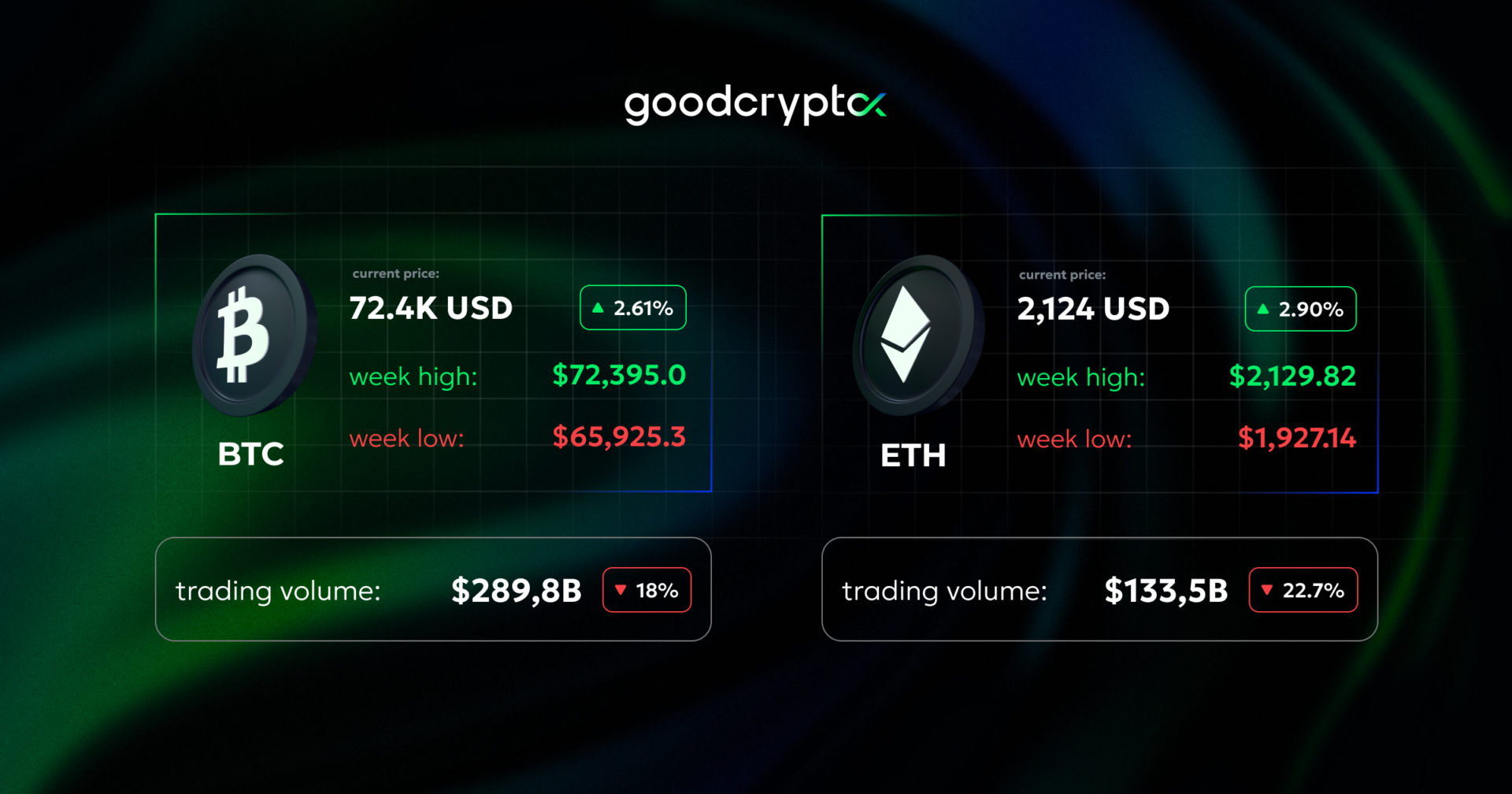
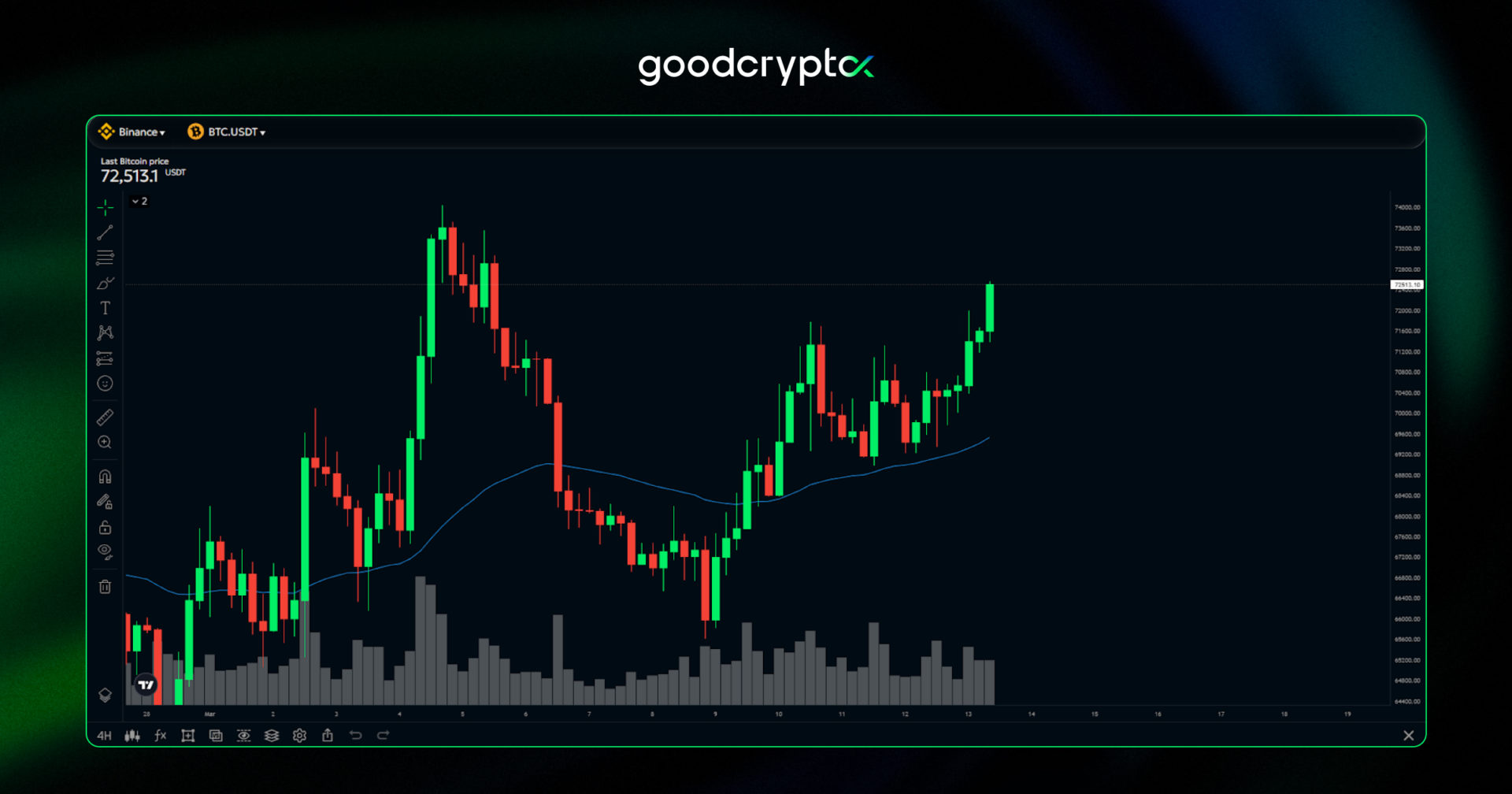
Bitcoin holds above $72K despite a stronger dollar, rising oil, and climbing bond yields
Bitcoin climbed above $72,500 on Friday, holding up well even as the dollar strengthened and oil hovered near $100 a barrel, with the war in the Middle East now entering its third week.
That’s a notable backdrop. A strong dollar and high oil prices typically pressure risk assets by tightening financial conditions and keeping rate hike expectations alive. Bitcoin has mostly shrugged it off, sitting among the better-performing macro assets since the conflict began on March 1. Fridays have historically been rough for crypto, the coin tends to drop around 3%, but that pattern hasn’t played out today.
The Dollar Index crossed 100 for the first time since late November. The 10-year Treasury yield pushed past 4.2%. The Nasdaq 100, tracked by QQQ, was roughly flat.
Tom Lee says the crypto slump is nearly over, as Bitmine steps up its Ethereum buying
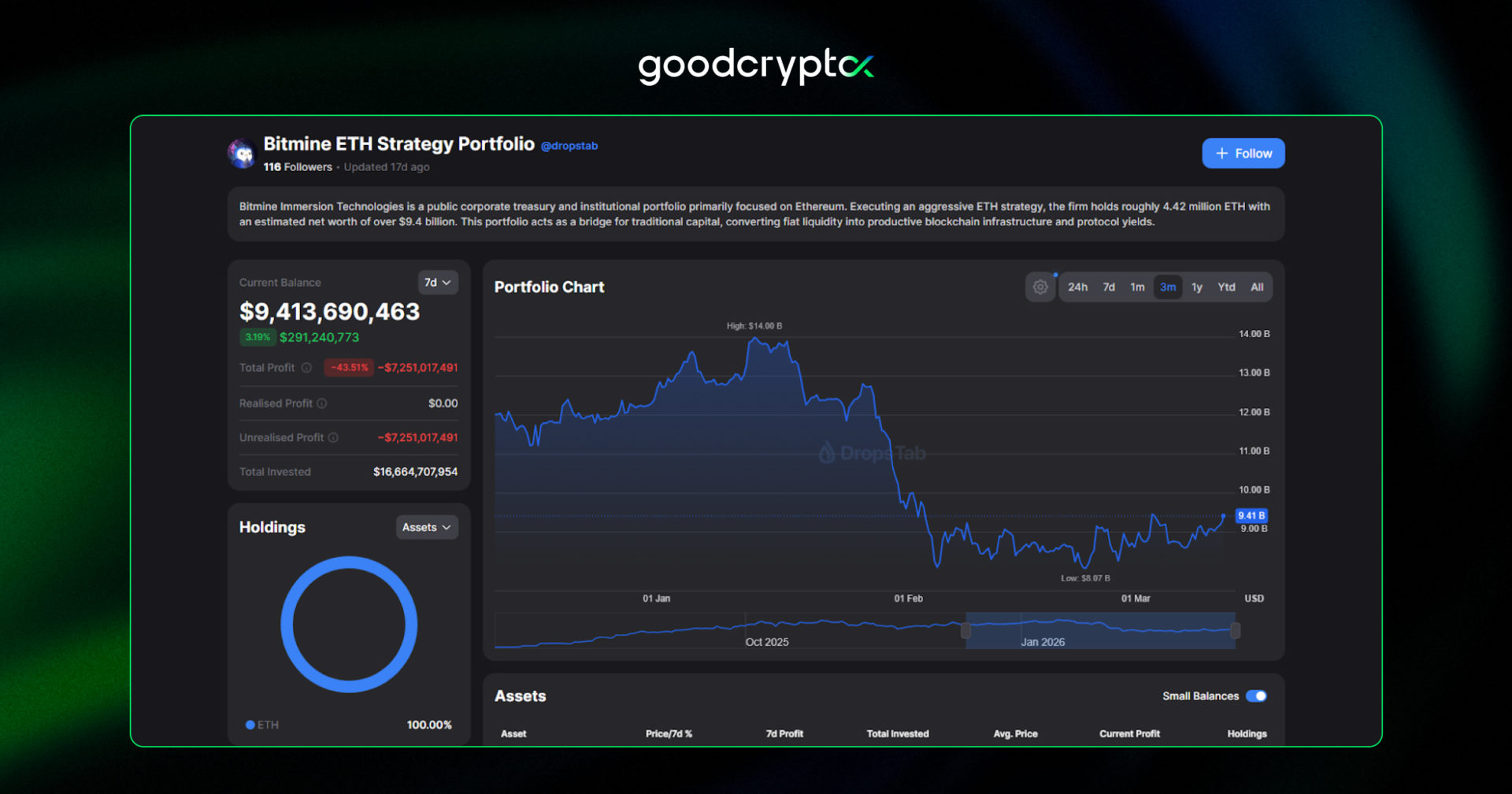
BitMine Immersion Technologies (BMNR) bought 60,976 ETH last week, its largest weekly purchase of 2026 so far, bringing its total holdings above 4.5M tokens, now worth over $9B.
The $120M buy came as the company signaled it’s leaning into what it sees as the tail end of a market downturn. BitMine has been adding throughout the slump, though it’s sitting on an estimated $7.2B in unrealized losses according to DropsTab data. Source:DropsTab
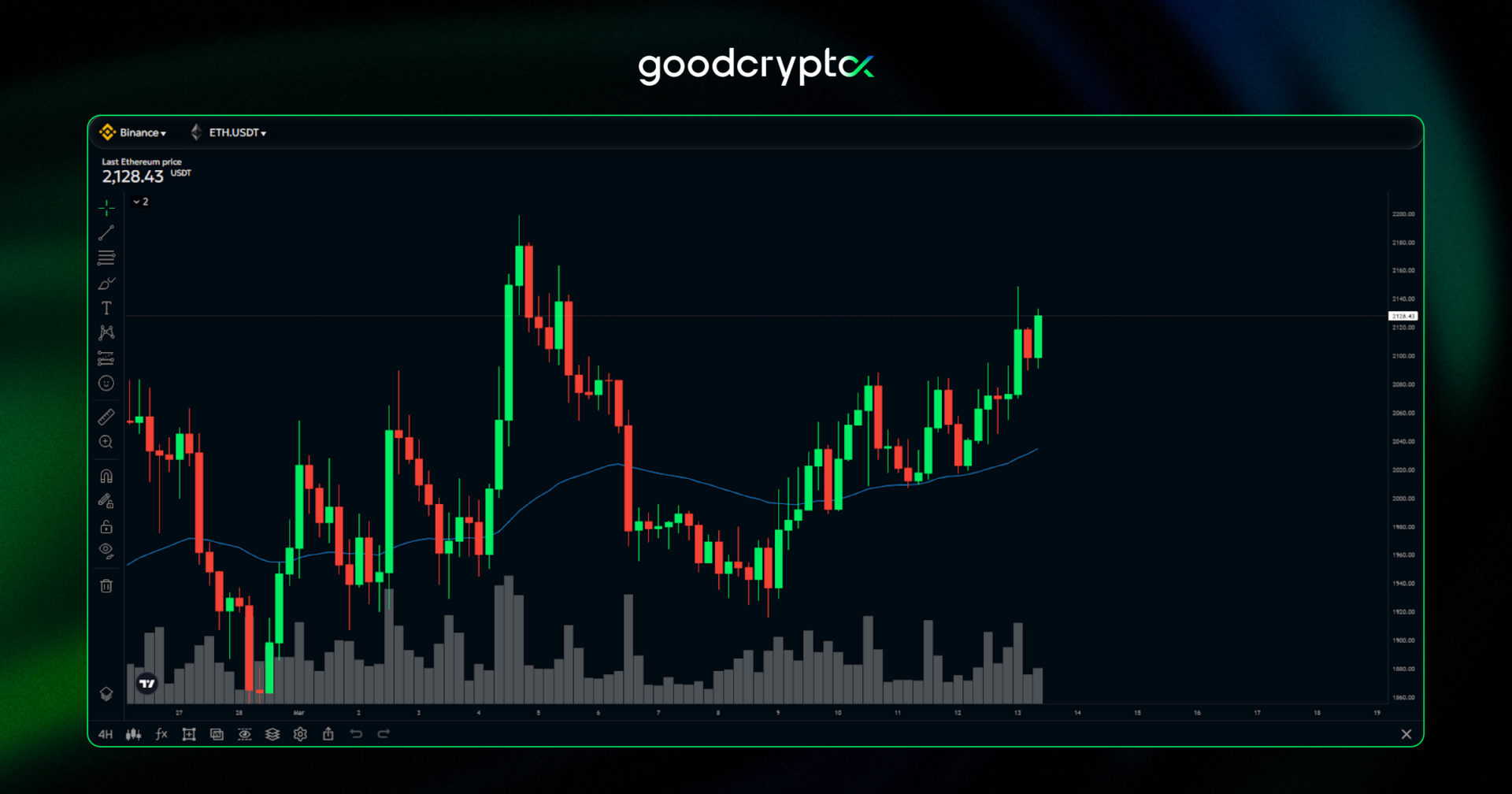
ETH itself has shown some life lately, climbing above $2,100 according to goodcryptoX data, a move that may be giving the firm’s thesis some early validation.
Chairman Tom Lee said the firm nudged up its buying pace from the recent weekly average of 45,000–50,000 ETH, citing signals that a bottom may be forming. “We continue to believe that crypto prices are in the late/final stages of the mini-crypto winter,” he said. “Nobody rings the bell at the bottom – therefore BitMine’s strategy is to slightly increase its pace of ETH accumulation.”
On the income side, the firm says it’s earning $174M annually from staking over 3M of its ETH holdings, a figure that could reach $259M once the full position is put to work.
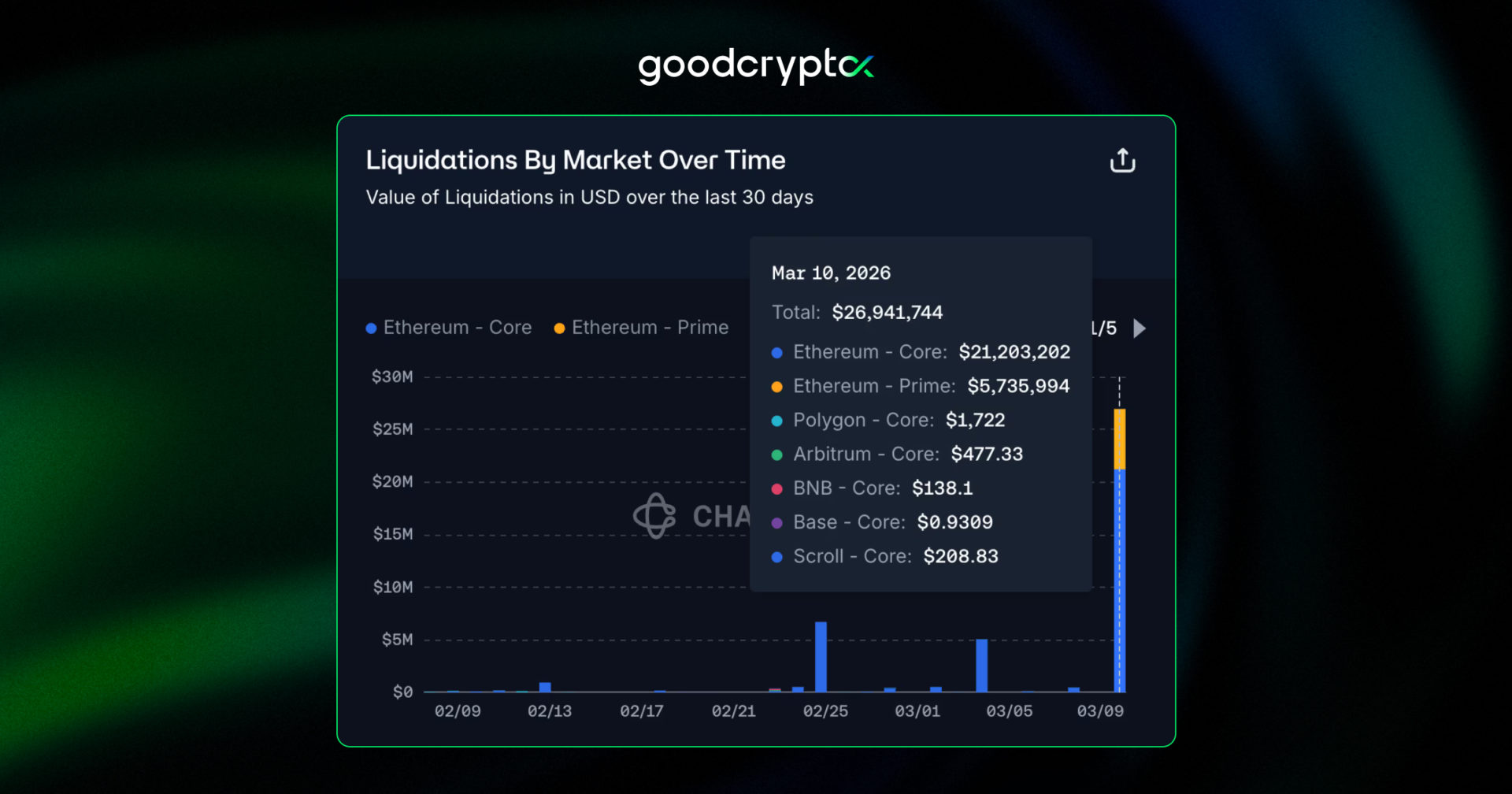
Aave saw $27M in liquidations after a price glitch hit the DeFi lending platform
Aave saw roughly $27M in liquidations over 24 hours, and the culprit appears to have been a pricing glitch, not a market crash.
The incident centered on wstETH, a Lido token representing staked ether. Because it accrues staking rewards over time, wstETH is always worth a bit more than regular ETH, currently around 1.23 ETH. But at the time of the liquidations, Aave’s risk oracle was pricing it at roughly 1.19 ETH, according to a post from LTV Protocol on X. That ~2.85% gap was enough to push some borrowing positions below their safety thresholds, triggering automatic liquidations.
The issue wasn’t the oracle itself reporting bad data. Risk management firm Chaos Labs traced it to a configuration problem in Aave’s CAPO oracle, a system designed to cap how fast yield-bearing tokens can appreciate. Stale parameters in a smart contract, including an outdated reference exchange rate and timestamp, caused the system to calculate a maximum allowed value that was lower than wstETH’s actual market price.
Aave founder Stani Kulechov said there was “no impact to the Aave Protocol,” and Chaos Labs confirmed the protocol took on no bad debt. Liquidators, bots and traders that close underwater positions in exchange for discounted collateral, walked away with around 499 ETH in bonuses from the temporary mispricing.
It’s a rare but not unprecedented scenario. Earlier this year, DeFi lender Moonwell briefly valued Coinbase Wrapped ETH at $1 instead of ~$2,200 due to a misconfigured oracle, leaving the protocol with nearly $1.8M in bad debt. Aave avoided a similar outcome.
Chaos Labs CEO Omer Goldberg said every affected user will be fully reimbursed.
Elon Musk has set April as the launch date for X Money
Elon Musk confirmed late Tuesday that X Money goes live next month. The feature turns X into a fintech app: peer-to-peer transfers, bank deposits, a debit card, cashback rewards. X Payments is already licensed in over 40 U.S. states, with Visa on board for account funding.
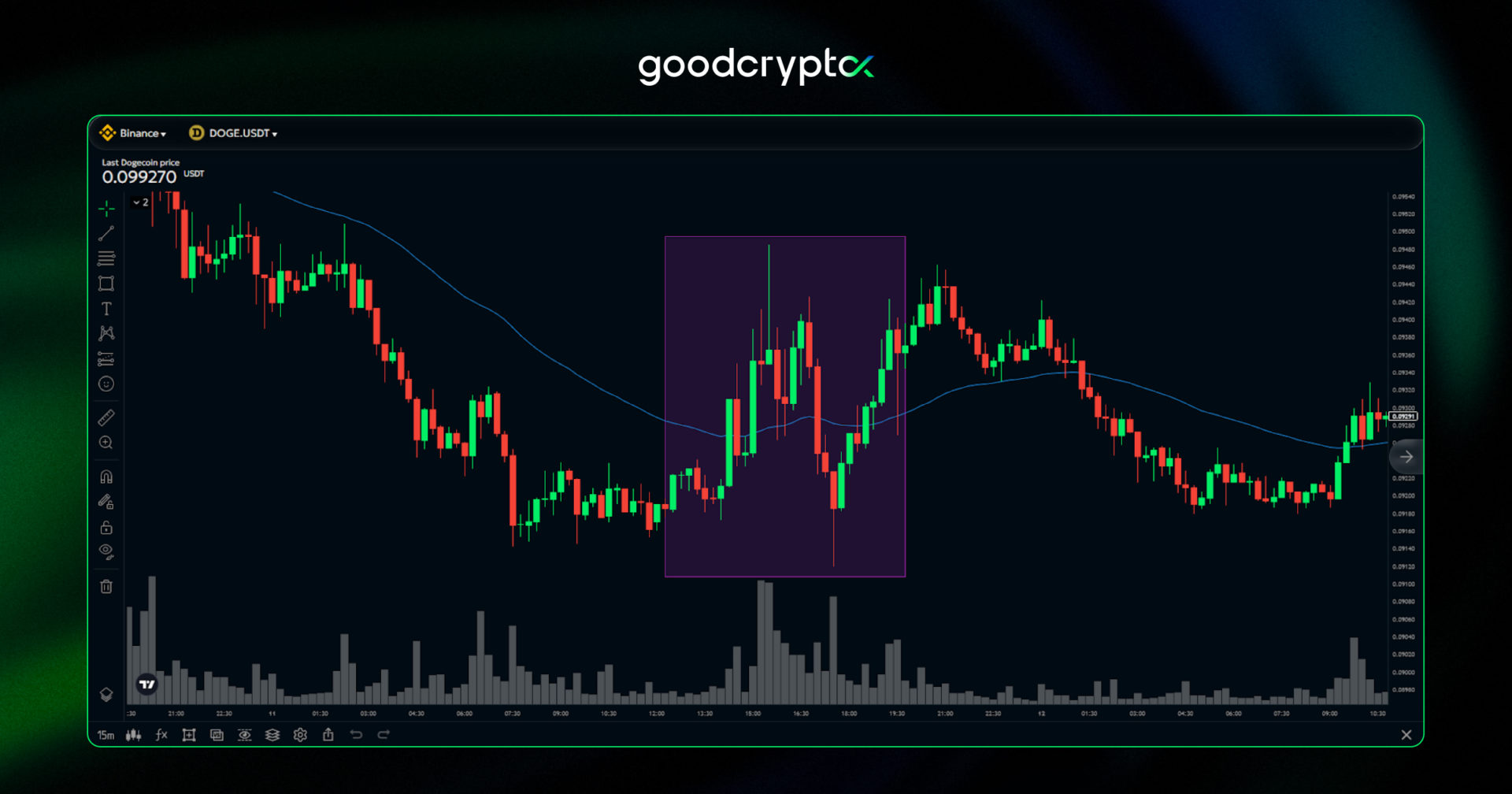
Dogecoin ticked up briefly after the announcement, despite no mention of crypto anywhere in it. It’s since dropped 2.5% alongside the broader market, but the knee-jerk reaction tracks a pattern that’s repeated itself since 2021: Musk mentions X payments, DOGE pumps on speculation he’ll plug it in.
He’s called it his favorite cryptocurrency, and Tesla briefly accepted DOGE for merch in 2022. But X Money as described is a straight fiat product, closer to Venmo bolted onto a social network than anything resembling a crypto wallet. X’s head of product Nikita Bier said in February that crypto tools would come to X via Smart Cashtags, but only as data and redirect links to exchanges. Not trading, not brokerage. Musk reposted a third-party forecast that included “crypto integration” among future features, but nothing’s been confirmed.
The more interesting angle isn’t DOGE. It’s a 6% yield.
Six percent inside a social media app used by hundreds of millions of people beats almost every U.S. savings account and goes toe-to-toe with money market funds. How that yield is generated, whether it’s subsidized, backed by lending deposits, or something else, matters a lot for how regulators will look at it.
X Money isn’t a stablecoin product. But it’s going after the exact same demand through a different regulatory lane. If it launches at scale with 6% APY before the CLARITY Act passes, the comparison will be hard to ignore, a fiat fintech product inside a social app offering yields that crypto stablecoin issuers are being legislated away from.
trailing Take Profit orders usecases
Trailing Take Profit is a dynamic order type that automatically adjusts as the price moves in your favor. Unlike fixed orders, it locks in gains progressively and cuts losses without requiring constant manual intervention.
Trailing TP & SL usecases:
Maximize your gains: When a strong trend is underway, a trailing stop follows the price at a set distance, letting you earn additional gains if the price keeps moving in your favor, while ensuring you exit before a significant reversal erases your gains.
Combining both orders for full automation: Boost your bots’ profitability by setting a trailing take profit. Wanna see how it works in practice? Here’s the latest, real trading case from our CEO, Maks.
Want to master this tool and use it effectively in your trading? Check out the full guide to Trailing Stop Loss and Trailing Take Profit orders by goodcryptoX! 📈
We hope this digest was valuable and informative for you! If you want to be the first to receive new crypto insights and stay up-to-date with the market, follow us on Twitter or Telegram. Become a better trader with the goodcryptoX app!
Read this step-by-step guide by goodcryptoX on how to start trading on the Hyperliquid and launch your first Hyperliquid trading bot in just a few minutes.