

DCA and Grid bots rank among the most popular CEX trading strategies today. They’re highly versatile, with the right setup and active management, you can deploy them across virtually any market condition without touching a single line of code.
But it wasn’t always this way. Nearly two cycles ago, when the market was raw and nascent, algo trading was fully gated. You needed solid knowledge in both coding and trading to run a bot, making it almost impossible for most retail traders. However, as the market matured and traders needed more advanced functionality, the demand kept growing.
That’s where trading terminals like goodcryptoX came in. They introduced no-code algo trading presets that anyone could customize to their own strategy, risk tolerance, and market conditions with no dev skills required. DCA and Grid trading bots have been born and have become one of the most popular and battle-tested of the bunch.
In this article, we’ll dive into what DCA and Grid bots are, when to use each, and what the difference is between both of them.
First, what is a DCA bot?
DCA bot explained
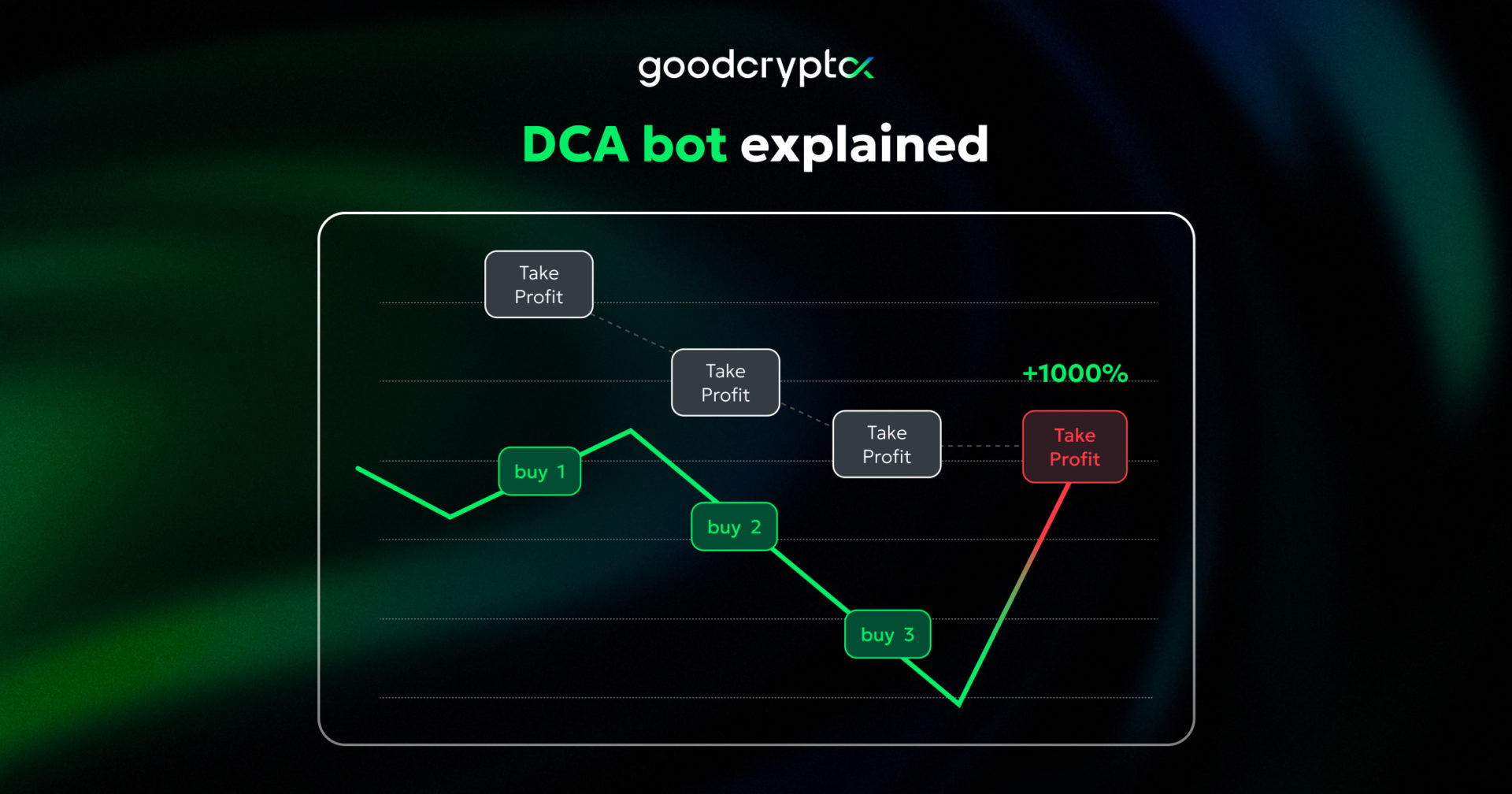
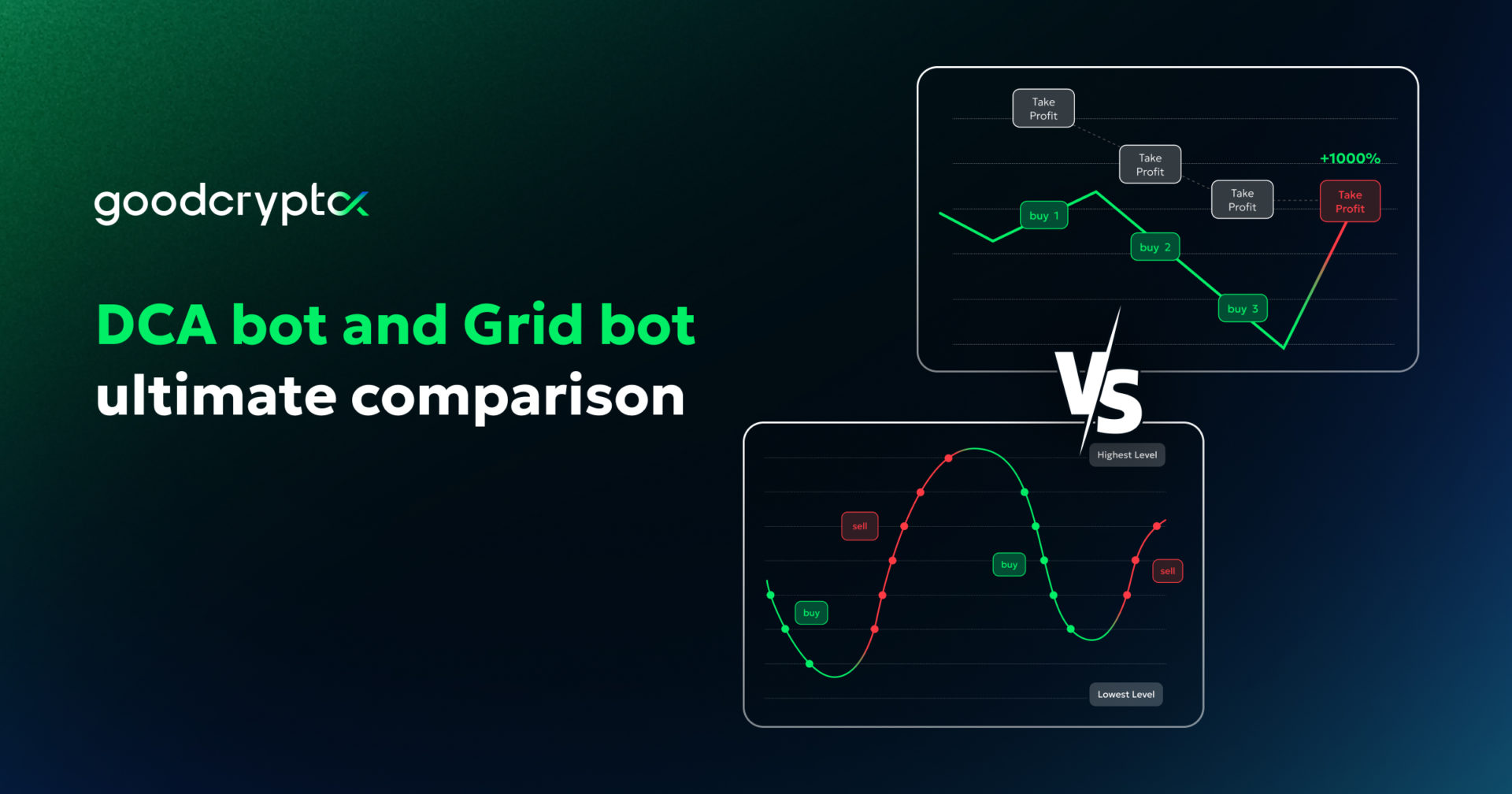
It’s a classic approach for stock market investors to accumulate long-term, fundamental positions, and that same logic carries over to the DCA trading bots. Instead of making a single directional bet, the bot automatically averages down your entry and adjusts your take profit as the price moves against you, increasing the odds of closing green even in choppy or downtrending conditions. Rather than predicting an exact move, you’re essentially betting that the price won’t move too drastically without it ever retracing enough to hit your take profit.
And since the whole strategy runs on autopilot, it can be used across any timeframe and adapted for more aggressive setups – things that would be nearly impossible to execute manually.
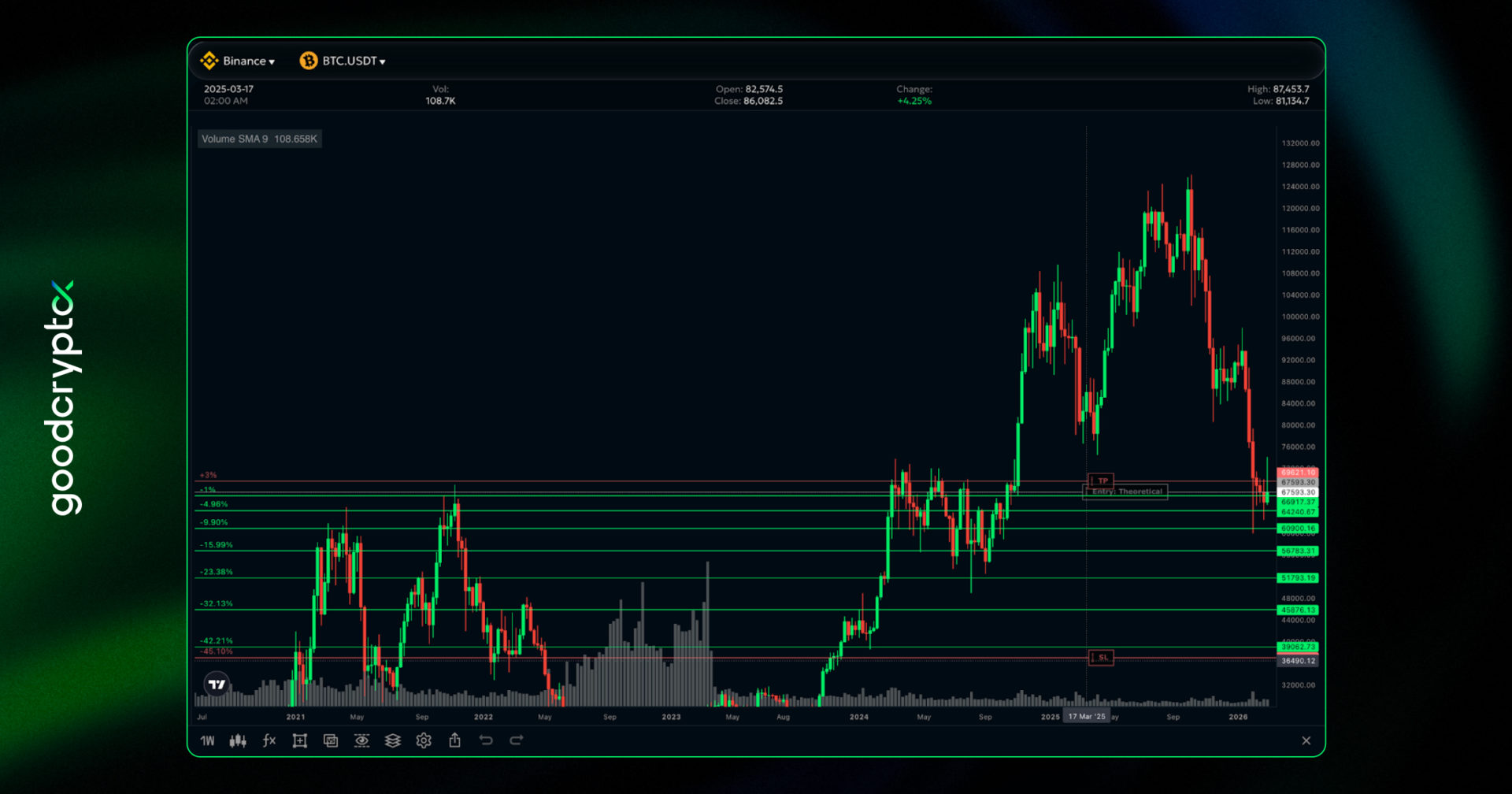
DCA crypto bot strategy 1: buy the dip
The first and most popular use case of a bot for DCA crypto trading is position accumulation, or in other words, a “buy the dip” strategy. You simply use the bot to streamline the process of building long-term holdings, replicating the classic dollar-cost averaging approach on autopilot. It’s a philosophy well-established in traditional markets, rooted in Warren Buffett’s famous “you can’t consistently beat the market” stance, so instead, you work with it.
DCA bot strategy 2: safety net
The crypto DCA bot is a powerful tool for protecting your trades from market volatility. It’s ideal when you set a trade expecting the price to move in a specific direction, but want protection in case of significant price fluctuations.
Say you expect Bitcoin to run from $68K to $73K, but you’re not convinced $68K is the exact bottom. Instead of going all-in at one level, you enter the trade with DCA bot crypto, which also sets multiple buy orders below to average down automatically if the price drops.
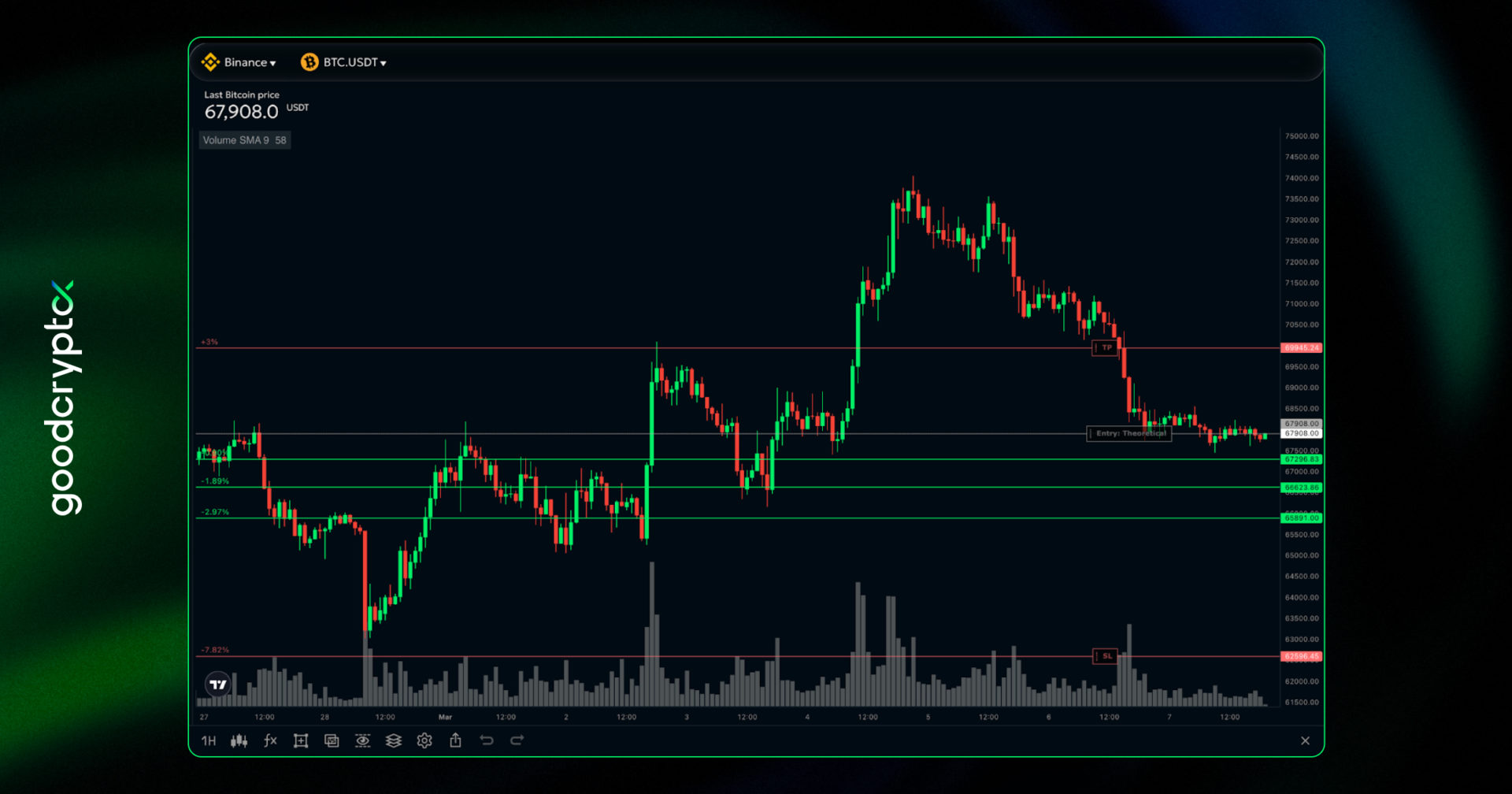
- If price dips first, your average entry gets weighted lower, meaning BTC doesn’t need to recover all the way to $73K for you to turn profitable, you break even sooner, and capture more upside if it does reach the target.
- If price moves straight to your target, you close the trade in profit, just like a normal entry, but with built-in downside protection along the way.
Either way, the crypto bots DCA improve your outcome compared to a simple “enter and wait” approach.
DCA trading bot strategy 3: volatility scalper
The last and most powerful strategy a DCA bot can implement is the volatility scalper, a strategy that cannot be executed manually.
The core concept is to run the DCA crypto trading bot with the “repeat on Take Profit” option enabled, either in TradingView Webhook or Auto mode, to make it enter the market automatically based on alerts from your TradingView account or goodcryptoX’s built-in TA-based signals, turning it into a fully automated profit-making machine.
The most important thing is giving the DCA bot enough “space to do its job,” without making that space too wide. In other words, you need to identify the correct price range for the potential price drop, one where you’re confident the price will rebound. Equally important is picking the optimal Take Profit percentage. If set too tight, you risk not generating enough profit to cover losses from SL-hit DCA bots, but if set too wide, you risk the price never reaching your take profit level during rebounds, which will eventually lead to a loss.
We also highly recommend using trailing entry and Take Profit orders – a feature available exclusively on goodcryptoX, to prevent the bot from entering a position when the market moves against you.
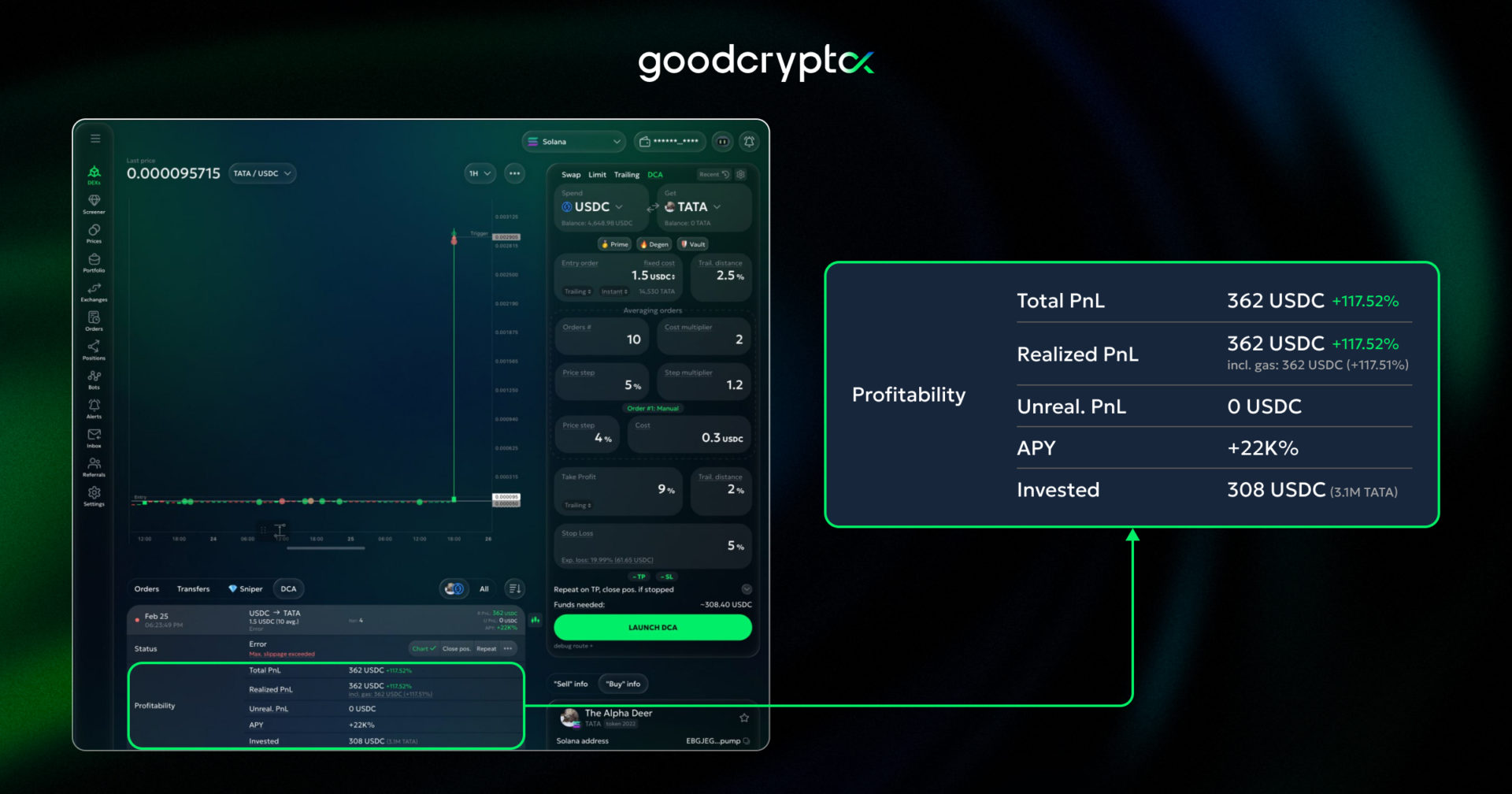
To see why this matters, let’s look at a real trading case from our founder and CEO, Maks Hramadtsou. He regularly shares the best DCA bot settings in his Telegram channel, and this latest case is a perfect example of how trailing stops and DCA crypto bots work together.
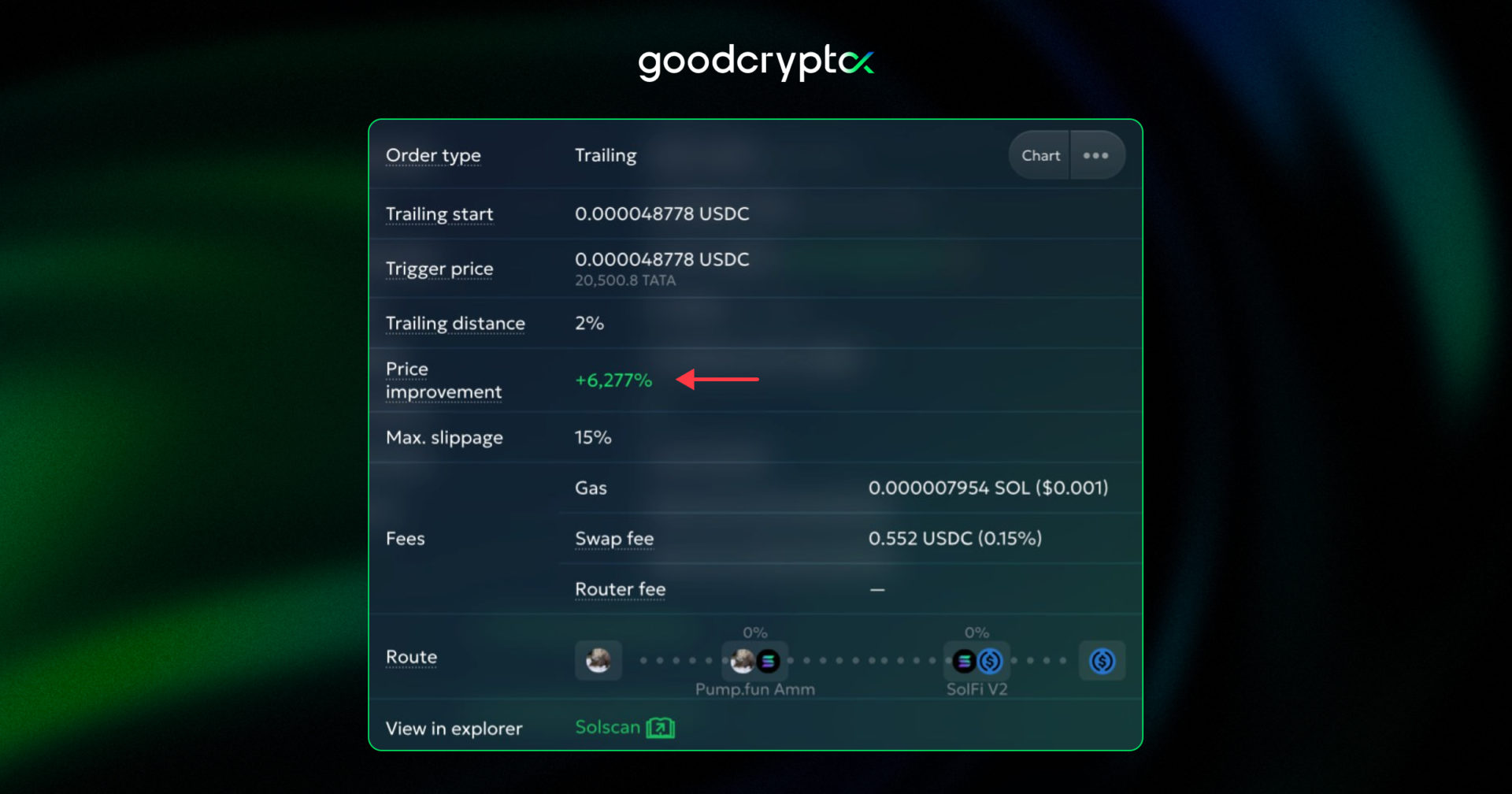
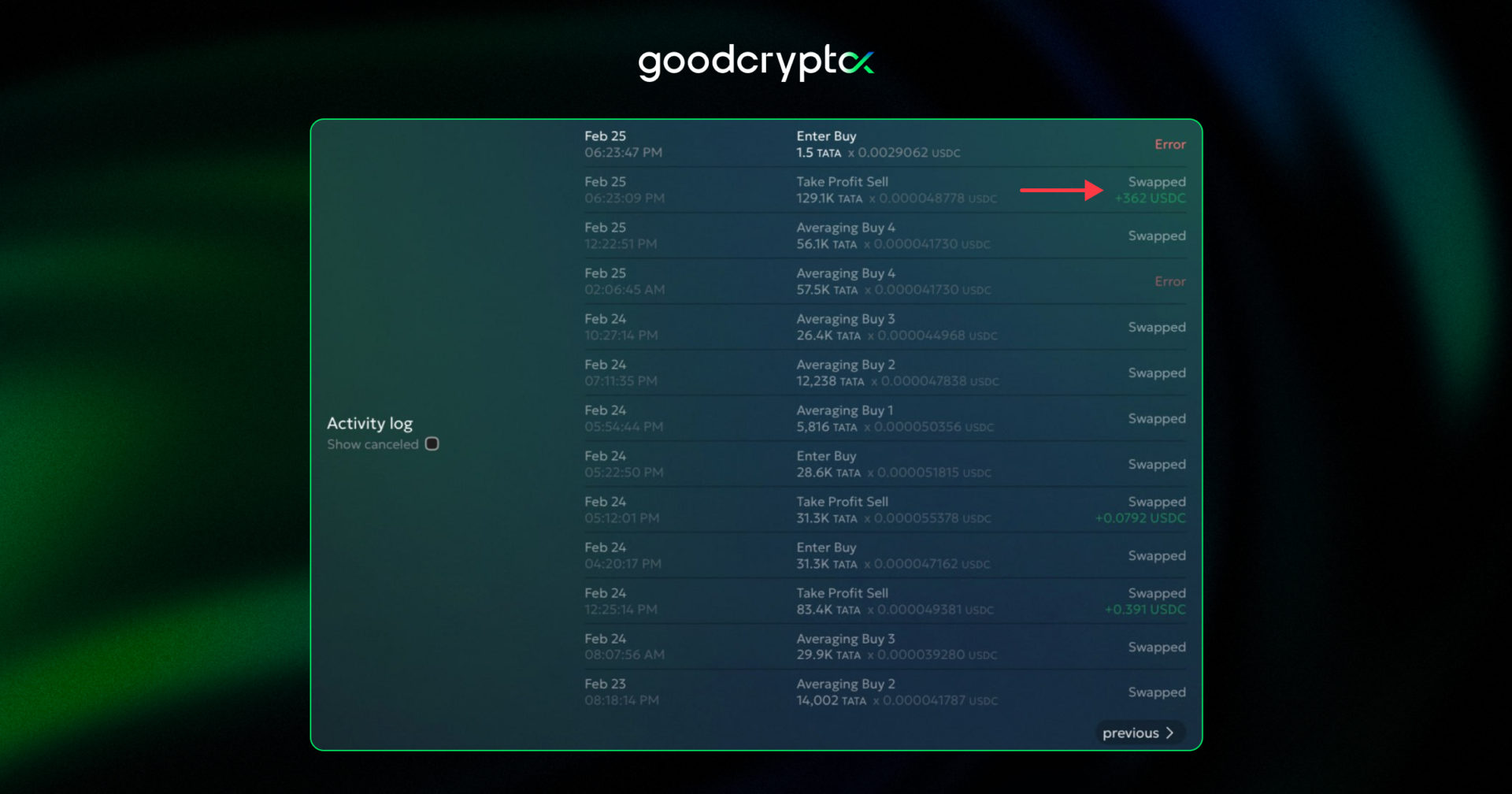
As you can see in the screenshots below, this is a Solana DCA bot. It achieved over 22,000% APR on $TATA, all thanks to a single trailing take profit that resulted in over 6,200% price improvement.
Grid bot explained
The DCA bot is powerful, but it’s not the only algo trading tool worth having in your arsenal. The Grid bot is another widely popular strategy with a loyal following among traders. In this section, we’ll break down what is a Grid bot, which mode to use, and when to deploy it.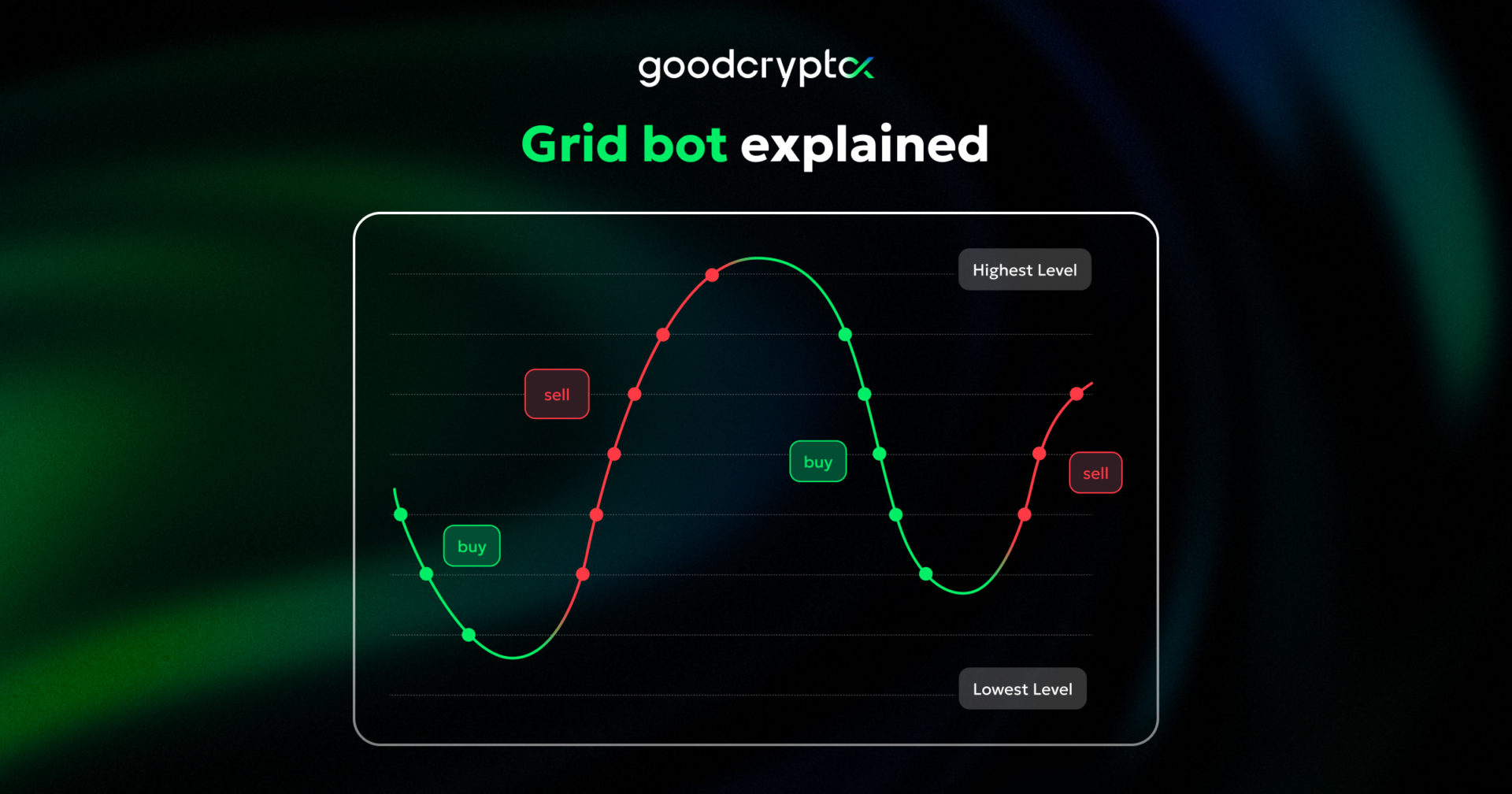
Crypto Grid trading bot solves exactly this. It’s an algo trading tool designed to extract value from sideways markets by working with the choppy markets rather than waiting for it to end. It places and maintains a grid of buy orders below and sell orders above the current market price, so every time one gets triggered, it automatically places an opposite order on the next grid level. The result? Continuous profit from price bouncing between key support and resistance levels, even when the market looks dead on the surface.
No trend? No problem. Crypto Grid bots print in conditions where most traders are sitting on their hands.
There are three types: Neutral for sideways markets, Short for bearish, and Long for bullish. Let’s break down all of them.
neutral mode for the Grid trading bot
In Neutral mode, the bot sets and executes a grid of buy and sell orders, starting with zero open positions, and begins filling orders as the price hits specific levels. It is designed specifically for ranging markets, the price bounces within a pre-determined range, generating profits while building up for its next major move.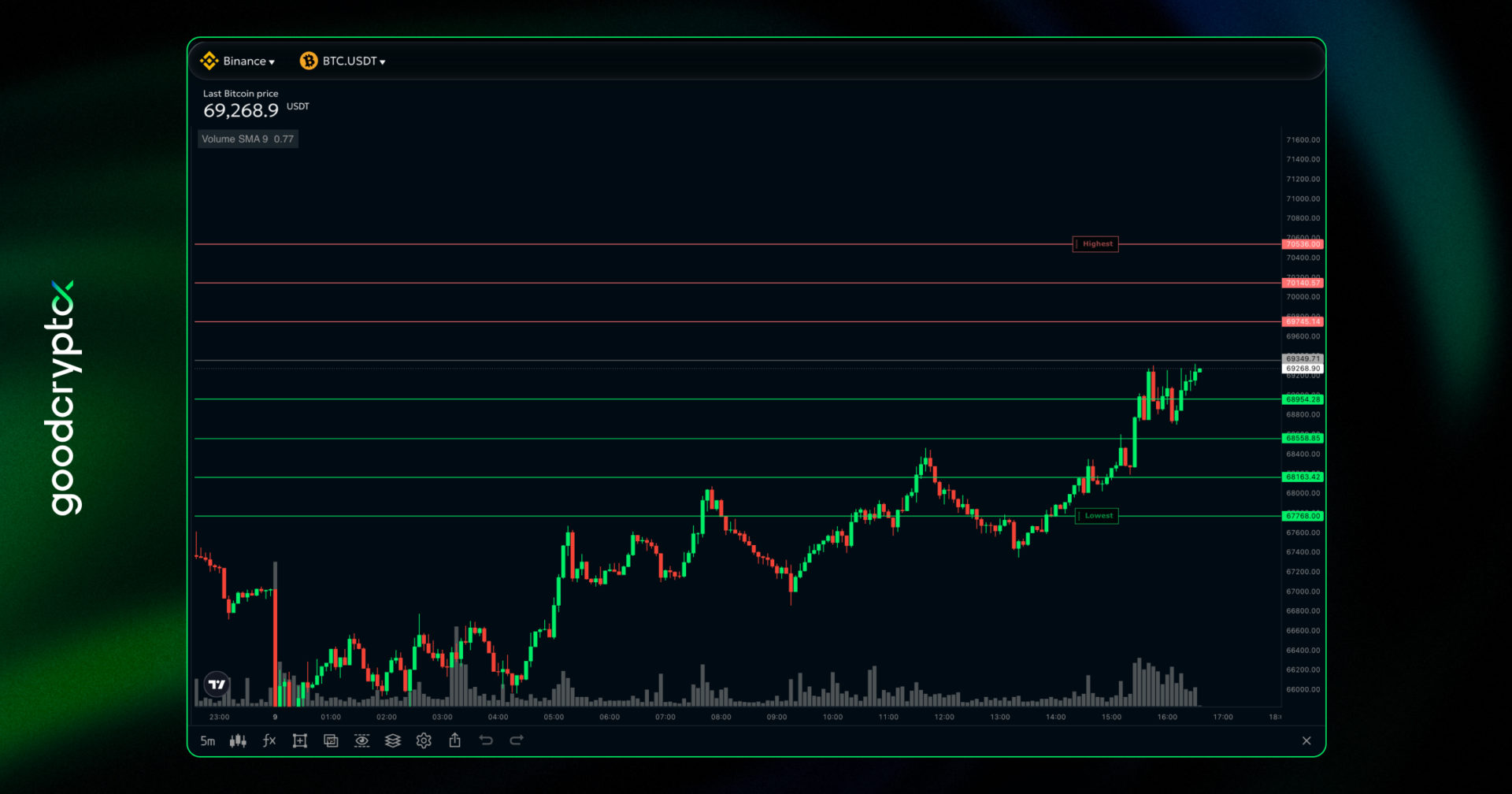
We also highly recommend setting a Stop Loss trigger to manage risk in case the price leaves the range, especially in futures trading, where an unchecked breakout can lead to liquidation. Note that exiting the range can result in losses in both directions, up and down.
A perfect example of the Neutral Grid bot trading in action is the NVDA/USDC bot on Hyperliquid DEX, featured by our founder, Maks, in his Telegram channel. 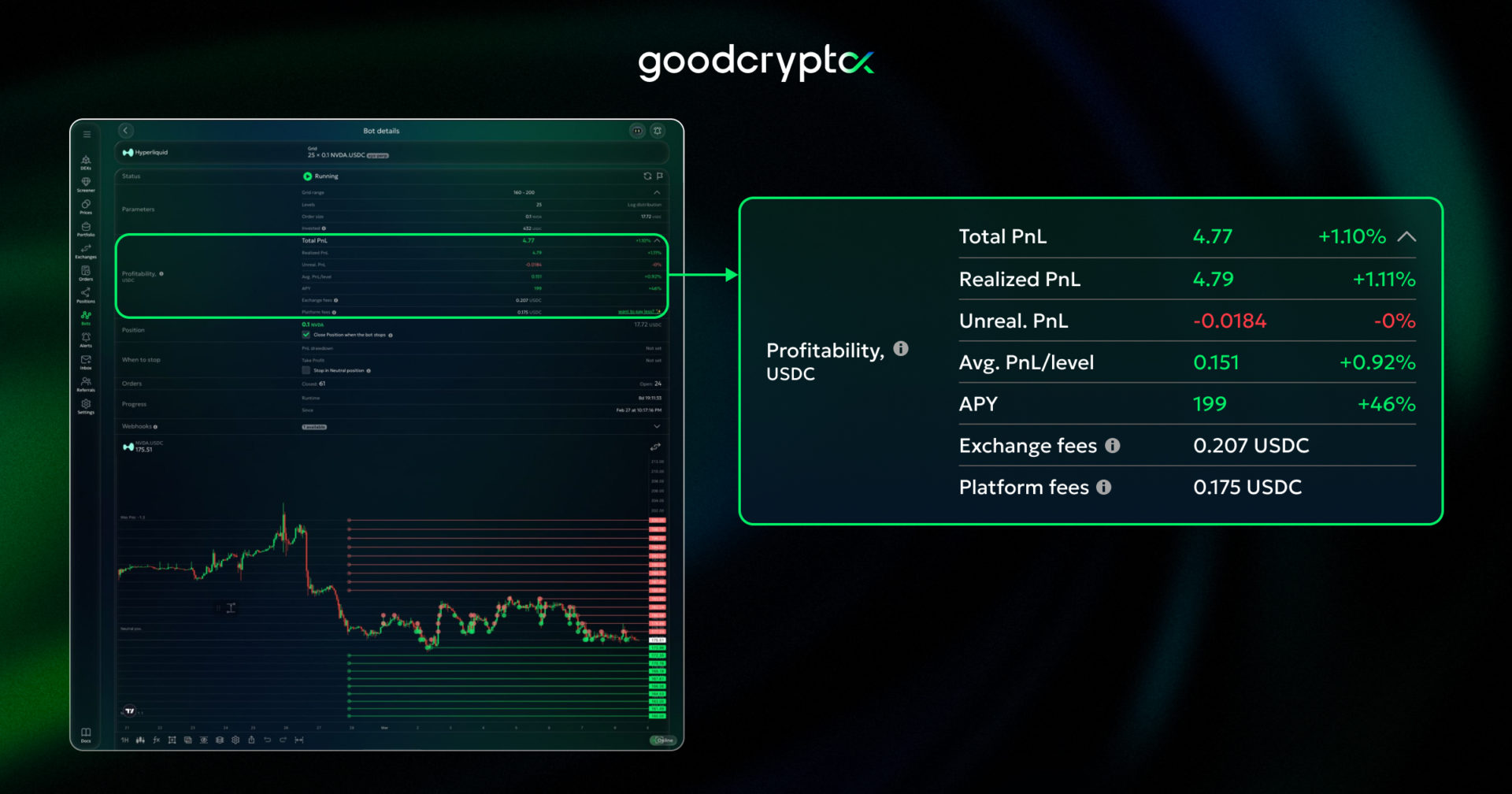
long & short Grid bots
Long and Short Grid bot crypto trading modes are designed for directional markets, bullish and bearish respectively. Unlike the DCA bot, they require you to forecast the market direction to get results. In return, they let you profit not just from the overall price move, but from the fluctuations along the way.
In Long mode, the bot opens an initial Long position and sets multiple sell orders above the market price as multiple take profits, while buy orders below act as averaging orders for your entry. Once the price reaches the last grid order in the range, the bot’s net position returns to zero.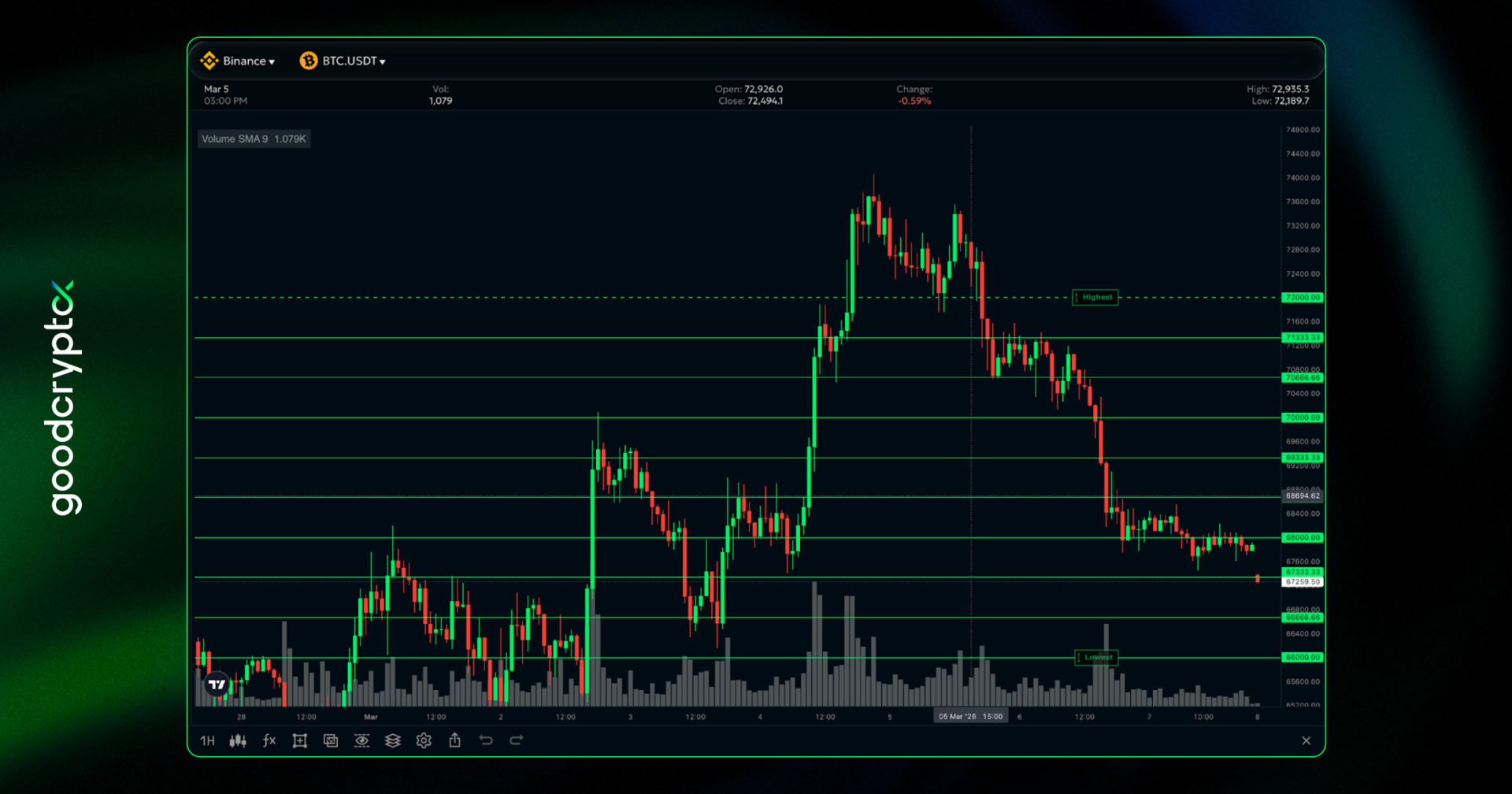
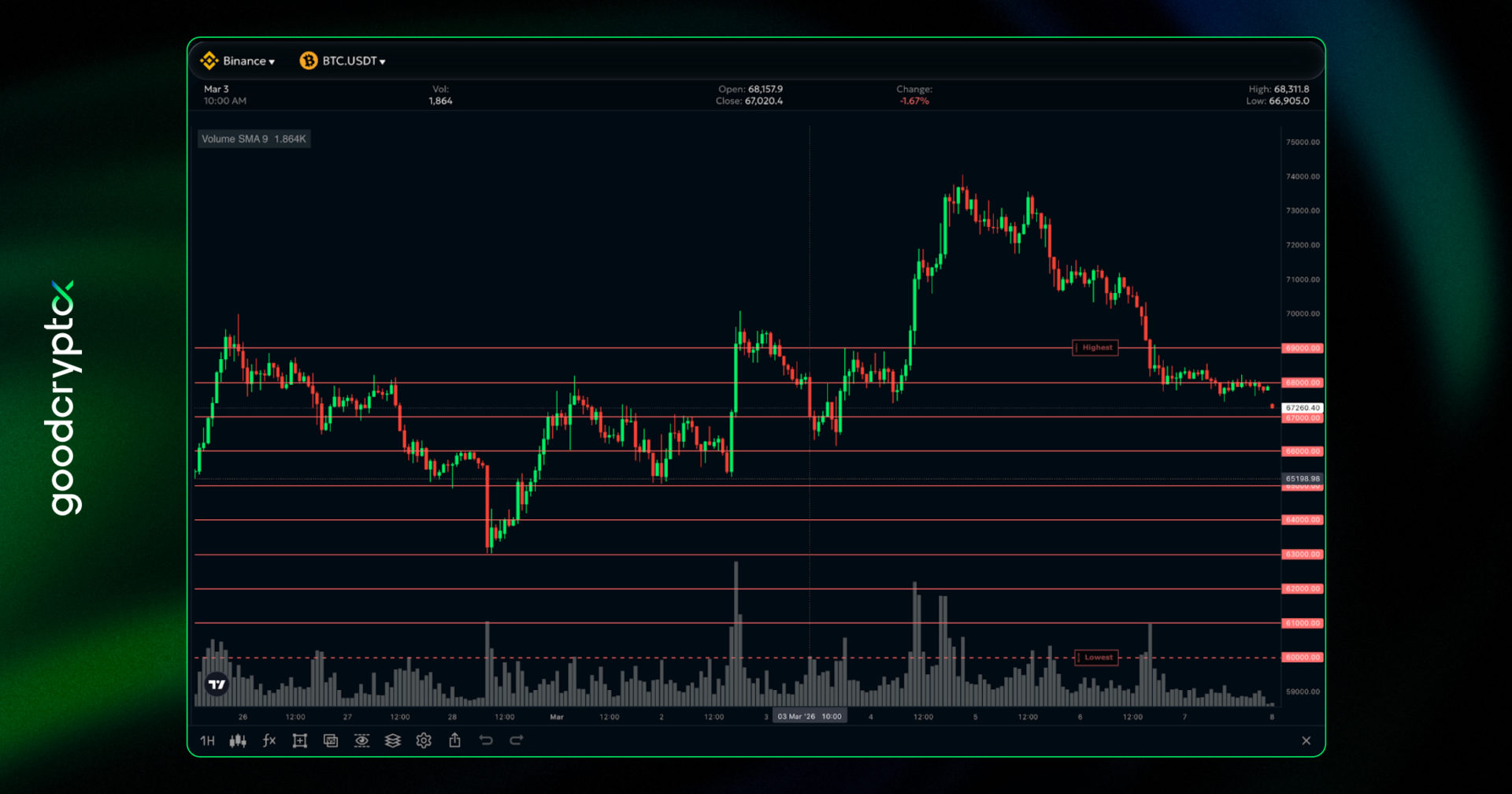
The result is profit from both the bearish market momentum and the price fluctuations between key moves.
Grid bot vs DCA bot: how to choose?
So, after all of these explanations, you might ask a fair question – how do you know whether DCA or Grid bot is the right pick for you? It depends entirely on your understanding of these strategies, your trading experience, and your risk tolerance. To help you decide, use this DCA vs Grid comparative table.
| Name of the bot | Market state | Trading Philosophy | Beginner friendliness |
|---|---|---|---|
| Neutral Grid | Ranging. ⬆️⬇️ | Earn from price fluctuations between support & resistance | Intermediate. 🟠 Requires the ability to identify key support and resistance levels |
| Short/Long Grid | Trending markets: Bullish & Bearish | Earn additional gains on top of your Long/Short from price bounces on the way to your target | Hard. 🔴 Requires understanding of market trend direction and potential price volatility |
| DCA bot | Trending, volatile markets: Bullish & Bearish | No need to guess market direction, profit by averaging into dips | Easy. 🟢 Straightforward “buy more at the dip” approach |
Need more info to master these strategies? Check out our Grid bot user guide or video overview on YouTube. For DCA bots & occasional Grid bot setups, join our dedicated Telegram channel where our CEO shares his best live setups and cases, ready for you to copy and trade alongside him. If you’re a beginner looking for a place to start, this is exactly where you want to be.
DCA and Grid bots: final thoughts
To sum up, there’s no clear winner in the “DCA vs. Grid bot” debate. Both DCA and Grid bots perform well in the right market conditions, but it all comes down to your trading philosophy, proficiency, and reading the current market sentiment.
We recommend learning both strategies and deploying whichever fits the market conditions best. goodcryptoX supports both, along with a suite of advanced features – from on-chart order visualization and draggable orders to TradingView webhooks, trailing entry, and TP & SL orders for DCA bots, and more.
So why wait? Get the goodcryptoX app on Web, Android, and iOS and unlock advanced trading automation with Grid bot or DCA bot across 5+ blockchain networks and 30+ CEXs & perp DEXs.