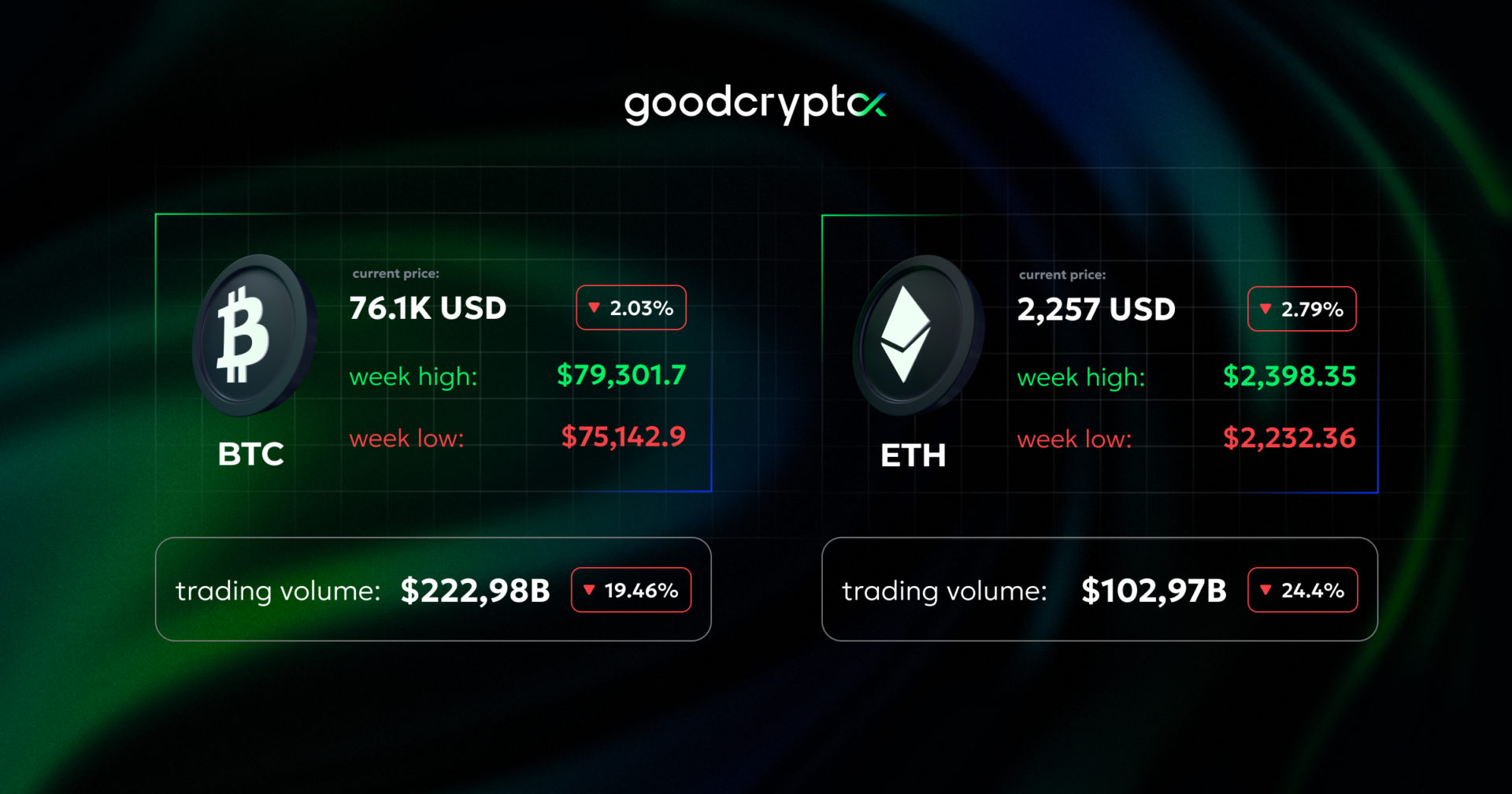
Another tense week where the macro and the micro collided: war premiums, rate holds, and Web3 companies’ moves are raising eyebrows this week. Here’s what happened:
quick weekly news
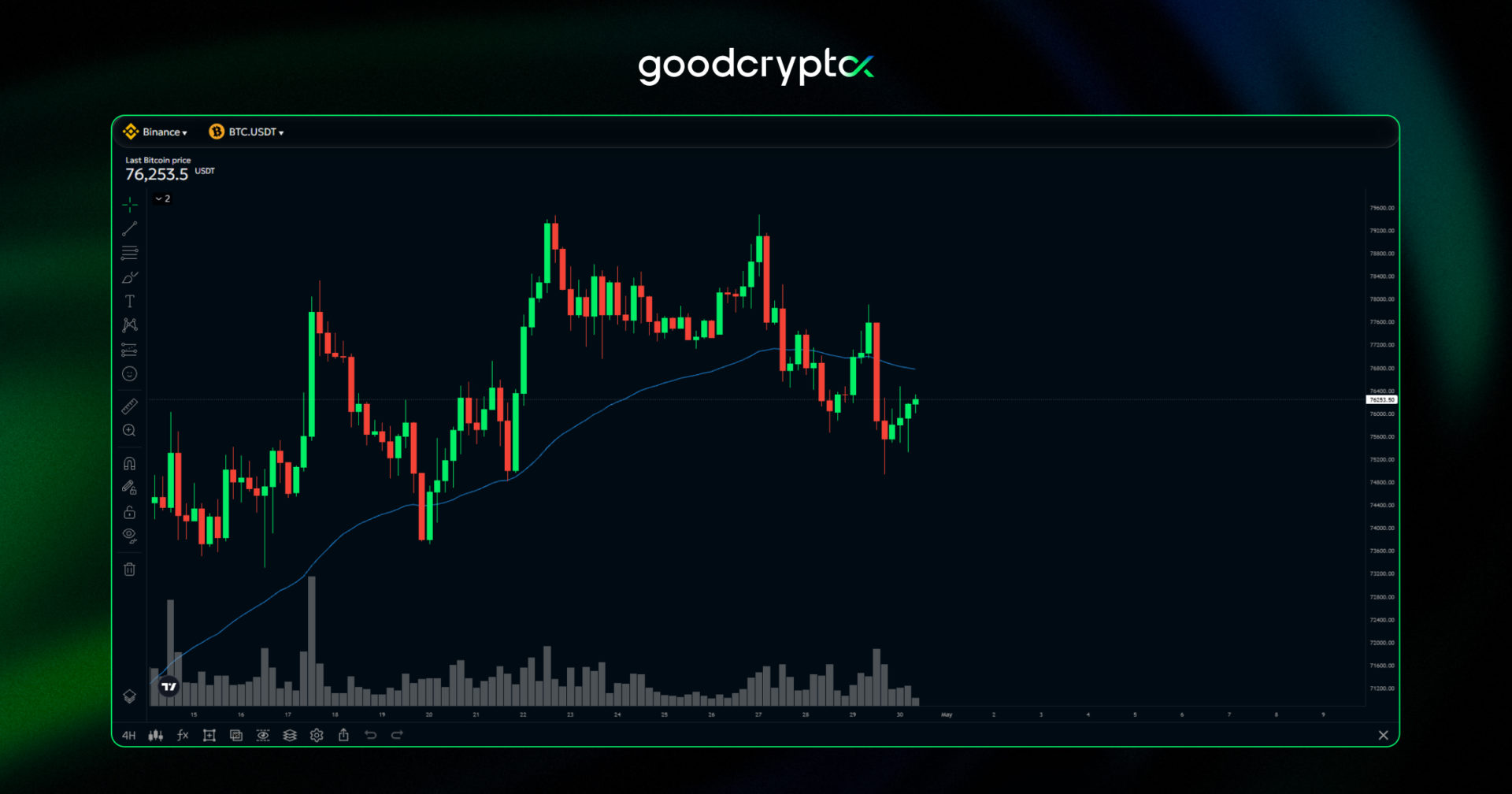
Bitcoin slides toward $75K as oil hits a four-year high
The Iran war premium is back, and crypto is feeling it.Source: goodcryptoX
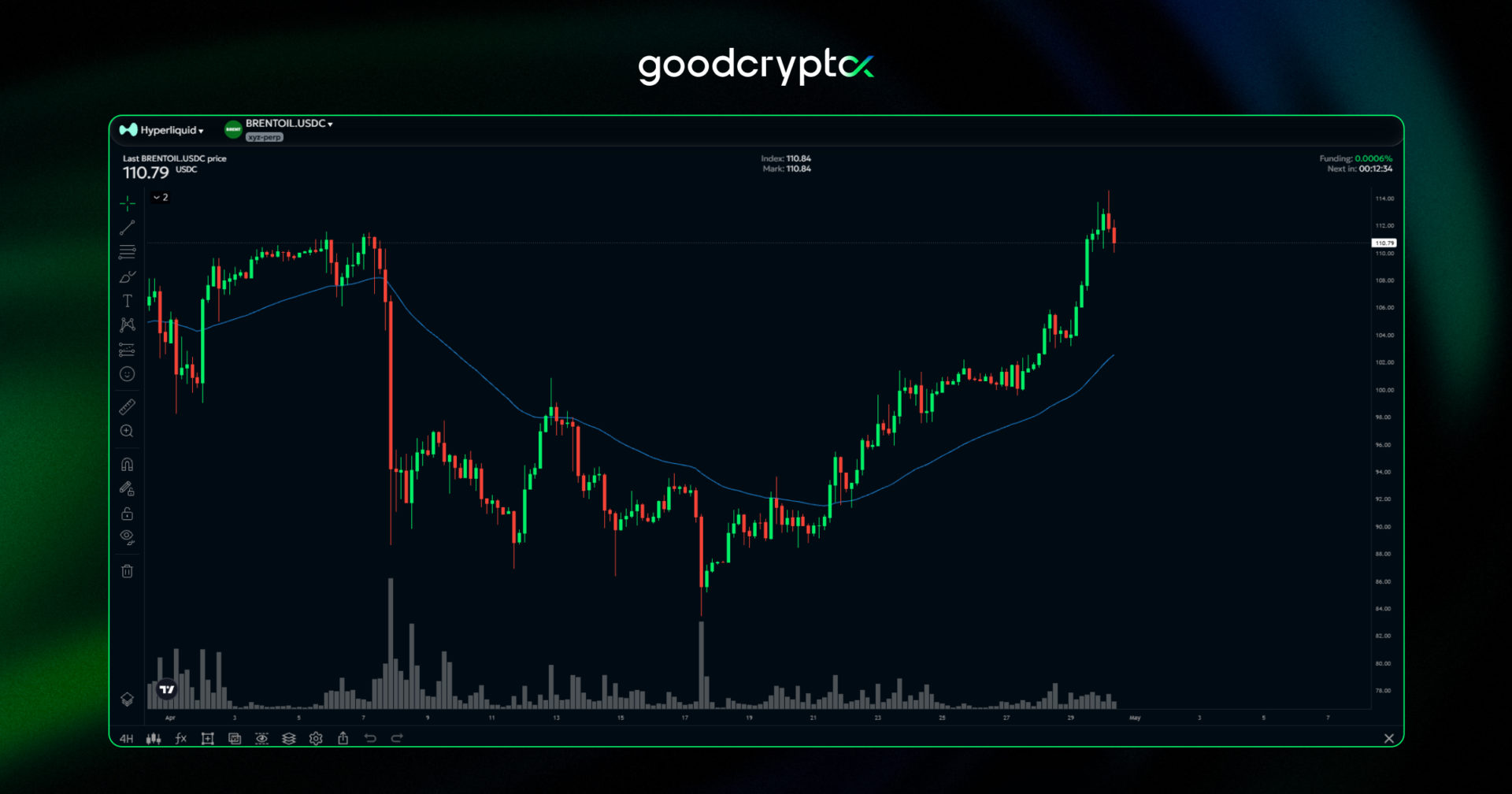
Bitcoin dropped 2.1% to $74,950 in Asian hours Thursday, down 3% on the week, after Brent crude jumped 7.1% to $126.41 a barrel – the highest intraday level in four years. The move came on reports that Trump is set to be briefed on new military options against Iran, with U.S. Central Command reportedly requesting hypersonic missiles be deployed to the Middle East. The Strait of Hormuz has been effectively shut since the war began in late February, choking global energy flows. Brent is now up over 100% year-to-date and riding a nine-day winning streak.Source: goodcryptoX
The rest of the market followed Bitcoin lower. ETH dropped 3.4% to $2,244, XRP fell 2.1% to $1.37, SOL lost 2.6% to $82.62, and BNB shed 1.9% to $615. The only green print in the top 10 outside stablecoins was DOGE, up 3.8% on the day and 10.1% on the week. Nasdaq 100 futures erased an earlier 1.1% rally despite strong Alphabet and Amazon earnings. Treasury yields pushed near their highest since July.
Bitcoin has held a tight $74,000-$78,000 band through April even as oil ran from $98 to $126 and the conflict entered its third month. But each escalation headline is producing a sharper drawdown, and the cumulative damage is starting to show. BTC is now $50,000 below its October 2025 all-time high.
Fed holds rates unchanged at Jerome Powell’s final meeting as chairman
The Fed held rates steady at 3.50%–3.75% on Wednesday, the fourth straight meeting without a move, as policymakers continue to weigh persistent inflation against slowing growth. The decision wasn’t clean as four dissents were recorded. Governor Stephen Mirran wanted a 25 basis point cut, while Beth Hammack, Neel Kashkari, and Lorie Logan preferred holding with no easing bias at all.
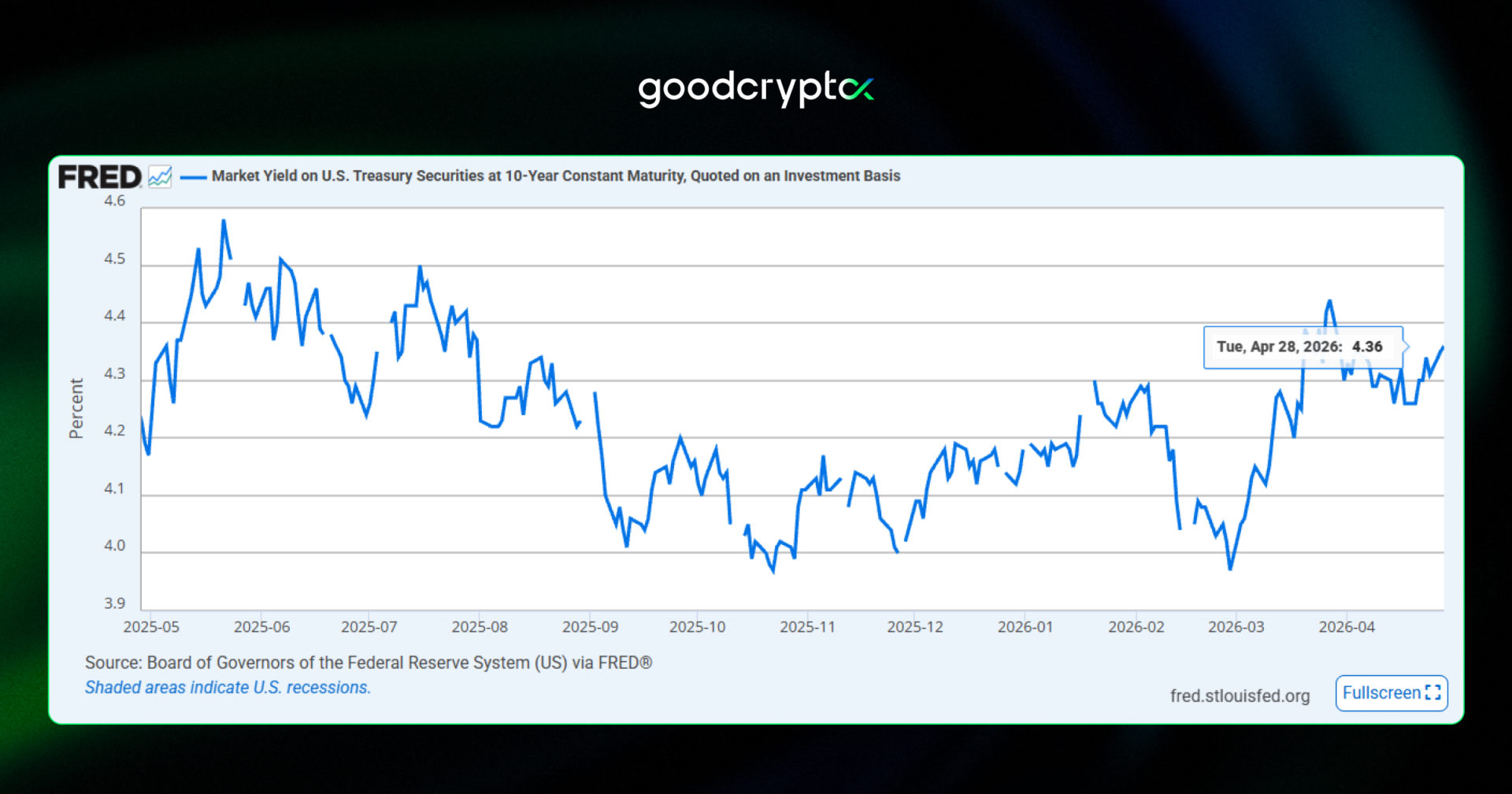
Bitcoin stayed about 1% lower over 24 hours, trading just below $75,000. The Nasdaq slipped 0.35%. Treasury yields moved higher: the two-year up 9 basis points to 3.93%, the ten-year up 5 basis points to 4.40%.Source: FRED
Wednesday’s meeting is likely Powell’s last as chairman. His term ends May 15, and his replacement Kevin Warsh cleared a Senate Banking Committee vote earlier the same day. The three hawkish dissents suggest Warsh won’t have an easy time pushing through cuts even if he wants to, the committee is split, and the inflation picture isn’t cooperating. Oil prices have rebounded close to post-war highs after briefly pulling back on peace hopes, with WTI trading just shy of $105. That keeps the Fed stuck between its two mandates, with no clean answer on which one to prioritize.
Tether freezes $344M in USDT on Tron tied to suspected illicit activity
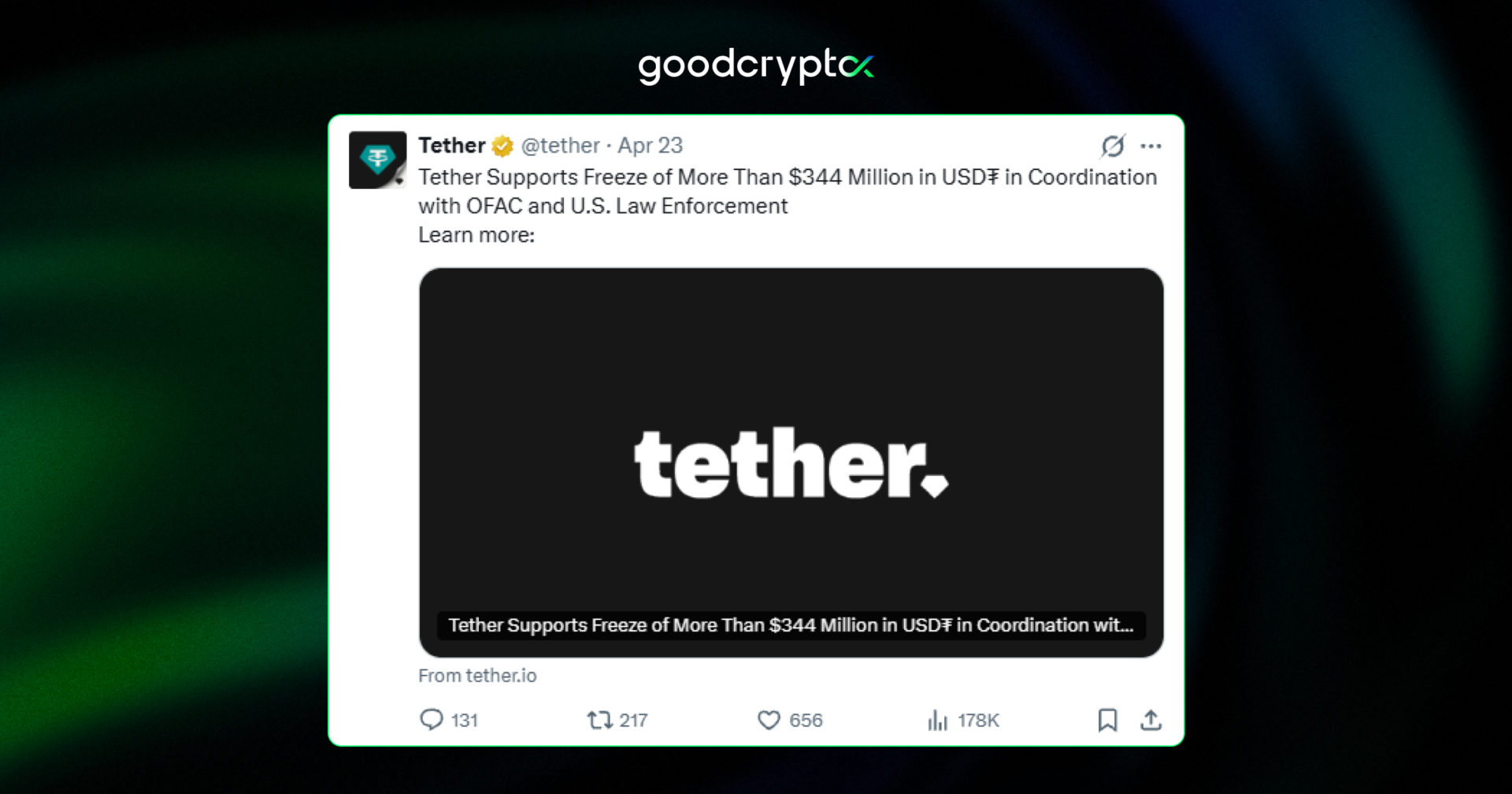
Tether has frozen $344M in USDT across two Tron wallets following requests from U.S. authorities, the company said Thursday. The addresses were flagged for alleged links to illicit activity, and the freeze prevented further movement of the funds. Tether didn’t specify the nature of the activity or who controlled the wallets. Source: X
The move lands as the debate around stablecoin issuers’ responsibility to act on illicit flows is heating up again. The Financial Action Task Force recently warned that stablecoins are increasingly being used for sanctions evasion and money laundering. The issue came into sharp focus earlier this month after the $285M Drift Protocol exploit, when critics argued Circle was too slow to freeze stolen USDC. Circle’s CEO responded that the company only acts when legally required or when contacted by law enforcement.
Tether took a different line, saying it works proactively with authorities and has supported over 2,300 cases across 340 agencies in 65 countries.
The freeze is also part of a broader push to clean up Tether’s image ahead of U.S. expansion. The company launched USAT, a federally compliant stablecoin issued with Anchorage Digital, and is preparing for a full reserve audit for the first time – a long-promised step as stablecoin regulation closes in.
Pump.fun is ditching its full revenue burn model and shifting to a new strategy
For nine months, Pump.fun had a simple rule: every dollar of revenue went toward buying and burning PUMP tokens. The logic was straightforward – constant supply reduction tied to platform success should push the price up. It didn’t quite work out that way.
PUMP spent most of 2026 trading sideways below its launch valuation despite the full buyback commitment and over $1B in lifetime revenue. So the model is changing. Going forward, Pump.fun will split net revenue 50/50 – half locked into an irreversible smart contract that automatically buys and burns PUMP for the next year, and half kept by the company for product investment, hiring, marketing, and potential acquisitions.
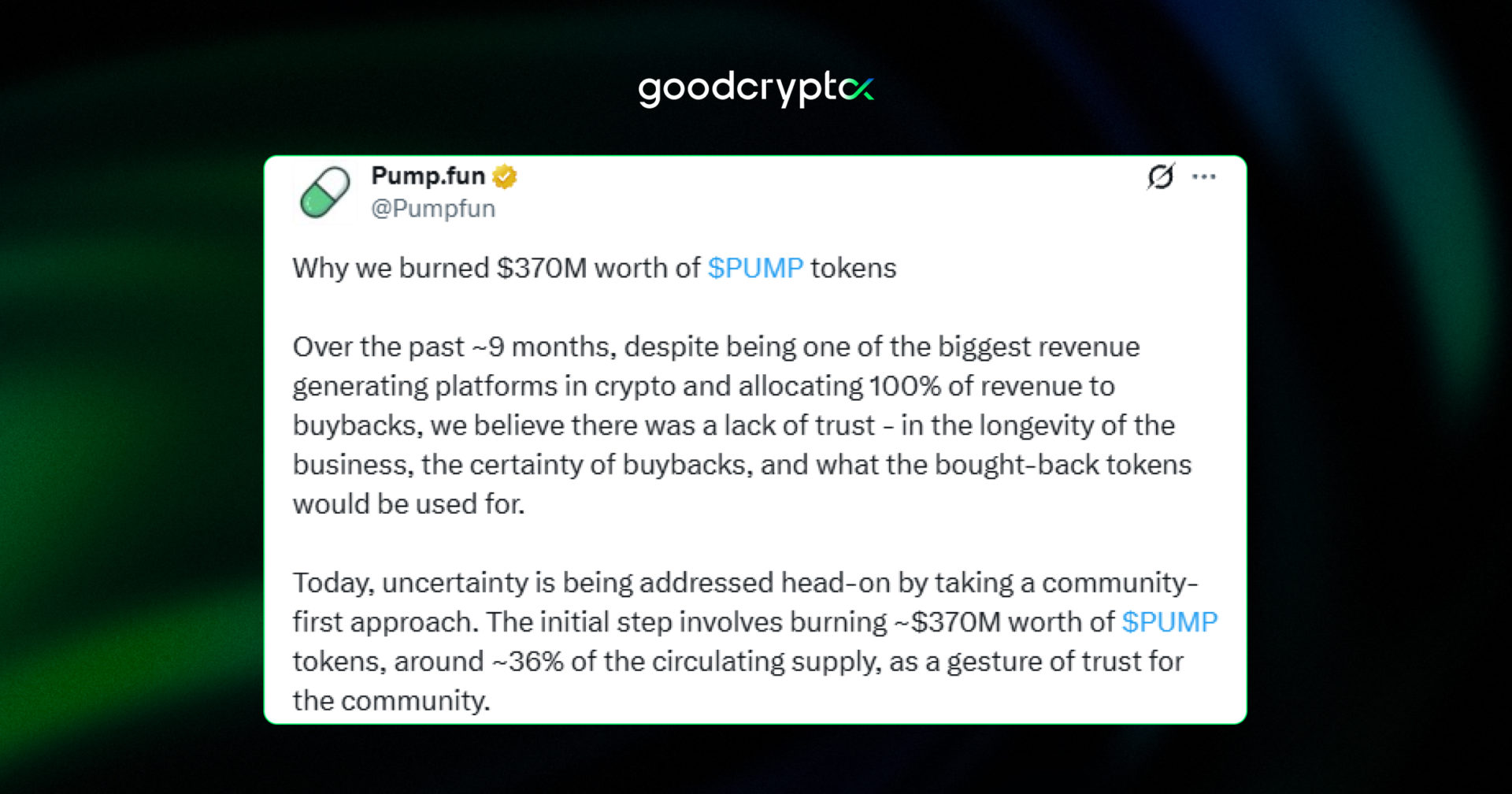
Before switching, the team burned all PUMP tokens it had bought back over the past nine months in two transactions, roughly 36% of the token’s circulating supply, one of the largest single-event supply reductions in crypto history by share of circulating tokens. Co-founder Alon Cohen said the business needs the retained half to stay operational “for decades to come.”
The team was candid about why the old model failed: “Despite being one of the biggest revenue-generating platforms in crypto and allocating 100% of revenue to buybacks, we believe there was a lack of trust in the longevity of the business, the certainty of buybacks, and what the bought-back tokens would be used for.”Source: X
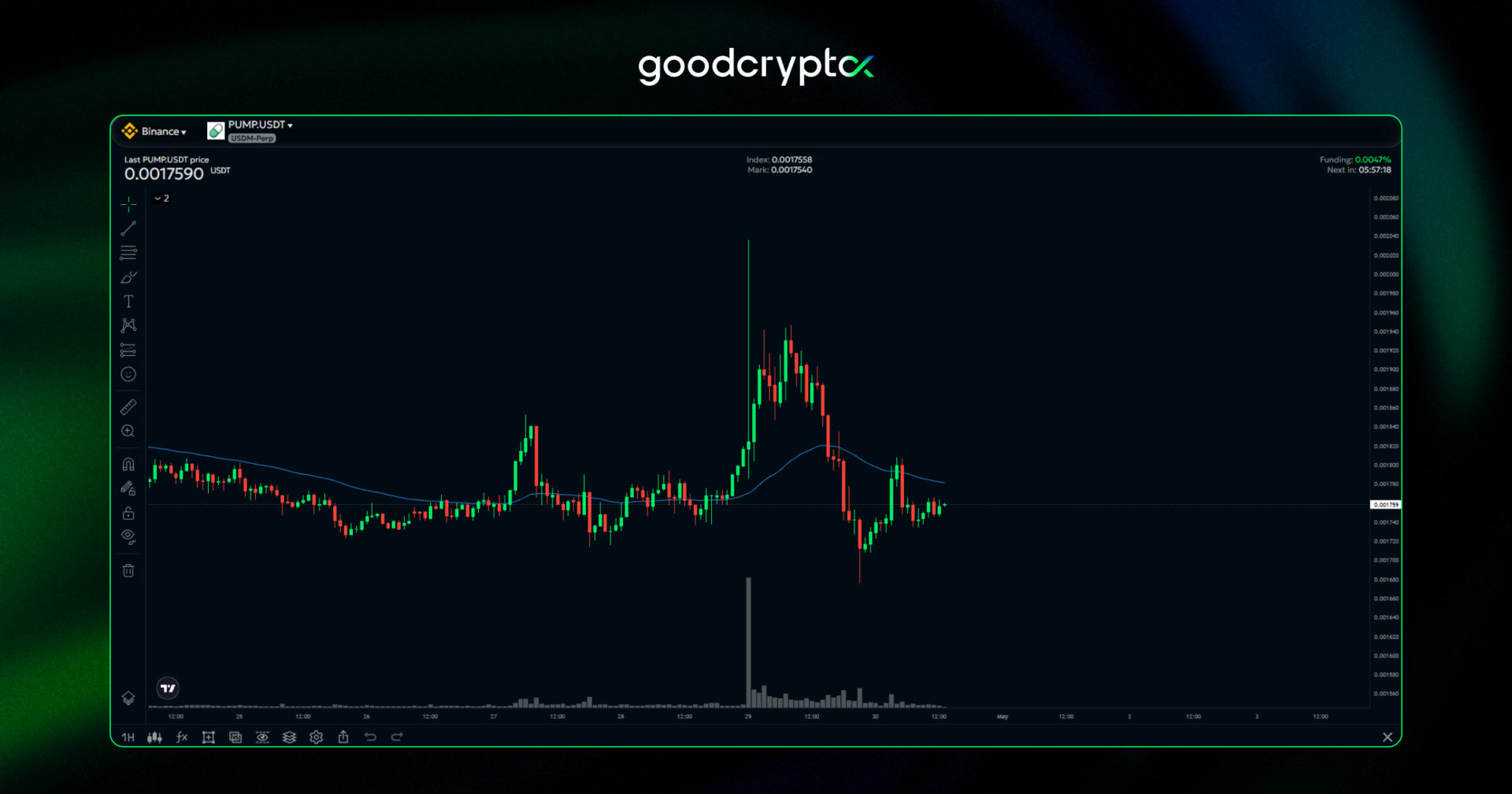
There’s a bear case. Pump.fun’s revenue is already declining from $971M in 2025, and is annualizing to roughly $320M in 2026 per DefiLlama. Half of a shrinking number produces smaller burns than 100% of peak revenue did. But 36% of the circulating supply is now permanently gone, and ongoing burns continue removing tokens every week regardless of what the team decides later. PUMP rose 6.9% in the 24 hours after the announcement.
Annualized fees run at $802M, putting Pump.fun in the rare category of crypto projects generating real cash flows at scale.
💎 Sniper Bot 144% ROI case study
On-chain trading is one of the fastest ways to catch a 10x, and one of the fastest ways to blow your portfolio if you go in blind. The goodcryptoX 💎 Sniper bot, powered by 💎 DEX Screener, is built to help you automate the process: screening the entire token universe by numerous metrics and purchasing the token the moment something worth watching shows up.
Here’s what the bot brings to your on-chain strategy:
Smart filtering: Set your own criteria – launchpad, market cap, trading volume, security score, FDV range, and let the bot surface only the tokens that match;
Risk management built in: Define your TP and SL levels upfront, so every trade runs on your terms, not on emotion;
Paper trading mode: Test your sniping strategy risk-free before putting real capital on the line.
With trade mode almost there, check out our test sniper bot case study and discover the potential of this powerful tool once it goes live fully-fledged👇
We hope this digest was valuable and informative for you! If you want to be the first to receive new crypto insights and stay up-to-date with the market, follow us on Twitter or Telegram. Become a better trader with the goodcryptoX app!
This was supposed to be a very different update: a chance to mark one year since the launch of the GOOD token and more than seven years since goodcryptoX fir...