Main › Blog › New Digest › Bitcoin fades as oil climbs. BitMEX is shutting down
Bitcoin fades as oil climbs. BitMEX is shutting down
Hey there! 👋
Oil up, rates up, and a crypto legend calling it quits. This week had the kind of stories that remind you why following the market daily actually matters. Here’s what happened:
quick weekly news
Bitcoin fades as oil climbs and rate fears return. CLARITY Act odds tumble
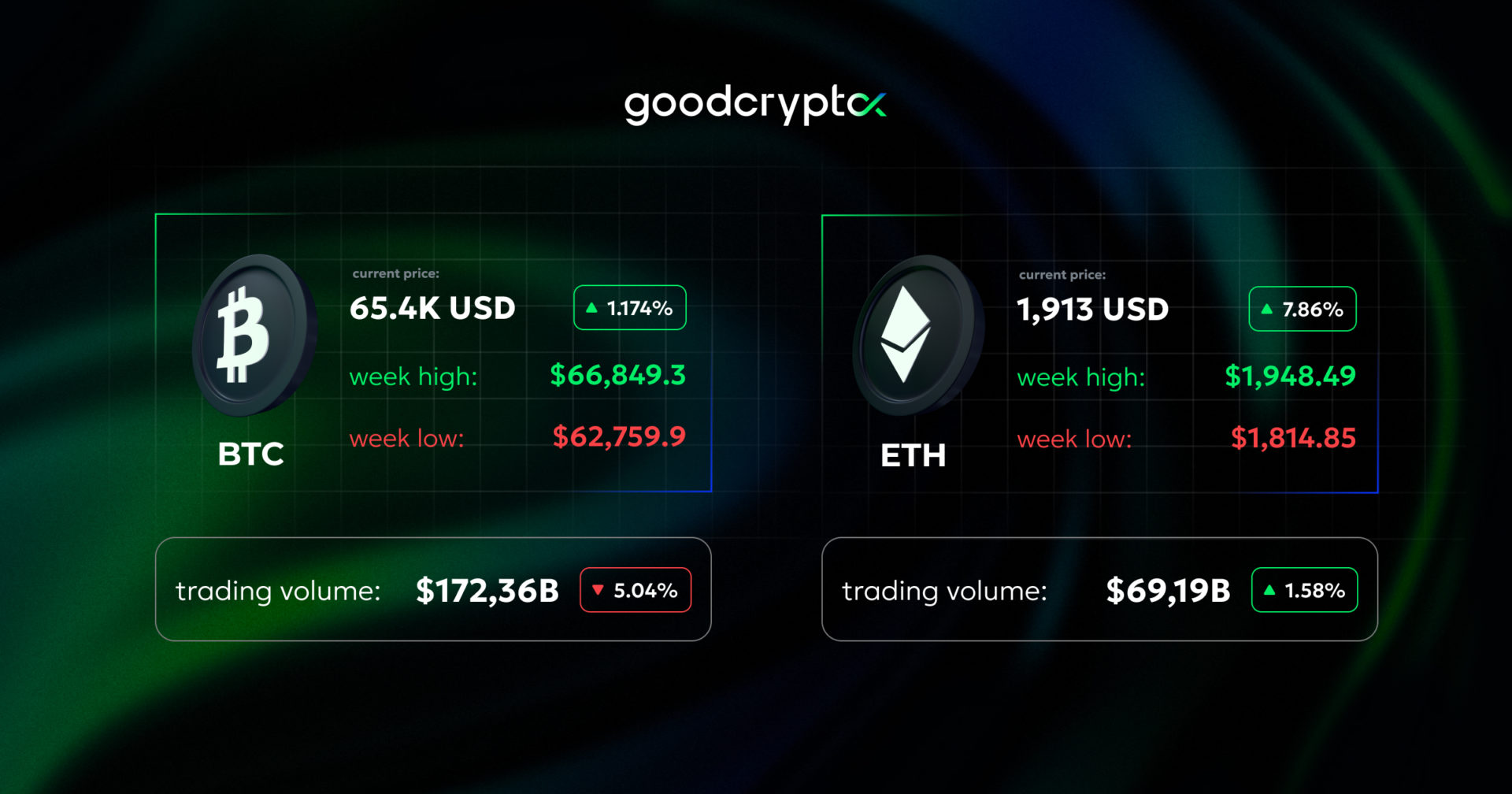
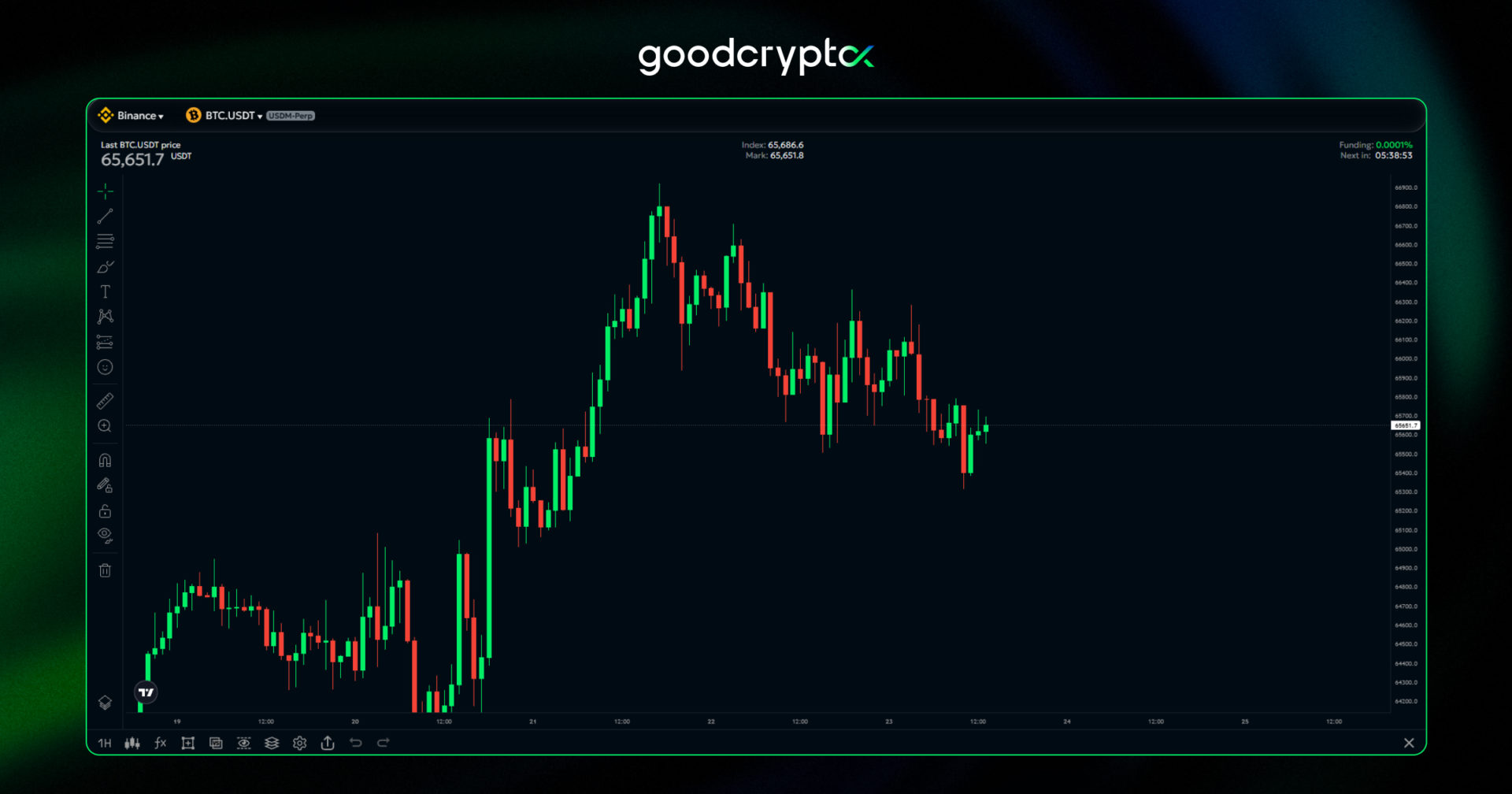
Bitcoin slipped to around $65,300 on Thursday, down 0.7% since midnight UTC, pulling back from a high near $66,900 reached Wednesday. ETH, SOL, and XRP followed lower.Source: goodcryptoX
Two macro pressures are building at once. WTI crude climbed to $88.60 a barrel, its highest since June 11, signaling a potential new inflationary impulse that could complicate central bank policy. Bond markets are already reacting: the two-year Treasury yield jumped to 4.31%, its highest since February 2025, and the ten-year rose to 4.66%. Higher yields raise the opportunity cost of holding non-yielding assets like Bitcoin, pushing money toward fixed income.
Adding to the cautious tone, Axios reported that the U.S. deployed a B-1 long-range bomber to strike IRGC-linked targets, a clear escalation in the scale of operations that suggests a broader campaign may be coming.
On the regulatory side, key Senate Democrats said the latest draft of the CLARITY Act “falls short” on ethics and other critical provisions, despite Senate Republicans releasing an updated version that includes an ethics clause agreed to by the White House. Polymarket’s implied odds of the bill passing dropped from 46% to 38% following the statement.
BitMEX, the exchange that invented perpetual futures, is shutting down
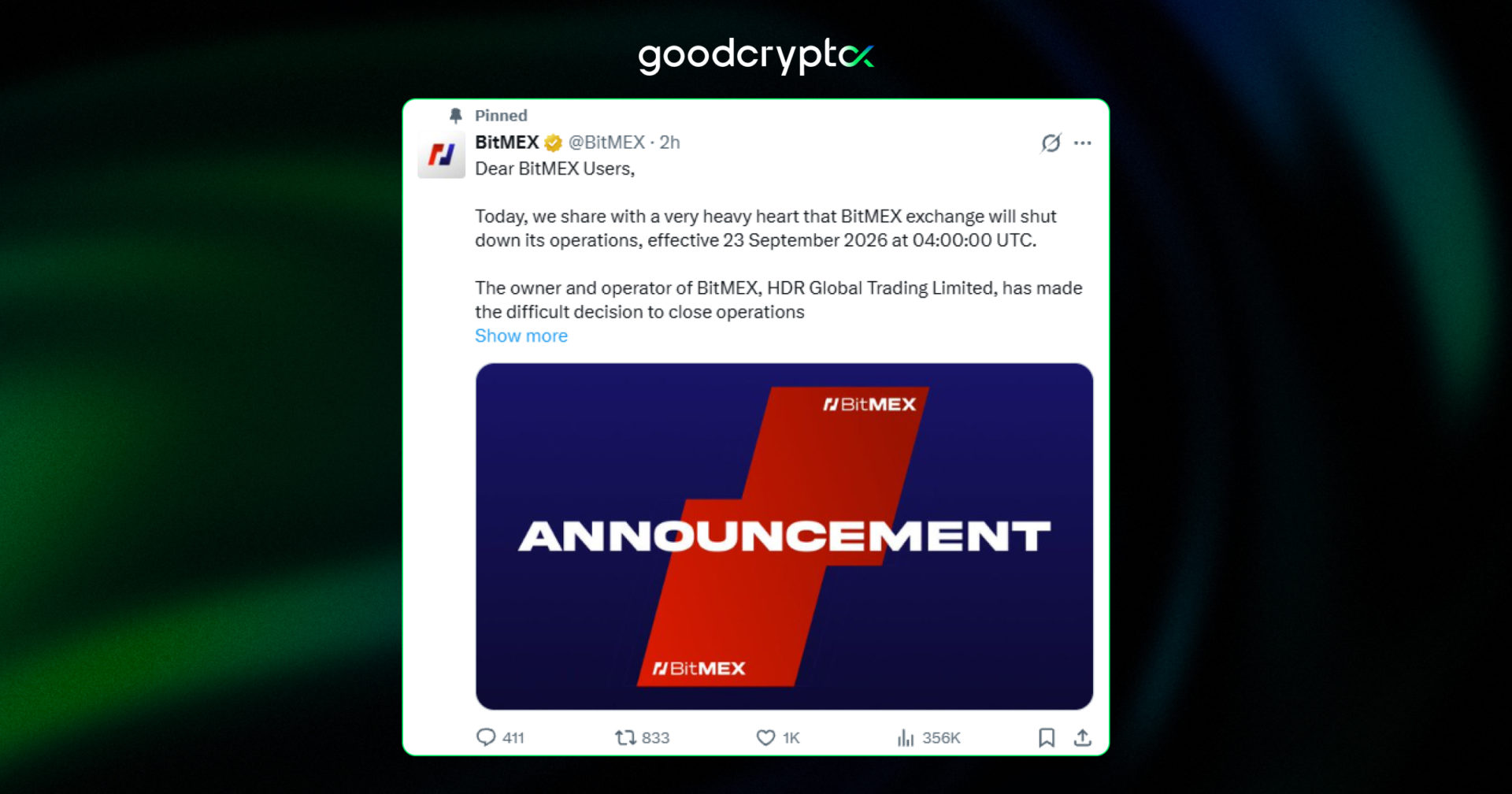
BitMEX is closing. The exchange that invented the perpetual swap, the instrument that now underpins the majority of global crypto derivatives trading, announced Thursday it will shut down on September 23.Source: X
“We share with a very heavy heart that BitMEX exchange will shut down its operations, effective 23 September 2026,” the platform told users, urging everyone to close positions and withdraw funds as soon as possible. Users who miss the deadline will face a $50 monthly maintenance fee or an annualized 1% levy on remaining assets.
The shutdown ends an 11-year run for the Seychelles-incorporated venue, which debuted in 2014 and at its peak handled over $1T in annual trading volume, capturing roughly 57% of the global crypto derivatives market. Daily volumes hit as high as $8B in July 2018. The exchange maintained a clean security record throughout, losing no user funds to hacks or exploits despite years of regulatory pressure.
The wind-down follows a steady loss of ground to faster, more liquid rivals. Centralized exchanges with deeper books and fewer legal overhangs pulled away the liquidity, market makers, and whales. A new wave of decentralized derivatives venues, including Hyperliquid, finished the job. New account registrations have already been halted. From August 26, no new positions can be opened. All remaining contracts will be force-closed before the final September deadline.
The news comes three weeks after BitMEX lost its CEO, CFO, and head of growth. The exchange was co-founded by Arthur Hayes, Ben Delo, and Samuel Reed. In 2020, it was charged with failing to implement adequate anti-money laundering measures, and later pleaded guilty. The founders resigned shortly after.
Arbitrum-based AFX Trade loses $24 million after bridge keys are compromised
Another week, another major DeFi loss, and once again, the vulnerability wasn’t in the smart contract itself.
AFX Trade, a decentralized perpetuals exchange on Arbitrum, was drained of $24.15M on Wednesday after an attacker compromised the private validator signing keys behind the bridge the protocol operates. Five of the bridge’s hot-validator signatures authorized a withdrawal of 24,150,000 USDC to the attacker’s wallet, clearing the roughly two-thirds quorum the bridge required. The contract did exactly what it was designed to do; the problem was that the keys authorizing the withdrawal were in the wrong hands.
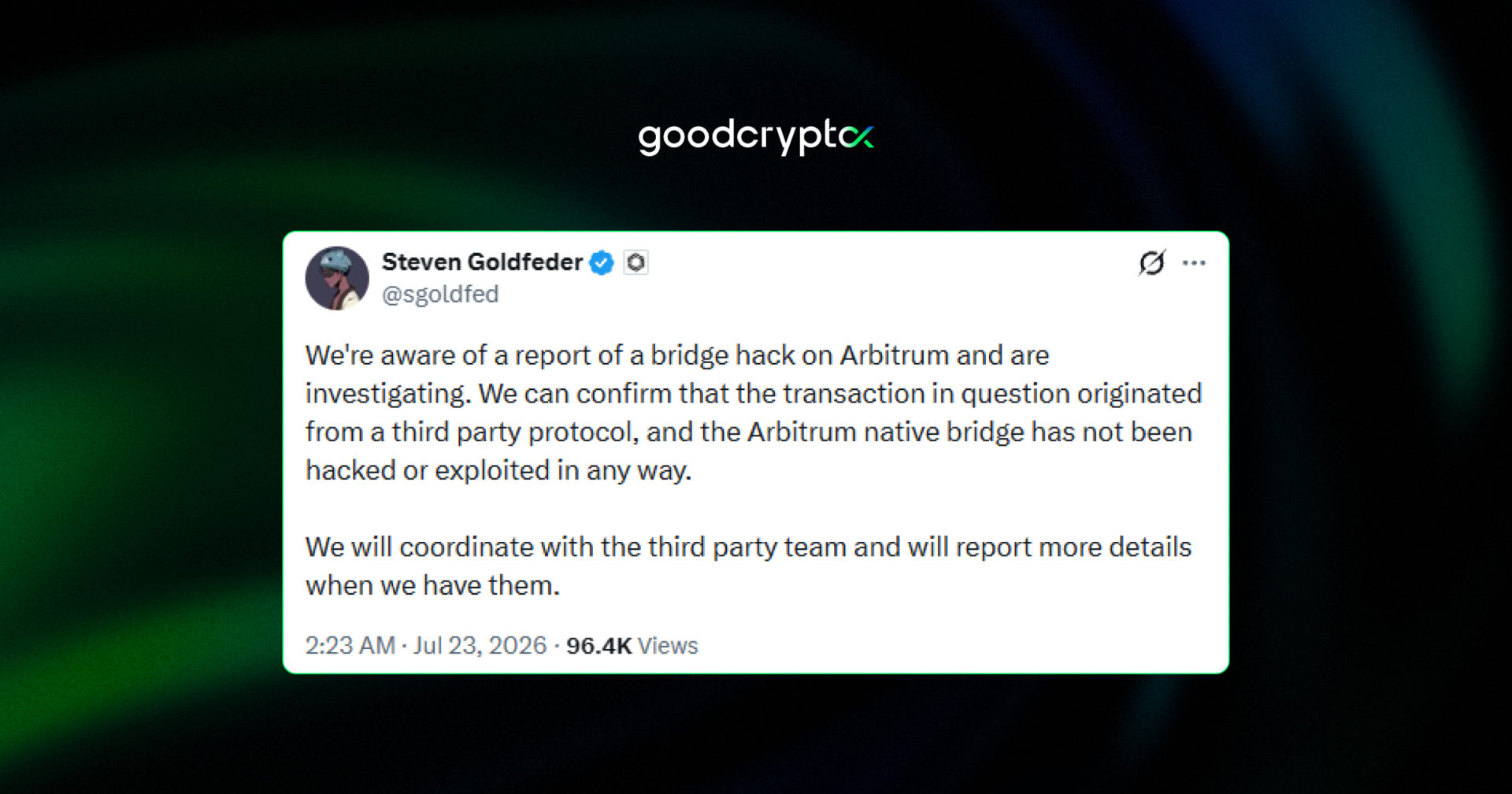
Offchain Labs co-founder Steven Goldfeder confirmed that Arbitrum’s native bridge was not involved. This was a failure contained to AFX’s own infrastructure, not the broader network. Security firm Blockaid confirmed the on-chain logic was not bypassed.Source: X
The attacker bridged the stolen USDC to Ethereum and swapped it for roughly 12,467 ETH, which is now sitting in a single wallet. The $24M drained was almost the entirety of AFX’s total value locked, meaning the attacker emptied the vault at close to the moment it was fullest. AFX’s trading volumes had been spiking to multi-month highs in mid-July in the run-up to the attack.
The incident follows a pattern that has dominated crypto security in 2026. Most major losses this year have come from compromised offchain components rather than smart contract bugs, similar to the $285M Drift Protocol loss in April. Q2 was already among the worst quarters for hacks on record, and Arbitrum-based protocols have been hit repeatedly, including an $18M oracle exploit at RWA platform Ostium just a week earlier.
Hyperliquid plans to bring decentralized prediction markets onchain with HIP-4
Hyperliquid’s HIP-4 upgrade, which introduced outcome trading to the platform, is getting a significant expansion. The exchange said permissionless deployment of prediction market contracts is coming in a future enhancement, meaning anyone will be able to launch a prediction market on Hyperliquid, subject to templates approved by validators.
Currently, prediction markets on HIP-4 remain under validator authority. Once permissionless contracts go live, first on testnet, then mainnet, validator-controlled markets will still exist but are expected to become rare, with Hyperliquid saying “ideally” there will be fewer than 10 per year.
Deployers will need to stake 500,000 HYPE to launch a market, with that stake subject to slashing if validators determine the market was poorly defined or settled incorrectly. In return, deployers earn up to 50% of trading fee revenue.
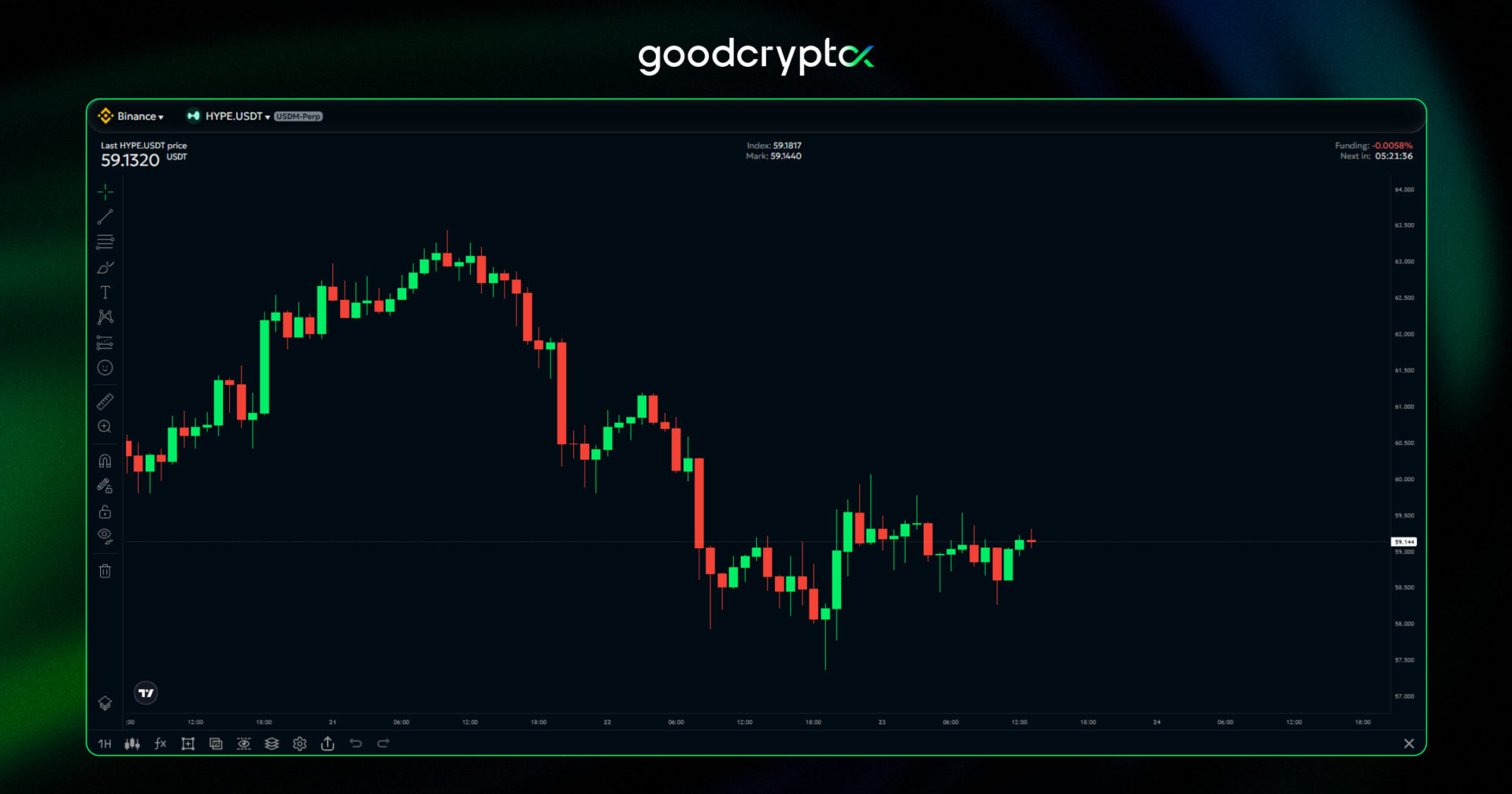
The move puts Hyperliquid in direct competition with Polymarket and Kalshi in a sector that just hit a new milestone: the FIFA World Cup, which wrapped up Sunday with Spain winning its third title, drew more than $50B in bets across prediction market platforms. HYPE rose about 1% following the announcement.Source: goodcryptoX
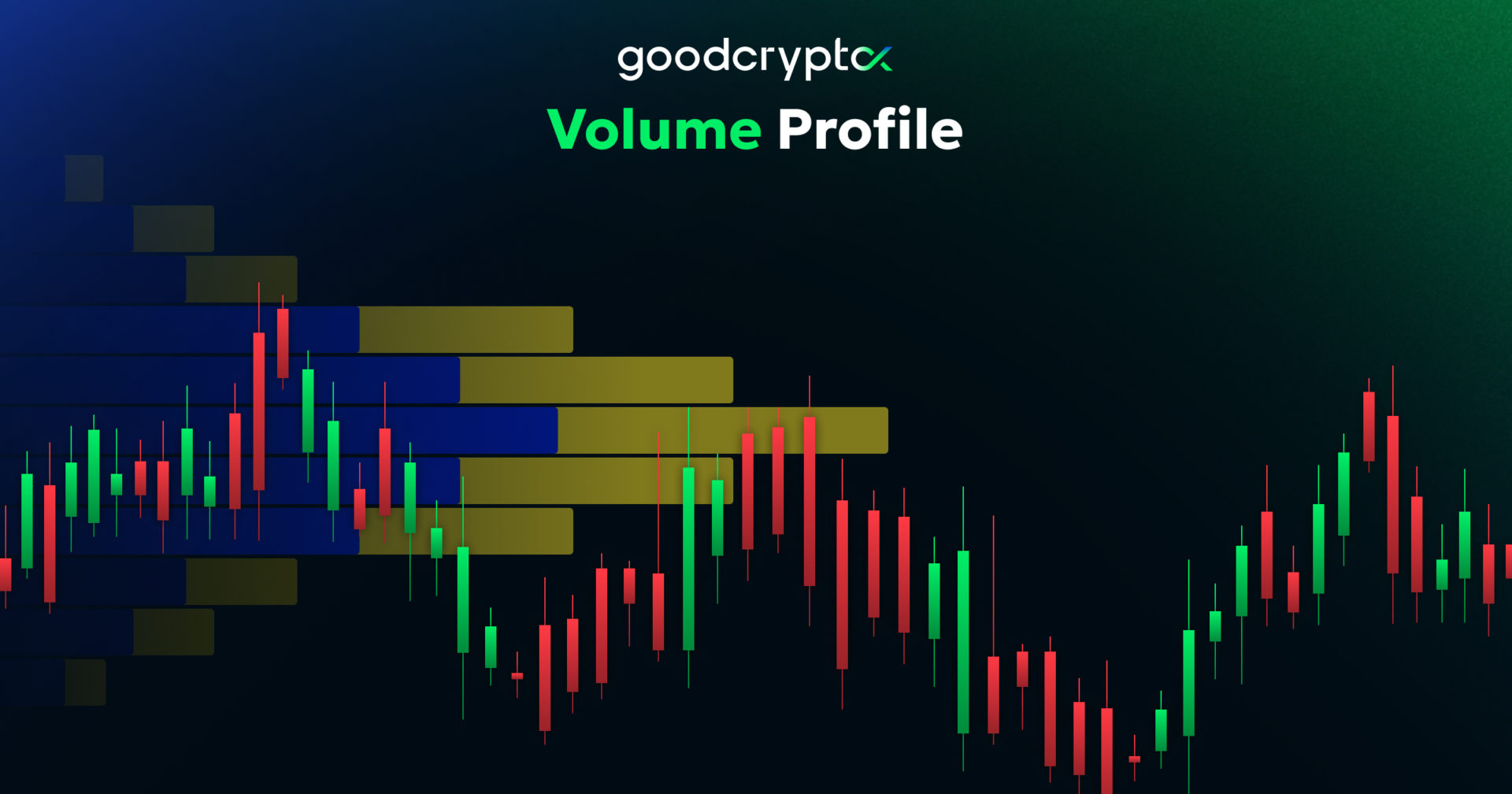
Volume Profile explained – the indicator that reads what price alone can’t
Most indicators tell you where price has been. Volume Profile tells you where the market actually agreed on value, and that’s a fundamentally different kind of signal.
It maps trading activity at every price level, revealing where buyers and sellers concentrated, where the market spent the most time, and where it’s likely to react again. Here’s what the full guide covers:
The key components broken down: Point of Control, Value Area, High and Low Volume Nodes, what each one means and how to read them on a chart;
Three Volume Profile types explained: VPVR, VPFR, and VPSV, when to use each and how to configure them for your trading style;
A universal Volume Profile strategy: how to use POC and volume nodes as dynamic support and resistance levels, with real chart examples.
Ready to run your own? Check out the full case study breakdown 👇
We hope this digest was valuable and informative for you! If you want to be the first to receive new crypto insights and stay up-to-date with the market, follow us on Twitter or Telegram. Become a better trader with the goodcryptoX app!
This was supposed to be a very different update: a chance to mark one year since the launch of the GOOD token and more than seven years since goodcryptoX fir...








 get the app. start trading smarter">