

This one is late.
Partly because I was traveling with the kids during their school break, and partly because I kept thinking 💎 Sniper bot would ship “any day now” – and wanted this report to land after it did – as promised. You can decide which one mattered more.
the market
The previous month was dominated by macro. Iran tensions, oil, FOMC — all of it kept risk assets pinned, with Bitcoin largely stuck in a range and Q1 closing as one of the weakest in recent memory. Fear & Greed spent close to two months in Extreme Fear – longest streak since 2002, and across the market, activity stayed suppressed. New listings slowed, risk appetite remained low, and most traders simply stepped aside.
Early April looked slightly different, but not in a way that suggests a turn. The relentless downward pressure eased and short bursts of activity started to appear again. Some risk appetite came back, but inconsistently — more like brief windows than a sustained shift. Mostly aligned with the TACO vs MAGA oscillations if you know what I mean.
The market has stopped falling. It hasn’t started rising.
The elephant in the room hasn’t changed. Markets don’t turn on their own — they turn when a new narrative takes hold. DeFi summer, Bitcoin ETF, AI agents etc. were the narratives that previsouly got the market out of hibernation. Right now, there isn’t a new one (yet). Until that changes, any recovery is likely to remain fragile — bursts of activity rather than a sustained move.
revenue sharing
Revenue sharing is straightforward. 50% of all DEX trading fees are routed directly to in-app wallets holding 10,000+ GOOD. No staking, no lockups, no actions required – the system runs automatically in the background.
Participation continued to expand:
- eligible wallets: 190 → 210 (+10%)
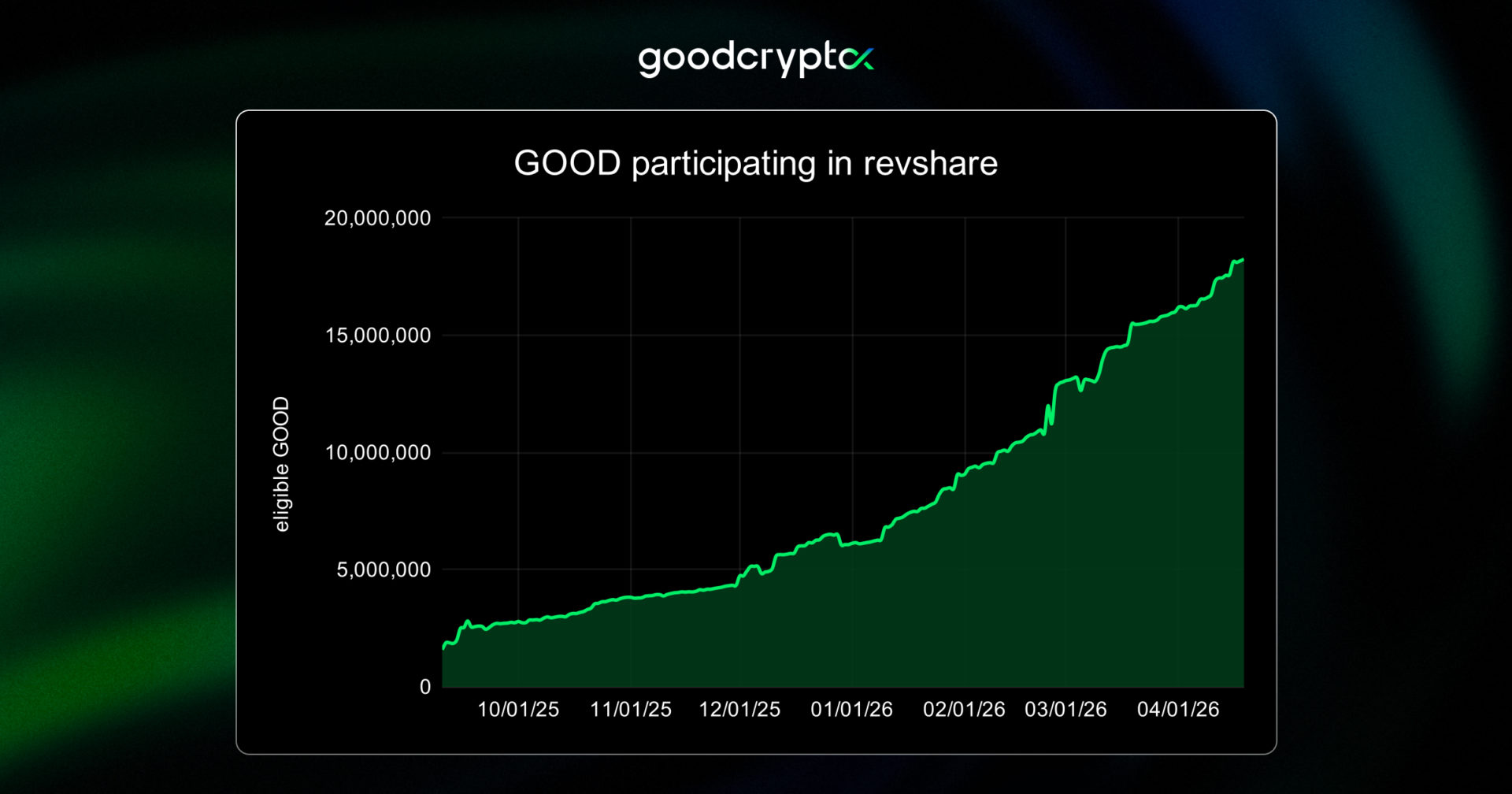
- GOOD in revshare: 13.0M → 16.6M (+28%)
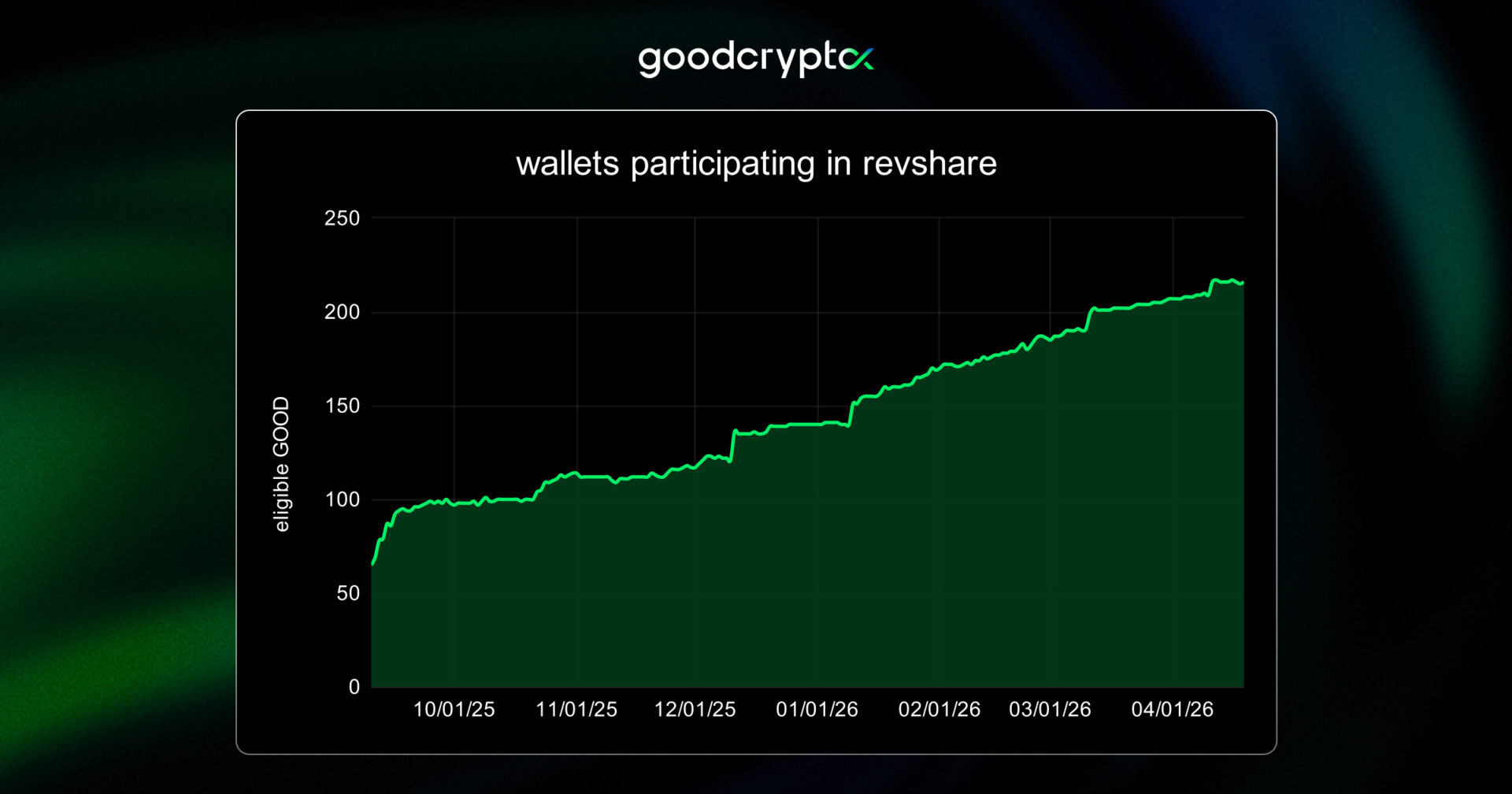
That’s now six consecutive months of double-digit month-over-month program participation growth.
At the same time, behavior inside the system keeps reinforcing itself. Around 95% of eligible wallets now auto-compound rewards, which bought roughly 129K GOOD from the market this month (vs ~108K last month).
- cumulative compounding buybacks to date: ~864K GOOD
Revshare program yields, unfortunately, continued to compress, with 30-day APY moving from ~10–15% toward ~11% by the end of the period.
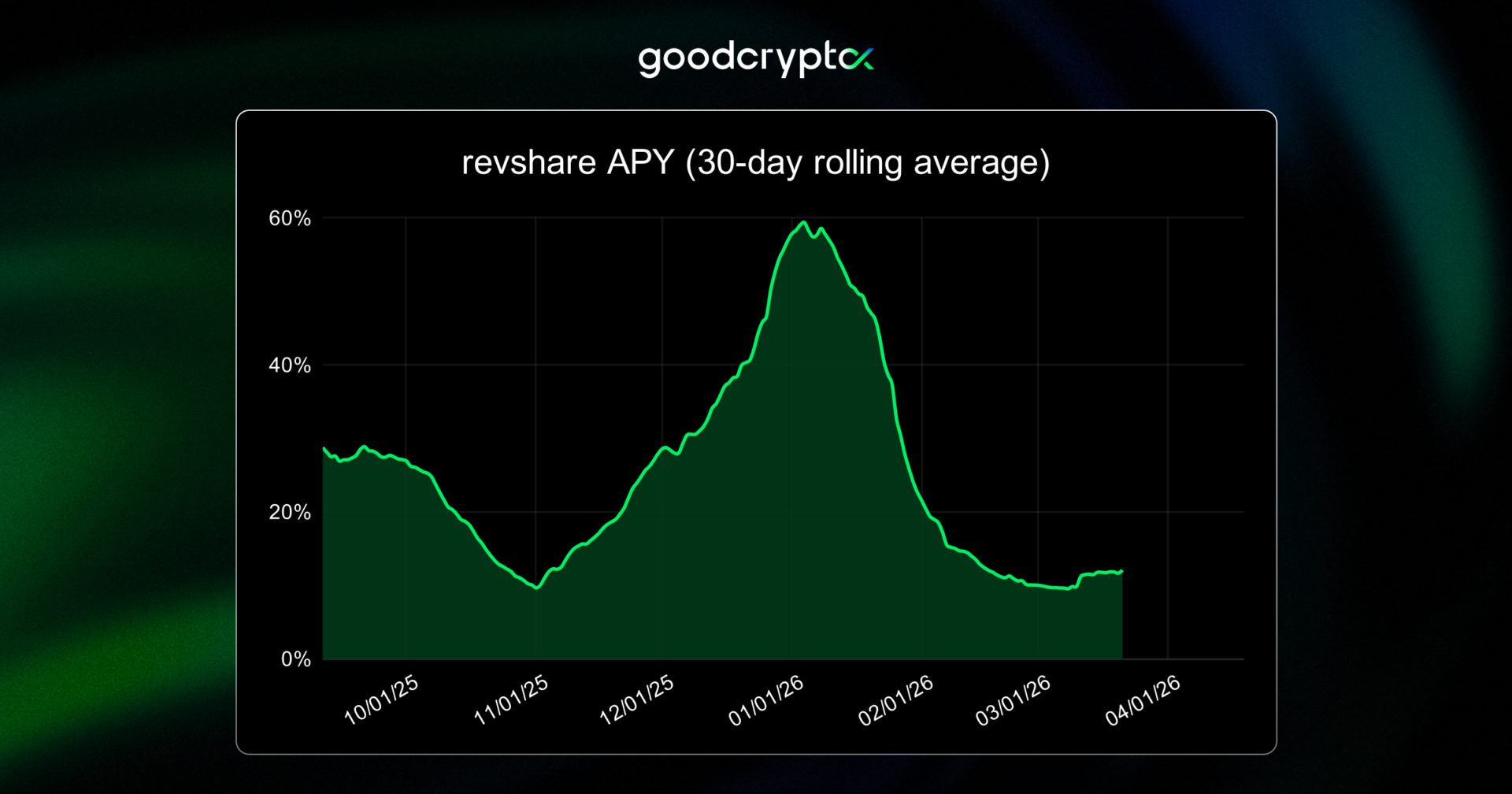
However, participation kept growing even through that compression. Tokens are staying in the system even as headline returns decline.
Monthly unlocks stepped up from March 10 onward as larger vesting schedules began. Revshare participation is meaningfully increasing at the same time, and it is no coincidence: a good part of the newly unlocked supply moved into revshare.
The system is still absorbing supply, just no longer outpacing it mechanically.
The good thing is that despite the unlocks ramping up, the absolute majority of the unlocked supply seats are idle. I read it is a clear indication of holders’ understanding of the transitory state of the current market, recognizing GOOD’s long-term potential and positioning themselves for the future upside.
trading rewards and airdrops
Trading rewards continued to support the in-app activity.
As a reminder, the GOOD trading rewards are distributed weekly based on your in-app trading volume on centralized and decentralized exchanges.
Our announced airdrops remain tied to cumulative platform activity:
- Airdrop 2 → $100M DEX spot volume (currently ~32M)
- Airdrop 3 → $1B perp DEX volume (currently ~13M)
The progress is painfully slow, but it’s there.
Hyperliquid is currently the only perp DEX integrated, so it accounts for all of the Airdrop 3 activity so far. Additional integrations will feed into the same target over time.
As another reminder, the aidrop eligibility requires holding 10,000+ GOOD throughout.
burns
Both monthly and daily burns reversed their trajectories this month (in a good way). For monthly burns, after a three-month decline (123K → 86K → 71K), April came in at ~99K – the second-highest monthly burn so far.
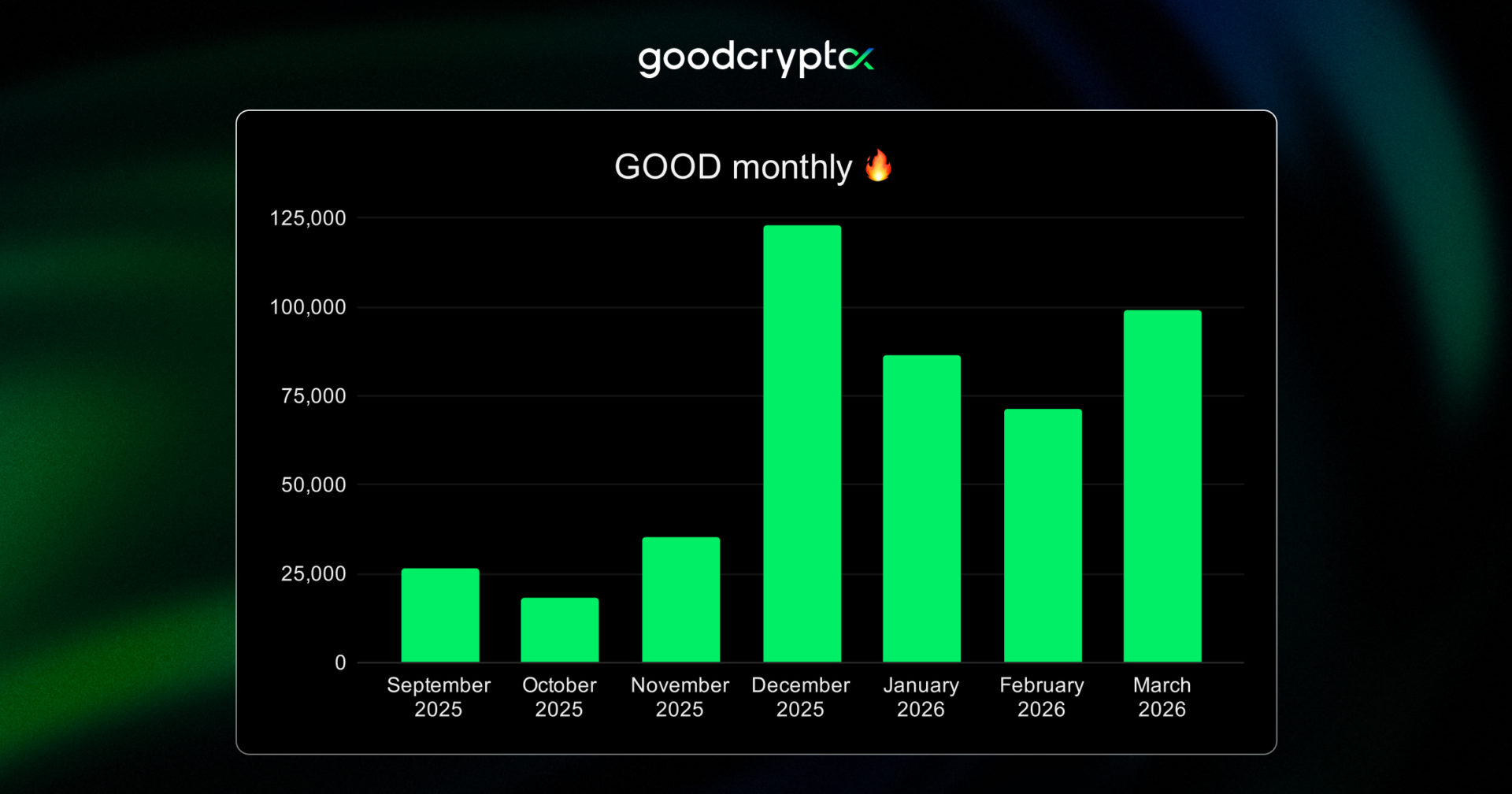
In part, it is due to (some) revenue recovery, but the main driver behind it was the token price.
Lower price → more tokens bought per dollar → larger burns in token terms.
The system ‘reblances’ automatically by design:
- weaker revenue + lower price → higher token burn per dollar
- stronger revenue + higher price → higher dollar burn even if token count compresses
Either way, supply tightens.
Daily burns came in at ~35K GOOD.
Cumulative burns are now approaching 750K GOOD.
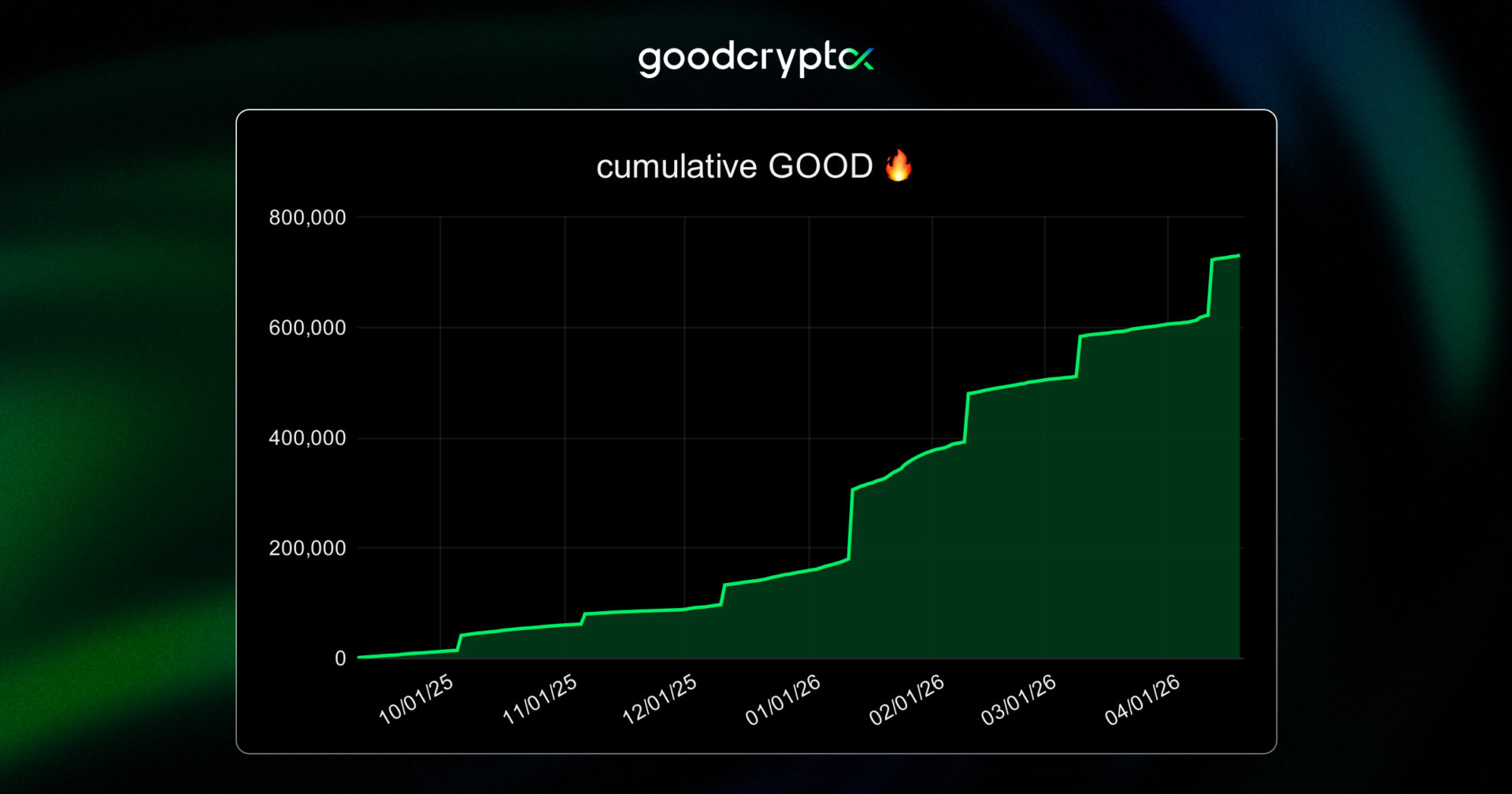
Good thing is that burns don’t depend on market sentiment. They follow activity and price.
the product
💎 Sniper bot was supposed to ship before this report. It didn’t.
The simple explanation is that we’ve been slow. The more complete one is that the scope expanded once we started running it against real market conditions.
What existed before was a test system: the Screener surfaced opportunities, alerts fired, and entries were simulated. No real execution. Over this month, that moved into production testing – with real trades, real capital, and real failure modes.
At the same time, the Screener itself was rebuilt and expanded:
- now fully functional on Solana (previously partial)
- broader set of criteria and combinations
- new primitives like launchpad-based filtering – e.g., targeting tokens graduating from @Pumpfun and layering additional conditions on top
In practice, this lets you define a much tighter trading universe (for example, only specific launchpad graduates with certain liquidity/behavior), and then automate entries on top of that. With these combinations, we’re already seeing strong early results in production testing.
Setups are live. Results are there.
We’re not attaching a new timeline – but it’s close.
There were no app releases this month.
That doesn’t mean nothing shipped – it means several pieces are already built and will go live together in the next release alongside Sniper + the new Screener:
- native DEX limit orders (built, Solana-first)
- email alerts
- Telegram alerts
Limit orders will start on Solana. EVM support follows after the wallet upgrade (current EVM smart contract wallet constraints don’t allow a clean implementation yet).
Beyond visible features, a large part of the work this month went into underlying systems.
On DEXs (especially Solana), routing keeps evolving, and we’ve been continuously optimizing execution paths to keep up. This doesn’t show up as a feature, but it directly affects fills and reliability.
On Hyperliquid, activity kept increasing – average perp volume moved from ~$52K/day to ~$95K/day over the period.
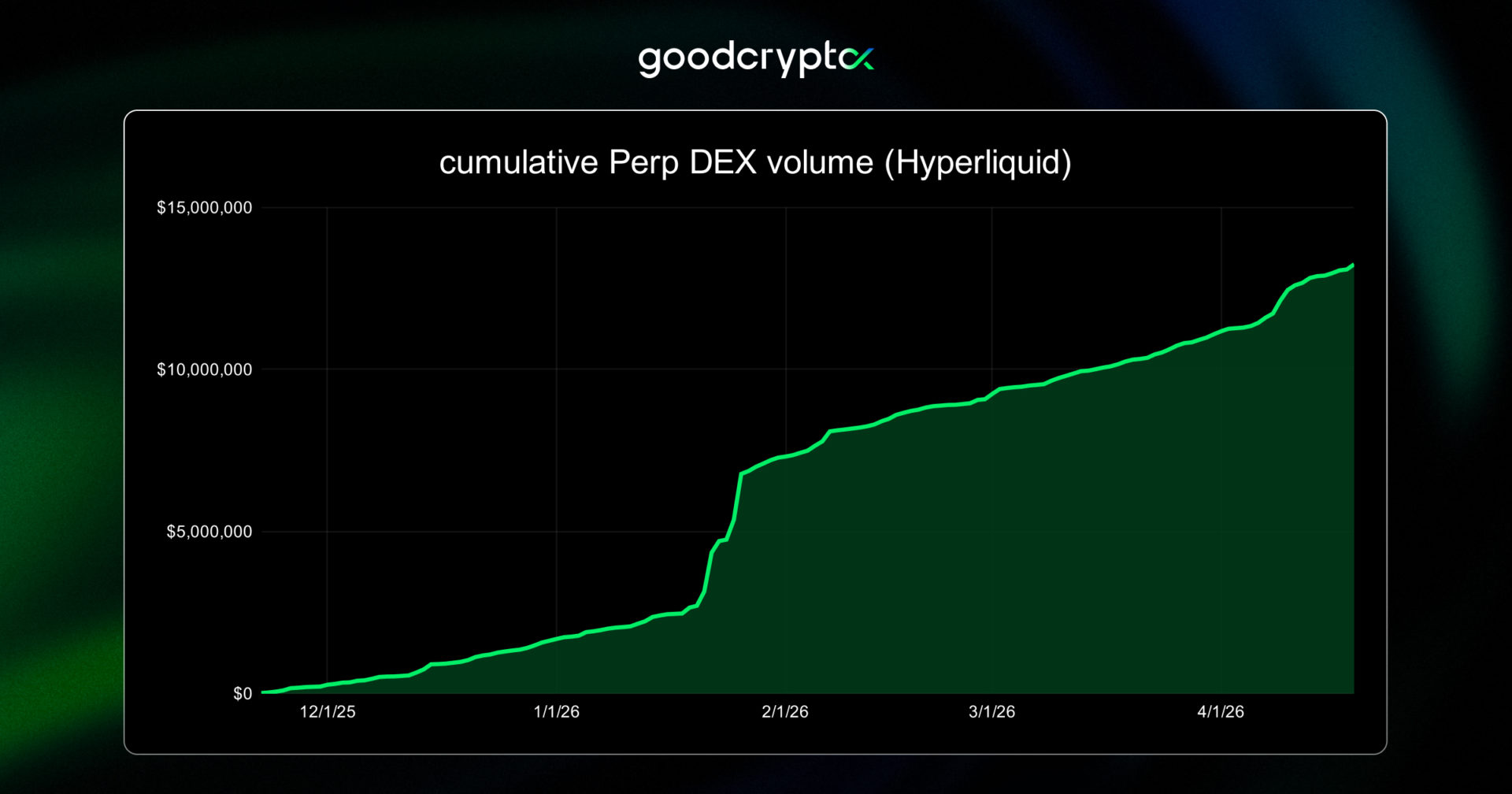
That growth exposed a bottleneck: Hyperliquid’s public API isn’t designed for multi-user, multi-bot terminals at this scale. We’ve been rebuilding order handling around async WebSockets. Rollout is expected next week and should make the system noticeably more responsive – faster order placement and cancellation feedback, and quicker visibility into state changes. Execution should also improve, but responsiveness is the primary gain.
Looking slightly ahead, the immediate roadmap remains largely the same:
- DEX Sniper (shipping first)
- DEX Grid bot (enabled by native limit orders)
- TradingView strategy bots (CEX + DEX)
- Screener and Sniper expansion to CEXs
- evaluation of prediction markets integrations
One additional piece entered that near-term track: the wallet overhaul.
From a user perspective, this brings:
- multiple wallets per chain
- wallet import (bring your own wallet)
- ability to pay network fees in tokens like USDC or USDT
On EVM chains specifically, it also consolidates the current two-wallet setup into a single wallet (enabled by EIP-7702). This is also what unlocks the clean implementation of EVM limit orders.
zooming out
The pattern hasn’t changed. Every time activity shows up – even briefly – the system responds immediately. Volume, fees, buybacks, burns. The flywheel engages without friction.
What’s missing is sustained demand, and that usually comes with a new narrative. One possible candidate forming in the background is the CLARITY Act – the first serious attempt at a US market structure framework for digital assets. It has been stalled for close to a year, largely around the question of stablecoin yield, but that piece may now be resolving.
If it lands, and if macro pressure continues to ease, two of the largest overhangs on crypto could clear in the same window. Or not. Either way, it’s one of the few things worth watching right now.
From the outside, Month 7 doesn’t look like much. Under the hood, most of the heavy lifting happened:
- limit orders
- notifications
- Screener rebuild
- Gems Sniper testing
- Hyperliquid infrastructure
The kind of work that only shows up after it ships.
The system is ready for activity. The market just hasn’t caught up yet.
Markets turn eventually, usually faster than expected. Until then, we keep building.
stay GOOD