Main › Blog › Bitcoin climbs back above $60K. Binance vows to stay in Europe
Bitcoin climbs back above $60K. Binance vows to stay in Europe
Hey there! 👋
Bitcoin tested levels it hasn’t seen in months, regulators kept the industry on its toes, and a few big names made unexpected moves. Here’s what you need to know:
quick weekly news
Bitcoin climbs back above $60K as AI stocks stage a rebound
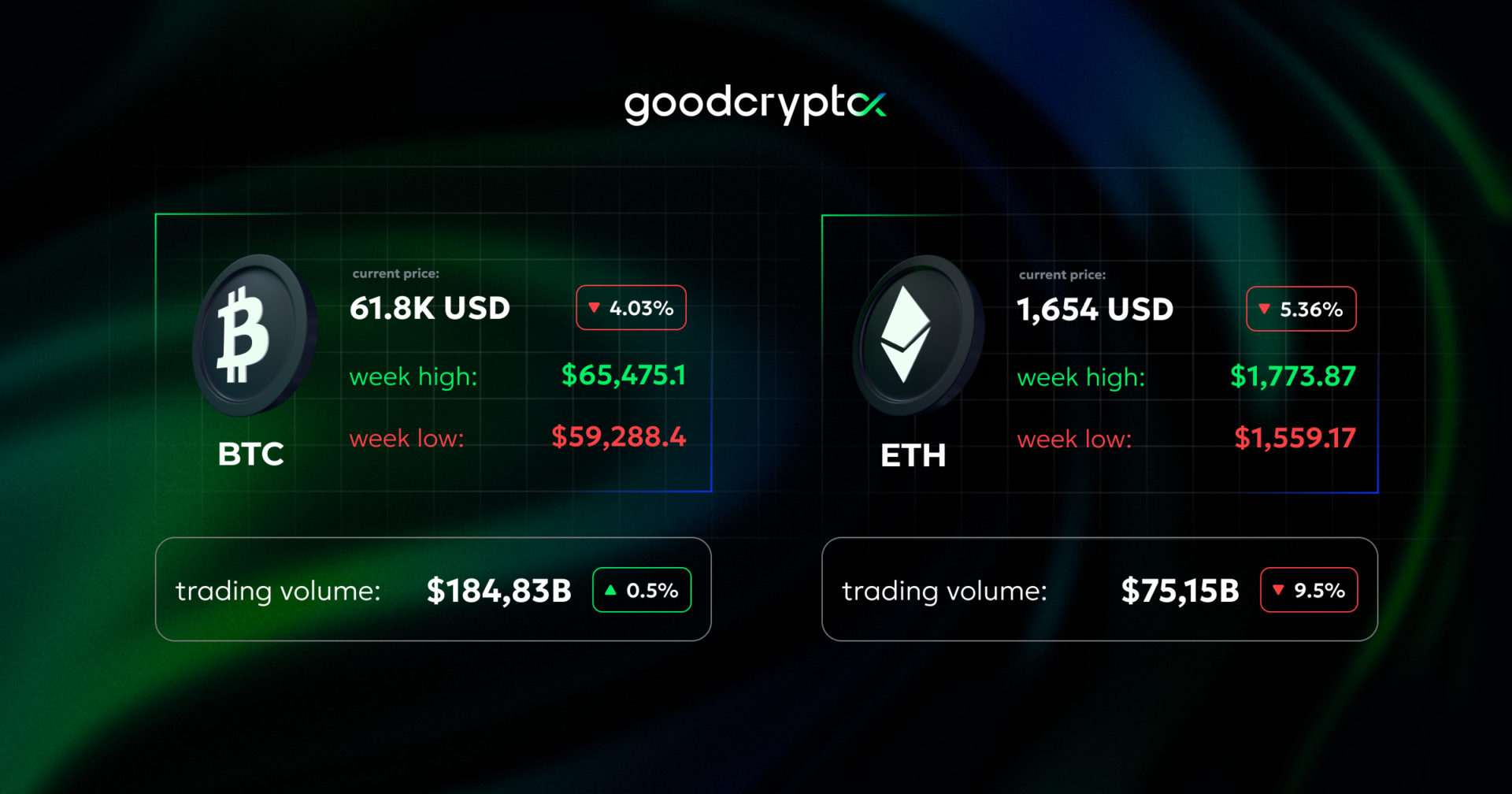
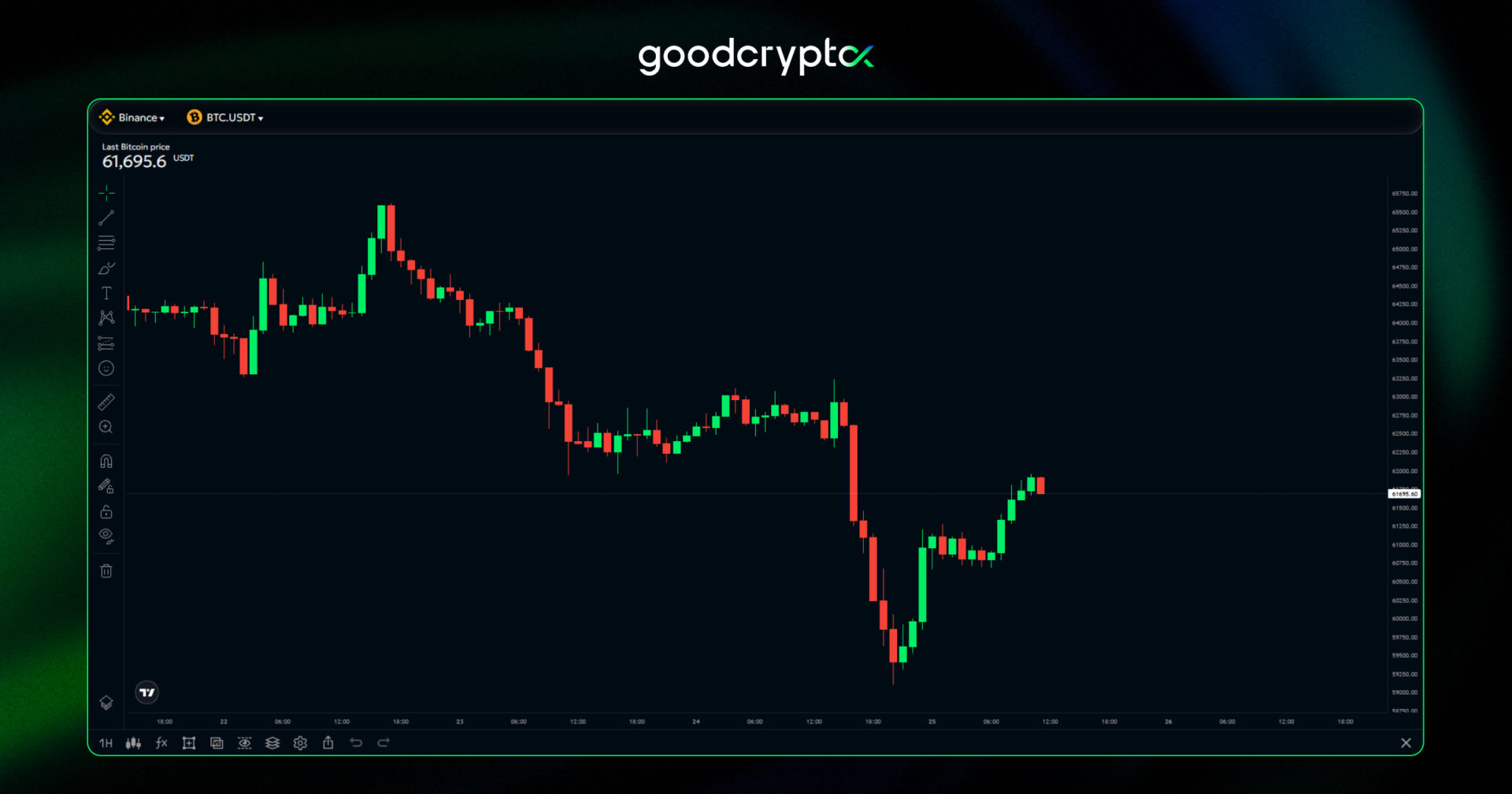
Bitcoin broke below $60,000 late Wednesday, touching $59,100 before buyers pulled it back to around $61,900 on Thursday, down 2.9% over 24 hours and 5.4% on the week.
The damage was broader across majors. ETH dropped 2.8% to $1,616 for a 7.9% weekly loss, XRP fell to $1.07 and is down 9.2% on the week, SOL slid to $68. DOGE and HYPE were the worst hit over seven days, down 11.9% and 11.7% respectively. Tron was the only major higher on the week, up 1.9%, per goodcryptoX data.
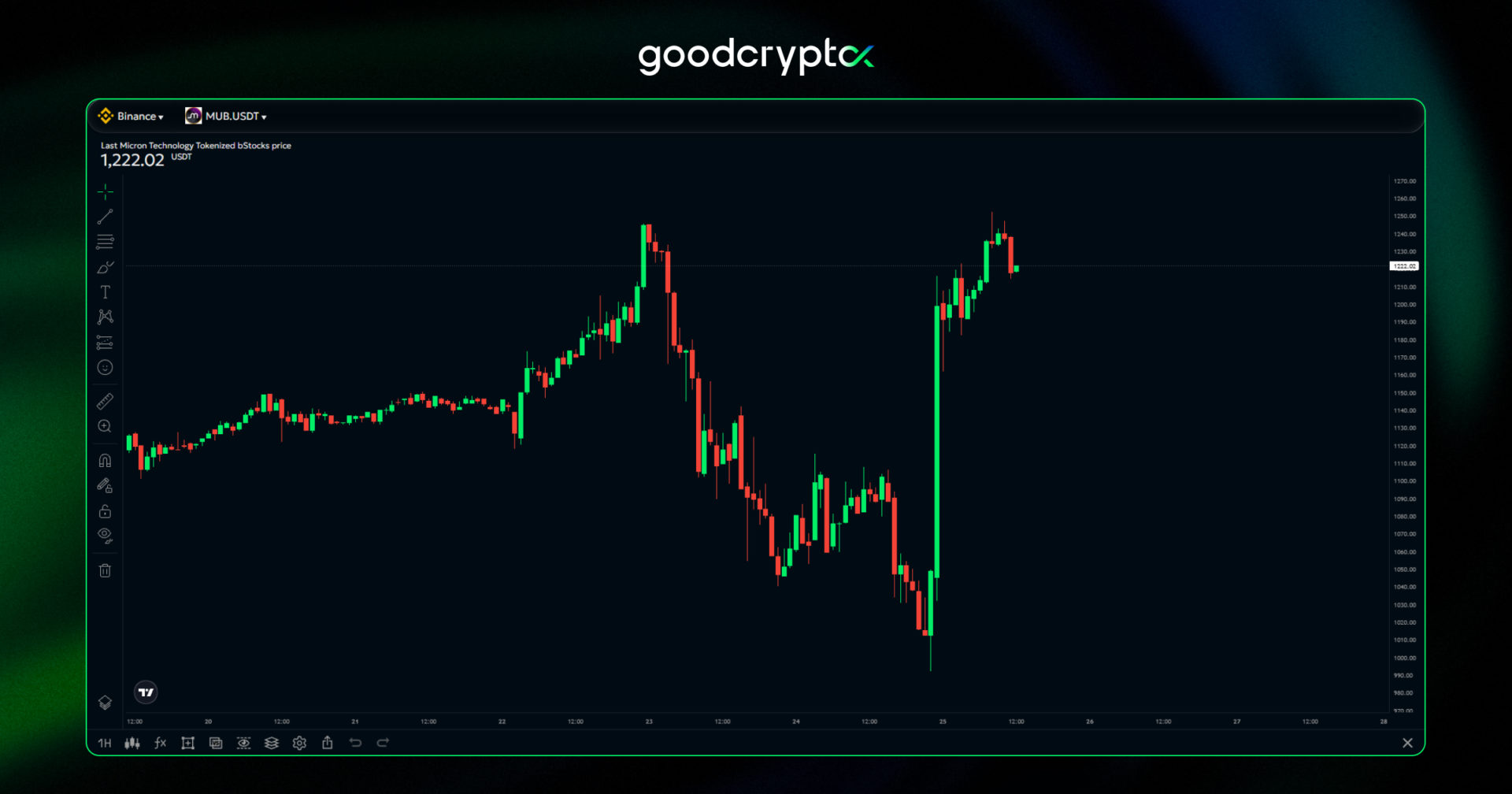
The AI trade that dragged crypto lower earlier in the week came roaring back overnight. Micron jumped about 15% after its sales forecast crushed Wall Street estimates, reviving confidence in AI spending. Nasdaq 100 futures rose 1.8%, South Korea’s Kospi surged as much as 6%, and Brent crude almost erased its wartime premium to fall below $73 as oil flowed back through the Strait of Hormuz.
But the rebound in stocks did nothing for crypto. The pressure on Bitcoin has become its own: continued ETF outflows, a hawkish Fed, and a U.S. dollar that climbed to a seven-month high, and Strategy struggling with STRC dropping to a record low below par. A stronger dollar makes dollar-priced assets like Bitcoin costlier for foreign buyers and tends to pull money out of risk trades.
Bitcoin is hovering near its 200-week moving average, a closely watched long-term trend line. The last three times Bitcoin sank to that level, weakness was prolonged: roughly nine months in 2015, six months in 2018, and around six quarters after the 2022 collapse. The pattern points to an extended downturn rather than a quick rebound.
Binance withdraws its Greek MiCA bid but vows to stay in Europe
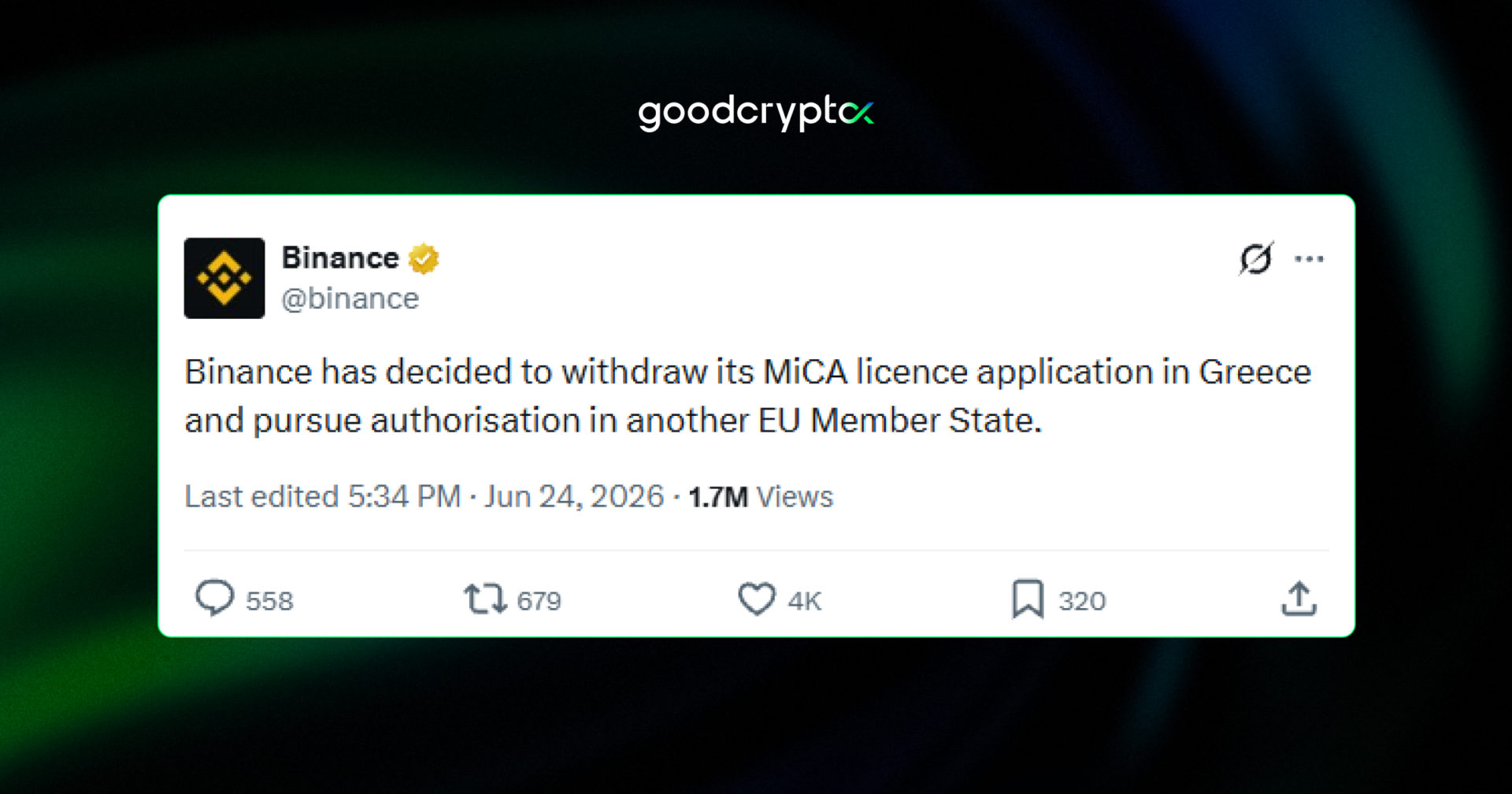
Binance has withdrawn its MiCA license application in Greece and will seek authorization in another EU country, the exchange announced Wednesday. Source: X
“Binance is not leaving Europe,” said Gillian Lynch, head of Europe and the UK, in comments to Reuters.
The withdrawal comes days before a June 30 deadline. Under MiCA rules, crypto firms must obtain a license from at least one EU member state by July 1 to serve clients across the 27-nation bloc. Unlicensed firms must wind down EU activities. “We made this decision after careful consideration of the current status and timeline of the Greek process,” Binance said. “Europe remains an important market for Binance… We are confident we will secure a license in the coming months.”
The move follows a tense week. Just last week, Binance said its Greek application was compliant with MiCA requirements and had been reviewed at the ESMA level. Reuters then reported that officials in Greece, Ireland, and Latvia had jointly tracked the bid and raised concerns about Binance’s past legal issues and corporate structure.
Binance said user funds remain safe and that it will communicate directly with affected European users ahead of the compliance deadline. The company did not name which EU country it will approach next.
Ethereum Foundation cuts 20% of its staff as leadership exits mount
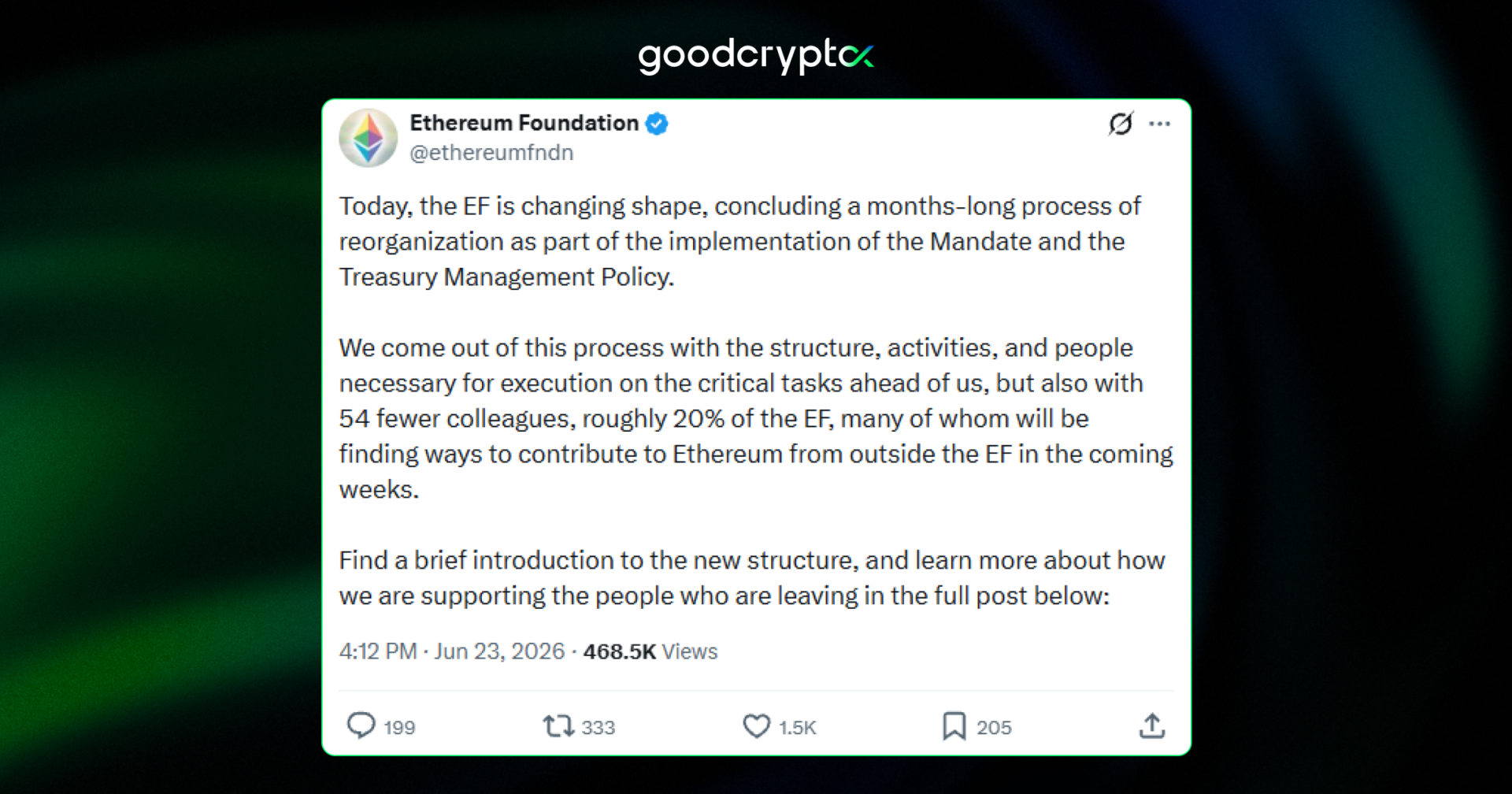
The Ethereum Foundation is cutting roughly 20% of its workforce, 54 positions, as part of a broad restructuring tied to an updated mandate and treasury policy. The EF said the reduction leaves it “leaner and more focused,” with work now grouped into five clusters including a dedicated institutional layer covering enterprise engagement, financial infrastructure, and policy coordination.
The layoffs follow a turbulent stretch at the leadership level. Co-executive director Hsiao-Wei Wang stepped down earlier this month, following the prior departure of co-executive director Tomasz Stańczak. Board member Bastian Aue has since taken on expanded responsibilities overseeing the transition. In total, roughly nine senior figures have left or transitioned out of the Foundation over the past six months, fueling scrutiny of its governance model as Ethereum faces intensifying competition from rival ecosystems.
While the EF shrinks, a separate effort is expanding alongside it. BitMine Immersion Technologies and SharpLink Gaming, two of the largest publicly traded Ethereum treasury companies, along with Ethereum co-founder Joseph Lubin, announced support for ETHLabs on Monday, a new non-profit R&D initiative aimed at accelerating Ethereum’s technical roadmap and institutional adoption.
Meta is building a prediction market app called Arena
Meta is developing a new app called Arena that functions like a prediction market platform, according to people familiar with the matter who spoke with the New York Times. Users would make forecasts on future events, politics, sports, entertainment, world affairs, through a video game-style points system rather than cash, though the company hasn’t ruled out real-money betting down the line. The people described it as both experimental and a top priority inside the company.
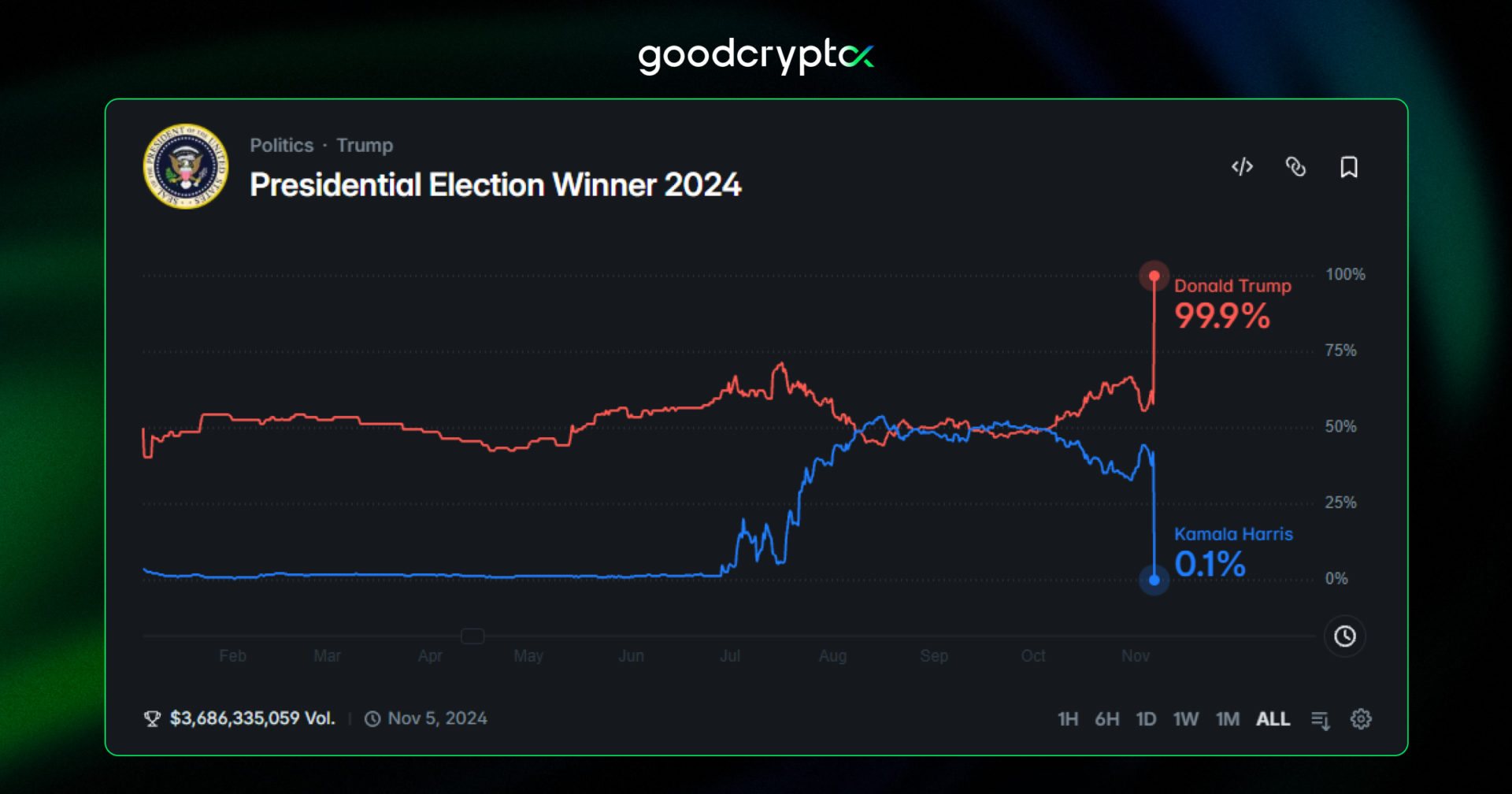
The timing makes sense. Prediction markets exploded into mainstream awareness during the 2024 U.S. presidential election, when Polymarket drove billions in trading volume and turned event-based betting into a legitimate financial conversation. Source: Polymarket
Nearly every major trading platform has since made some move in that direction: Coinbase, Kraken, and Robinhood have all explored the space.
Meta isn’t new to this either. It launched a similar product called Forecast in 2020 during the early stages of COVID-19, then quietly shut it down in 2022. Arena represents a second attempt at the same idea in a much more receptive market.
The regulatory picture remains complicated. The CFTC has repeatedly wrestled with whether event contracts serve a legitimate hedging purpose or constitute prohibited gambling. Critics point to risks around market manipulation, insider information, and the potential for participants to profit from events they may be able to influence. How Meta navigates that will likely determine how far Arena can actually go.
193% ROI in 6 months — a real DCA bot case study
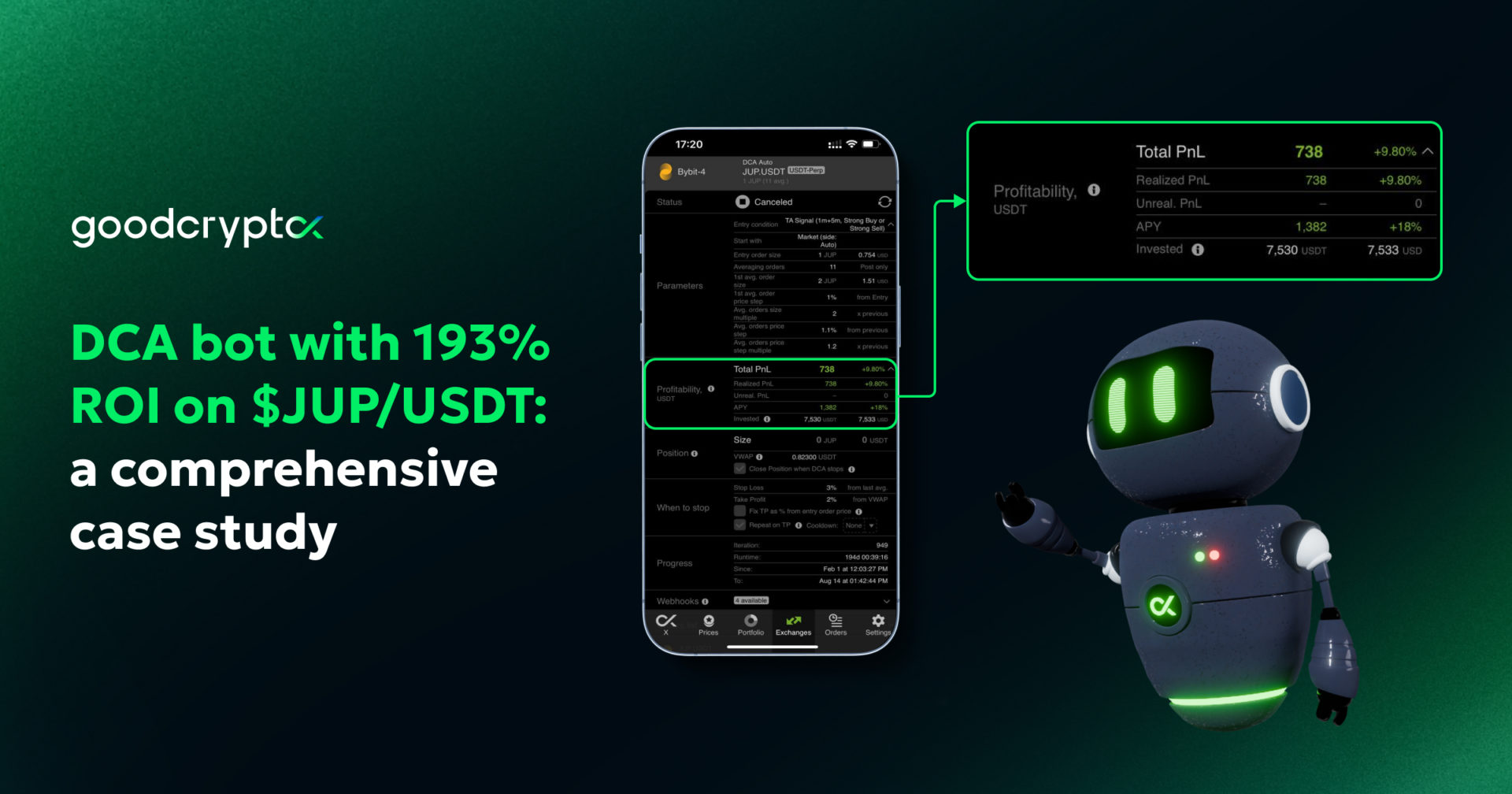
What if we told you a DCA bot could turn $376 into over $730 in six months, without ever manually picking a single entry? Check out this real user case study on how a $JUP/USDT DCA bot delivered 193% ROI, or nearly 360% APY with leverage. Here’s what it covers:
How the bot was configured: exact bot settings on entry, take profit, order size, number of averaging orders, price step, and other details;
Why those settings worked: the logic behind averaging order sizing, price step multipliers, and why the SL was intentionally wider than the TP;
What to watch out for: the two most common DCA bot mistakes, setting your price range too tight or too wide, and how to avoid them.
Curious how it all comes together? The full case study is right here 👇
We hope this digest was valuable and informative for you! If you want to be the first to receive new crypto insights and stay up-to-date with the market, follow us on Twitter or Telegram. Become a better trader with the goodcryptoX app!
This was supposed to be a very different update: a chance to mark one year since the launch of the GOOD token and more than seven years since goodcryptoX fir...