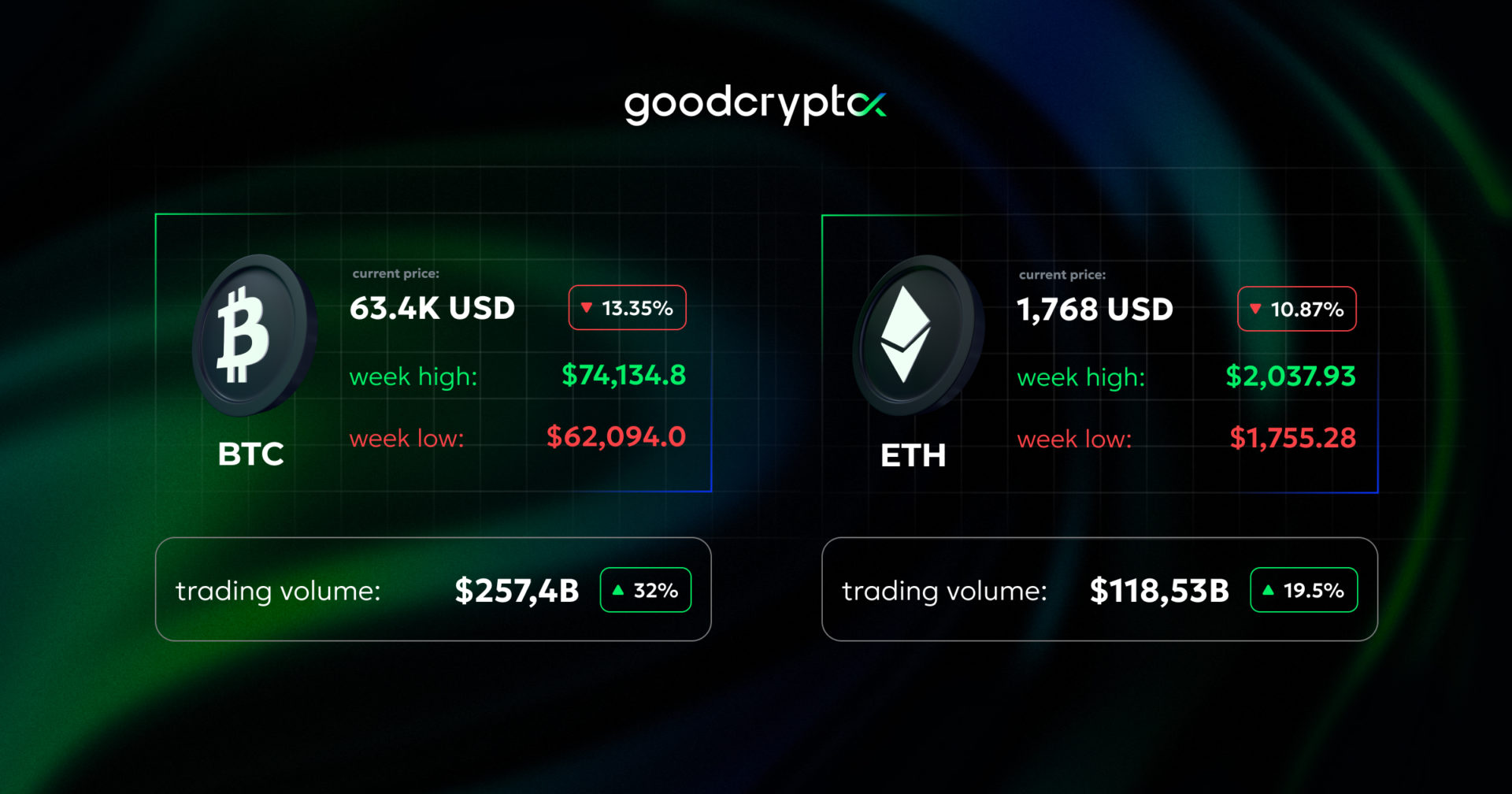
Escalation, outflows, and a few surprises on both ends of the market. This week reminded everyone how fast the mood can shift. Here’s what happened:
quick weekly news
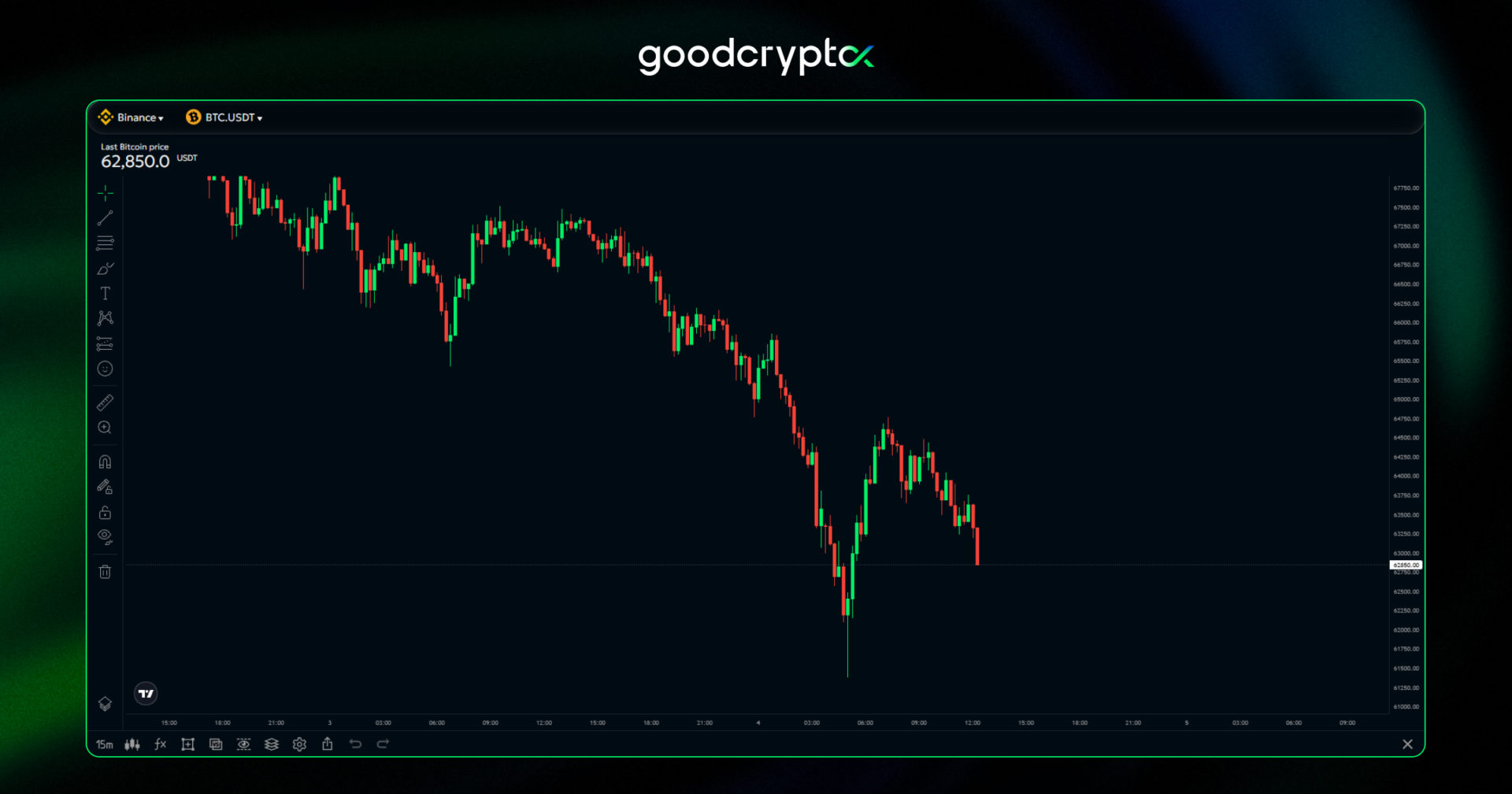
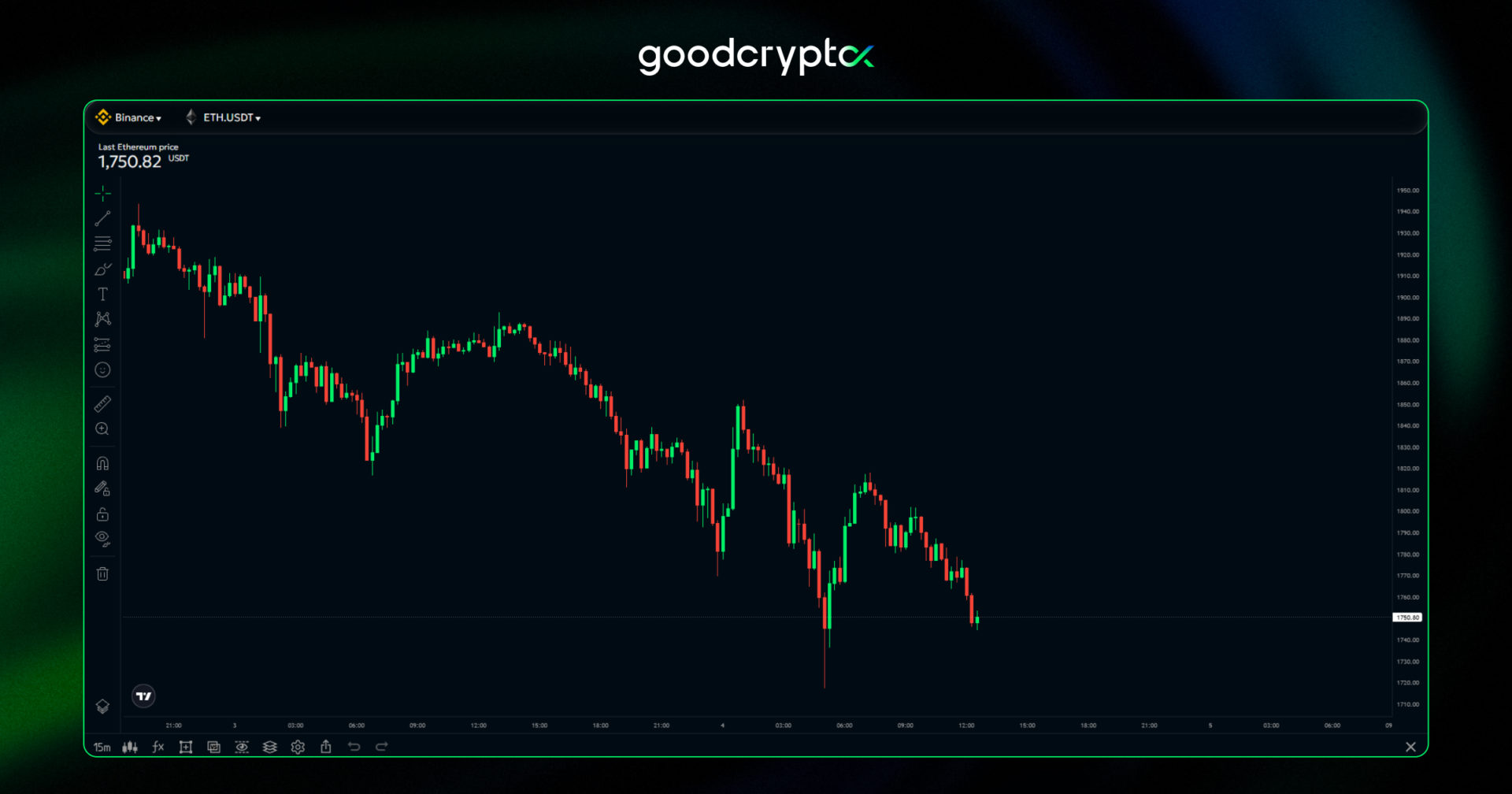
Bitcoin dips below $62K as $1.5B in crypto longs get wiped out
Bitcoin briefly touched $61,400 Thursday morning, triggering over $1.5B in liquidations across crypto markets over 24 hours, the steepest single-session wipeout in months.Source: goodcryptoX
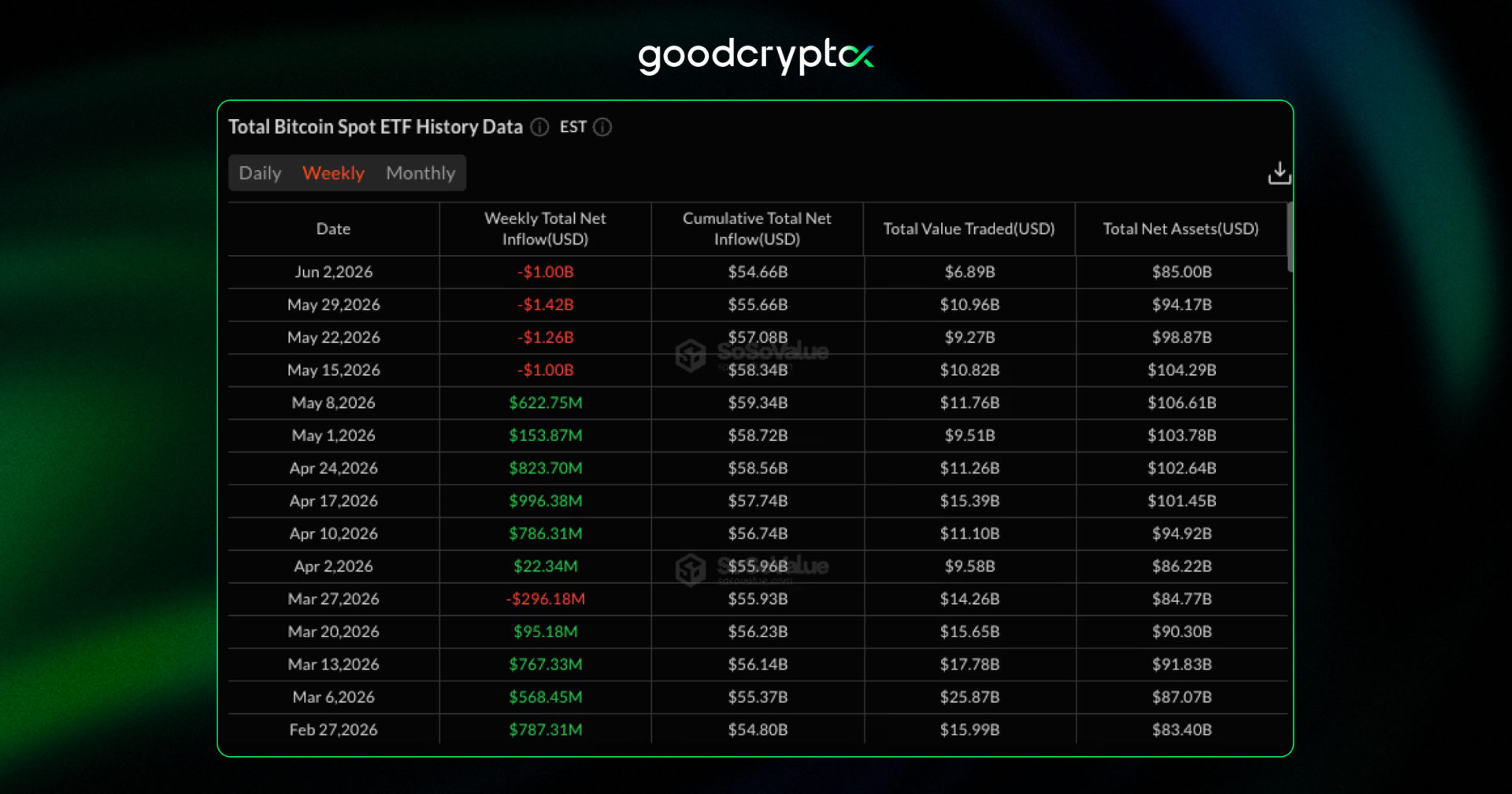
More than 208,000 traders were liquidated, per CoinGlass data. Bitcoin accounted for over $800M of that, and ETH another $386M. The forced selling landed on top of already weak institutional demand; investors have pulled roughly $1B from U.S. spot Bitcoin ETFs this week, according to SoSoValue, extending what is now a record streak of net outflows.
Presto Research argued Thursday that Bitcoin’s weakness may have less to do with crypto-specific catalysts and more to do with competition for capital. The firm noted that Bitcoin’s major drawdowns this year have coincided with rallies in gold and AI stocks as rate cut expectations faded. If that relationship holds, a recovery may depend more on easing inflation concerns than on anything happening inside crypto.
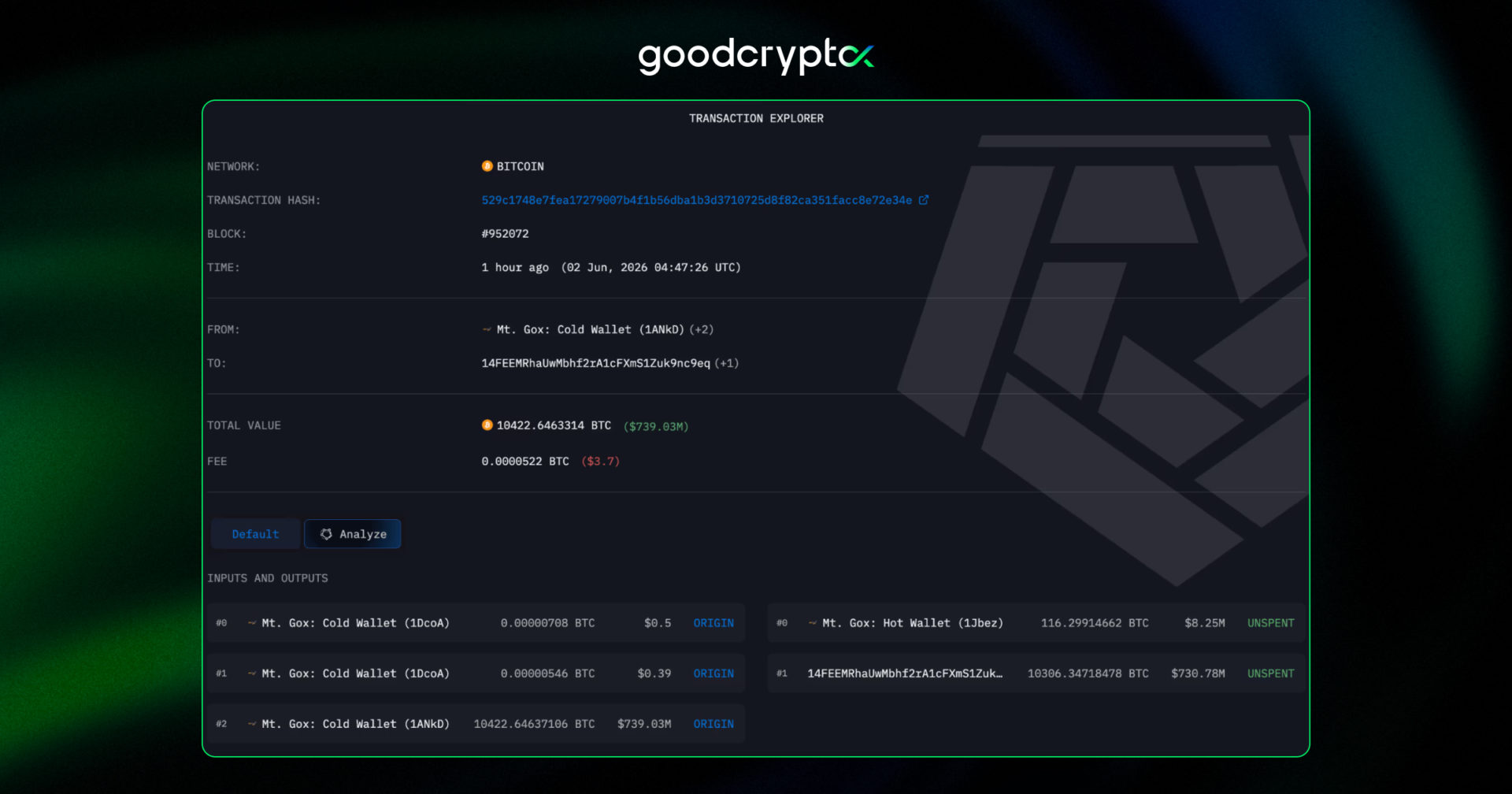
Adding to the pressure, Mt. Gox moved 10,422 Bitcoin worth roughly $739M to a new wallet on Tuesday, its largest single transfer in months and its biggest move ahead of the October 31, 2026, creditor repayment deadline. The transaction sent 10,306 BTC to a previously unseen address, with a smaller 116 BTC slice routed to Mt. Gox’s known hot wallet, per Arkham Intelligence.
The split pattern mirrors earlier administrative transfers that preceded distributions, though none of the coins have yet moved to a custody provider or exchange. Mt. Gox still holds roughly 34,504 BTC valued at $2.43B, the largest unresolved holding tied to any failed crypto exchange.
Strategy sells 32 Bitcoin for $2.5M to cover dividend payments
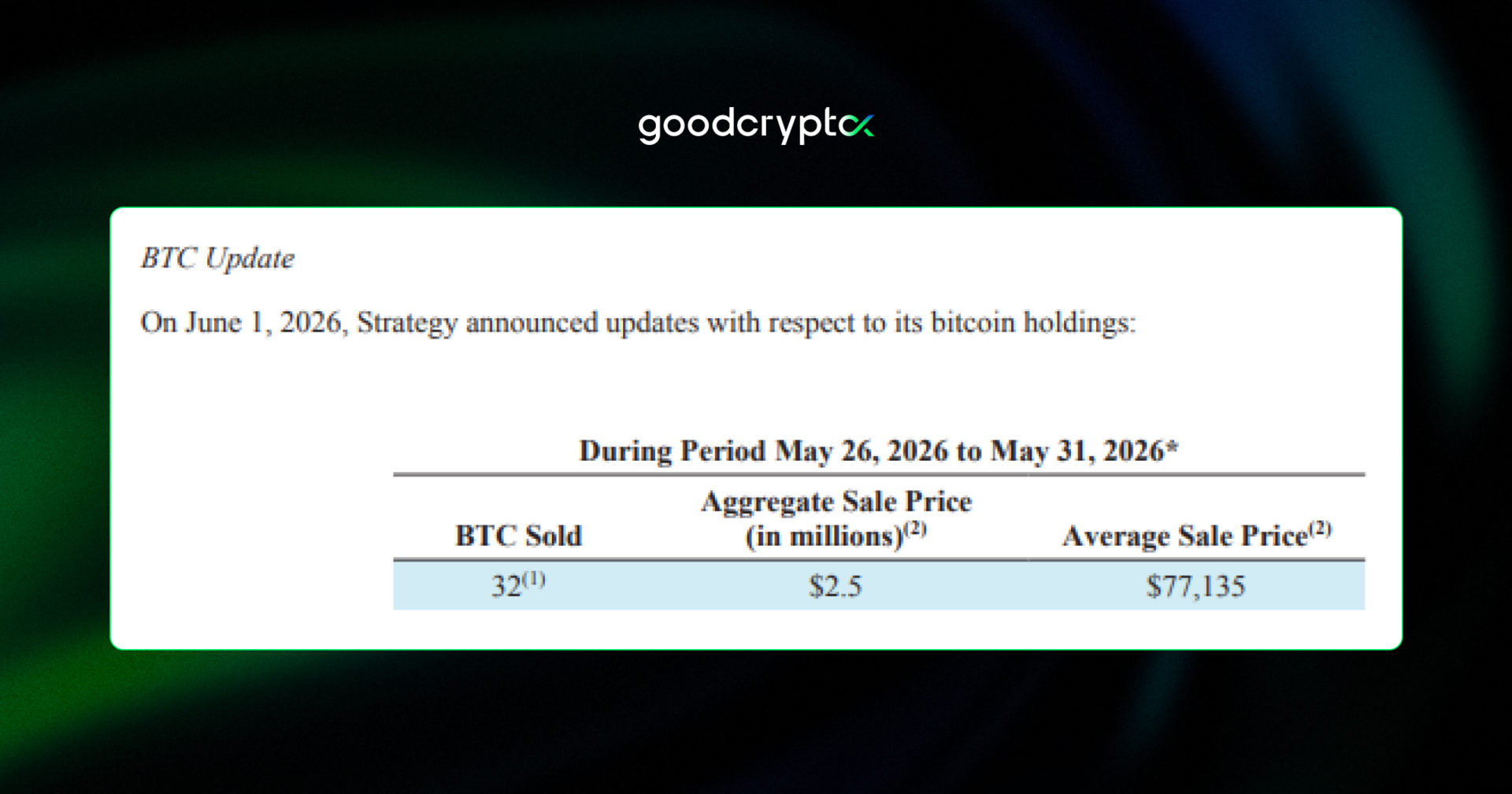
Strategy has sold Bitcoin for the first time in four years. The company disclosed in an 8-K filing on Monday that it sold 32 BTC between May 26 and May 31 at an average of $77,135, totaling $2.5M, to fund dividend payments on STRC, its perpetual preferred stock.Source: 8-K filing
The sale represents just 0.0038% of Strategy’s holdings. The company still holds more than 843,700 BTC purchased at an average cost of $75,699, keeping it comfortably the largest corporate Bitcoin holder.
The move wasn’t entirely unexpected. On Strategy’s Q1 earnings call, Michael Saylor said: “We will probably sell some bitcoin to pay a dividend just to inoculate the market and send the message that we did it.” It was still a notable shift from a chairman who had publicly advocated for buying and holding Bitcoin indefinitely.
In a subsequent CoinDesk interview, Saylor walked through several potential capital sources for meeting dividend obligations, including Bitcoin sales, framing each decision through the lens of Bitcoin per share accretion.
The disclosure sent Strategy shares down about 6% on Monday. Bitcoin dropped below $71,500 on the same day, compounded by Iran halting talks with the U.S. over Israel’s incursions into Lebanon. More than $90M in BTC futures positions were liquidated shortly after.
This is the first net Bitcoin reduction recorded in a standalone 8-K filing and the first time Strategy has publicly disclosed a Bitcoin sale on its website. A December 2022 transaction involved selling 704 BTC and buying 2,395 BTC, a net increase structured primarily as tax-loss harvesting. This one is different.
Bitmine’s Ethereum bet approaches $9B in losses as ETH falls below $1,800
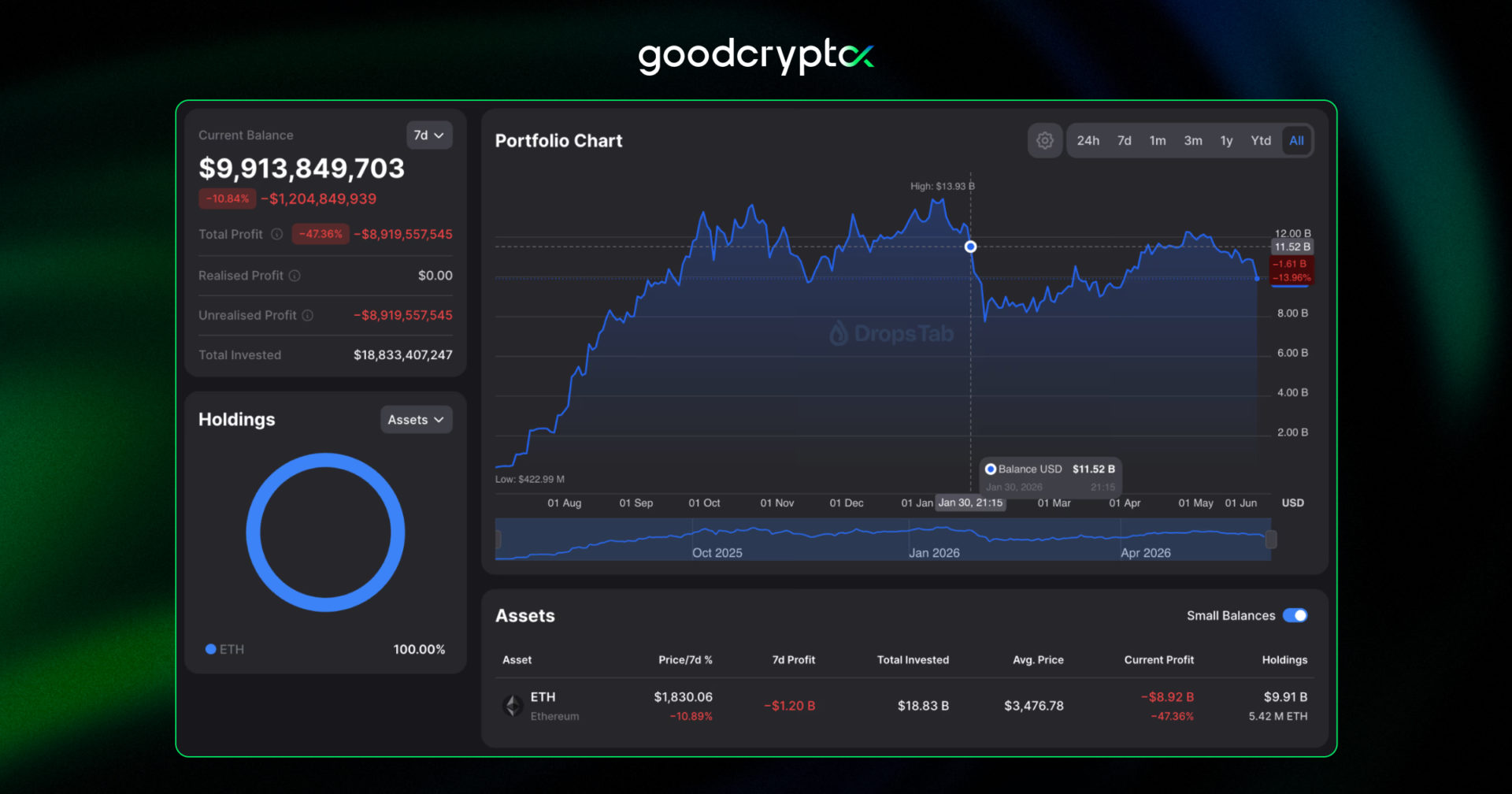
Bitmine Immersion Technologies is staring at nearly $9B in unrealized losses as ETH slips back toward its February lows.
The company, chaired by Tom Lee, has accumulated more than 5.4M ETH, roughly 4.5% of Ethereum’s circulating supply, over the past year. That position is worth about $10B at current prices, but carries an estimated $8.9B in unrealized losses according to DropsTab data.
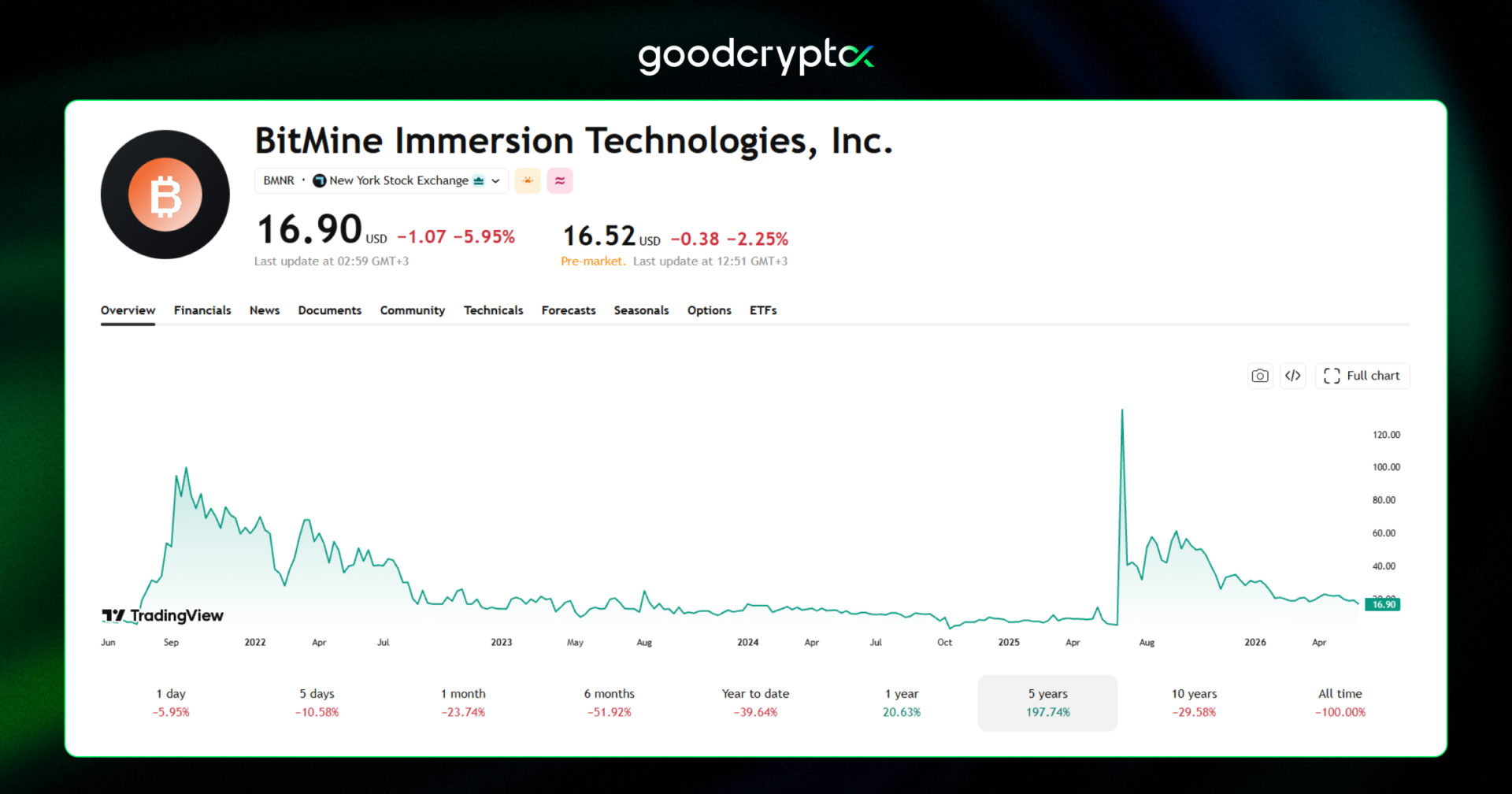
Shares of BMNR fell another 5.9% Wednesday, dropping below $17 and extending their decline to 28% since early May, now trading below February lows and at the weakest level since the company announced its Ethereum treasury pivot in 2025.
The timing is painful. In early May, Lee called the market’s “mini crypto winter” over and declared a new “crypto spring” had begun. ETH has lost more than 20% since then.
Bitmine’s structure does offer some insulation. Unlike peers who financed crypto purchases with debt, Bitmine raised capital through equity issuance, no leverage concerns or interest payments. The company also generates revenue from staking, with more than 4.7M ETH staked and annualized staking revenue estimated at roughly $276M.
Lee hasn’t changed his view. Speaking at the Proof of Talk conference in Paris this week, he said ETH could eventually reach $250,000 as tokenization, AI-driven transactions, and corporate staking reshape Ethereum’s role in global finance. For now, the market appears focused on a more immediate reality, ETH back near February lows, and Bitmine’s treasury deep underwater.
Hyperliquid flips Solana in token price as its share of perpetual futures volume hits a record 6.63%
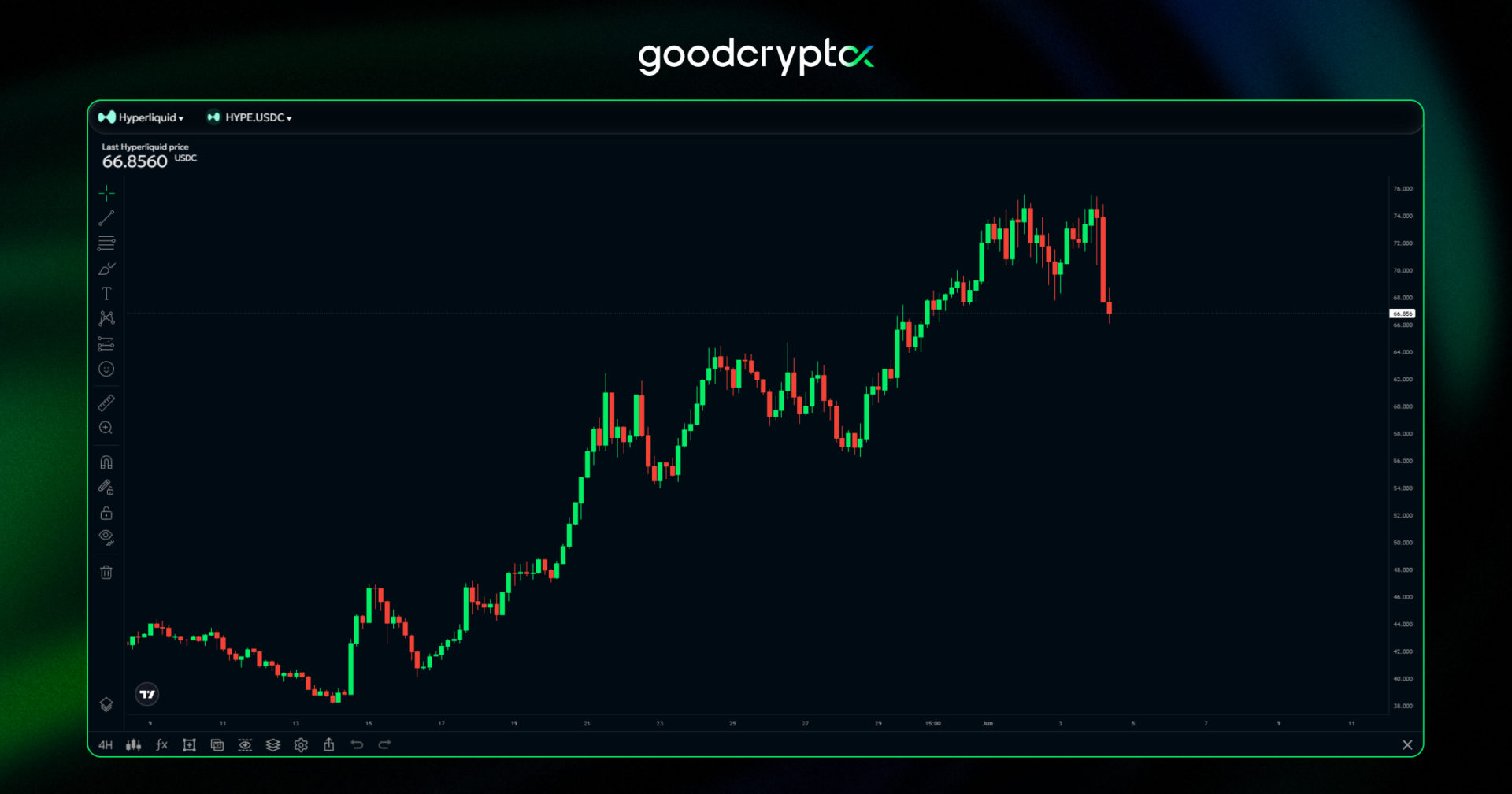
HYPE crossed above SOL in price on June 4, with goodcryptoX data showing HYPE trading at around $75.4, up nearly 28% on the week, while SOL sat at $70.9, down more than 12% over the same period and touching its lowest level since late 2023.
The gap in market cap remains wide, Solana at roughly $42B against Hyperliquid’s $16B, but the distance is narrowing fast. Hyperliquid’s share of global perpetual futures trading volume hit a record 6.63% last month, per The Block, with HIP-3-based perpetuals alone exceeding $62B in monthly volume.
Institutional infrastructure is following the momentum. Grayscale launched the Hyperliquid Staking ETF (HYPG) on Nasdaq on June 3, pricing it at a 0.29% sponsor fee, the lowest among the three Hyperliquid ETFs now trading. Grayscale’s fund is designed to capture staking rewards on top of price exposure, with historical staking yields averaging around 2.2% annually. Grayscale head of research Zach Pandl called Hyperliquid “the most successful breakout of this cycle.”
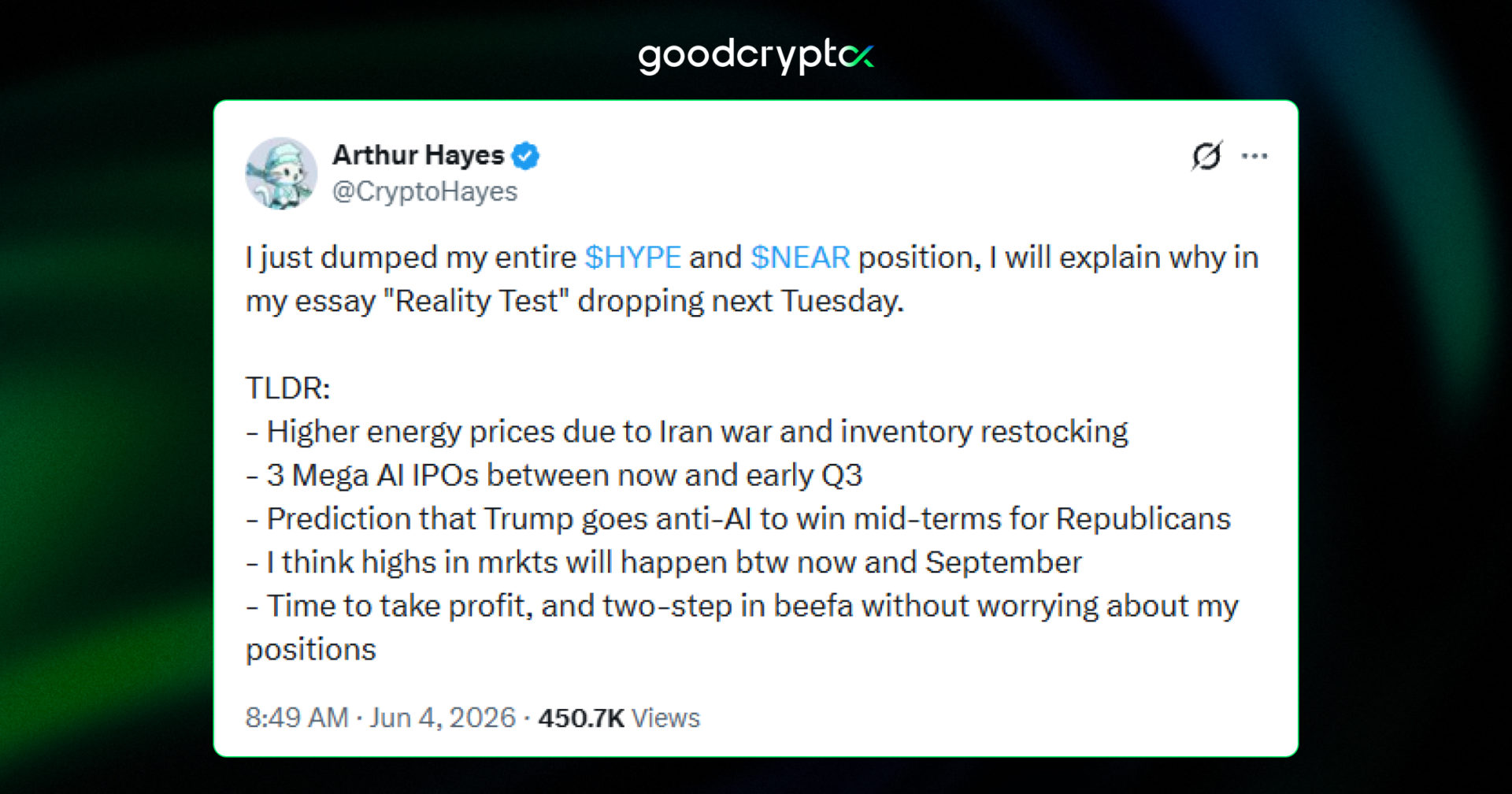
Not everyone is staying long. Arthur Hayes sold his entire HYPE position, worth around $18M, along with an unspecified amount of NEAR, citing geopolitical tensions from the U.S.-Iran war and upcoming AI IPOs as reasons. HYPE dropped over 4% following his announcement. Hayes said he’ll explain the decision in an upcoming essay titled “Reality Test.”
Hyperliquid generated approximately $857M in revenue in 2025, with roughly 99% of protocol fees directed toward token buybacks, a model that links network usage directly to HYPE’s value and has drawn comparisons to traditional financial infrastructure rather than a typical crypto trading app.
Hyperliquid in 2026 — everything you need to know
If there’s one project that defined this cycle, it’s Hyperliquid. From perp DEX to a full L1 ecosystem with spot trading, HIP-3 markets, TradFi exposure, and $1.4B in DeFi TVL, it’s moved faster than almost anyone expected. Check out the Hyperliquid review to find out:
What Hyperliquid actually is and how it works under the hood;
Why HYPE has been one of the strongest performers this cycle;
Hyperliquid DEX interface review & how goodcryptoX complements it.
And more info about the hands-down best crypto project of 2026. Full breakdown 👇
We hope this digest was valuable and informative for you! If you want to be the first to receive new crypto insights and stay up-to-date with the market, follow us on Twitter or Telegram. Become a better trader with the goodcryptoX app!
This was supposed to be a very different update: a chance to mark one year since the launch of the GOOD token and more than seven years since goodcryptoX fir...